
Blog
Blog
How BTR Operators Can Scale Operations Without Compromising Service
How BTR Operators Can Scale Operations Without Compromising Service

When a new 300-home BTR building joins a portfolio, the extra work does not arrive in one neat block. It shows up in late leads, full viewing diaries, move-in questions, repair photos, contractor calls, lease changes, and weekly reports.
At first, the team keeps up. Soon, replies slow and tasks pass through more hands. Site staff spend more time updating tools and less time with residents. The portfolio has grown, but the way its work moves has not.
That is why BTR growth is a work design problem before it is a hiring problem. More homes may still need more people, mainly for onsite service, hard cases, and expert work. Yet hiring into a broken process only gives the same delays to a larger team.
To scale BTR operations without losing service, operators need clear work paths, tools that run routine steps, one live record, and firm rules for human help. The aim is not a smaller team. It is a team with more time for work that needs skill, care, and trust.
Why does a growing BTR portfolio become harder to manage?
A BTR portfolio becomes harder to manage because each new site adds more than homes. It brings more residents, suppliers, messages, local needs, service standards, and links between onsite and central teams.
The UK BTR pipeline now includes more than 300,000 homes. Opening those homes is only one part of the job. The harder task is to give each site steady service, even when its tools, suppliers, and local needs differ.
Why does more volume expose weak workflows?
A small manual step becomes a large drain at scale. Typing one lead into the PMS may take only a few minutes. The cost appears when the team repeats it hundreds of times.
One repair can also touch the resident, site manager, central team, contractor, approver, and finance record. When no one owns the next step, the job waits between people instead of moving towards a result.
Operators cannot scale BTR operations by adding more hands to the same weak path. They first need to find where work waits, where data is copied, and where the next owner is unclear.
Why do fragmented systems make BTR growth harder?
Work slows when each step lives in a different tool. A lead starts in email, the viewing sits in a diary, and the unit data lives in the PMS. The team must notice each change and keep every record in step.
Leaders may see a staff shortage when the real gap sits in the workflow. Common signs include double entry, private spreadsheets, shared inboxes with no owner, different steps at each site, and reports that arrive too late to help.
The Association for Rental Living Best Practice Guide links a sound tech plan with lower costs, stronger income, and better operations. The key question is not whether the portfolio needs more software. It is whether work can move from request to result without being rebuilt by hand.
Why can resident service fall as teams get busier?
Service can fall when routine admin crowds out the moments residents remember. A site manager who chases updates has less time to solve a complaint, welcome a new resident, or help with a hard case.
This matters because service is part of the BTR product. Research on the BTR resident experience links strong management and resident satisfaction with occupancy, retention, lease-up, and rent.
A BTR mystery shopping review also found that missed enquiries and weak follow-up remain gaps in the lettings journey.
BTR operational efficiency must therefore improve both speed and care. A faster workflow has little value if the resident gets a worse result. This is the base operators need to scale BTR operations with steady service.

How can BTR operators create more capacity?
BTR operators create more capacity when they give repeat work one clear path. Property management automation can then run safe steps and send hard cases to the right person.
Which property management processes should be standardised?
Start with work that repeats at each site. Map enquiries, viewings, applications, move-ins, repairs, renewals, tenancy changes, arrears, and move-outs.
Each flow needs an owner, a target time, the facts needed, and a clear stop point. This does not force every site to sound the same. A city scheme and a family portfolio can keep their own tone, team, and supplier list while using the same core steps.
Use this check before changing a workflow.
Does the task happen often enough to matter?
Do most cases follow the same steps?
Are the needed facts live in the PMS?
Does a named person own hard cases?
Can you track time, cost, service, or income?
If the path is unclear, fix it before adding a tool. Automation cannot repair poor data or vague ownership on its own.
What property management tasks can BTR operators automate?
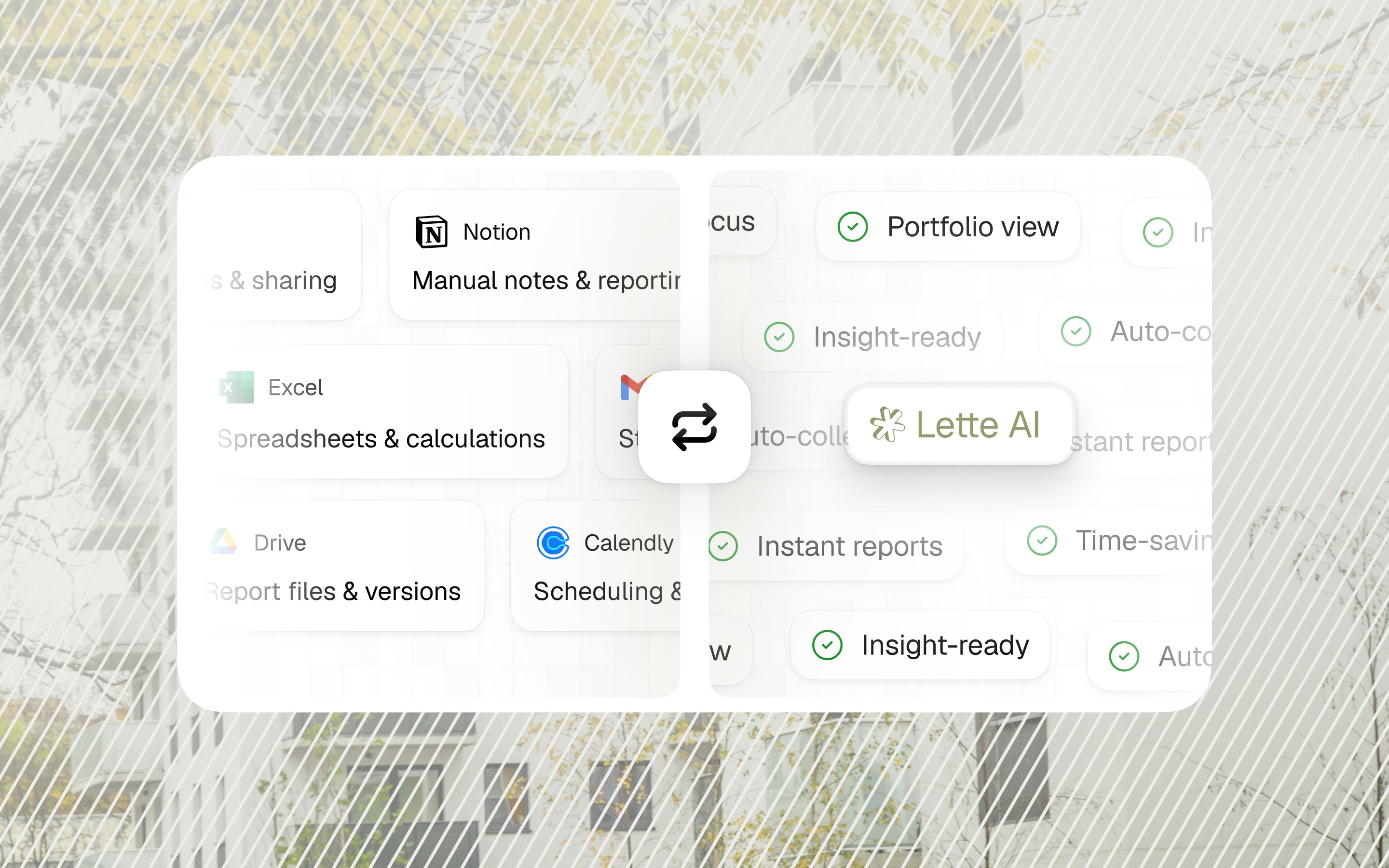
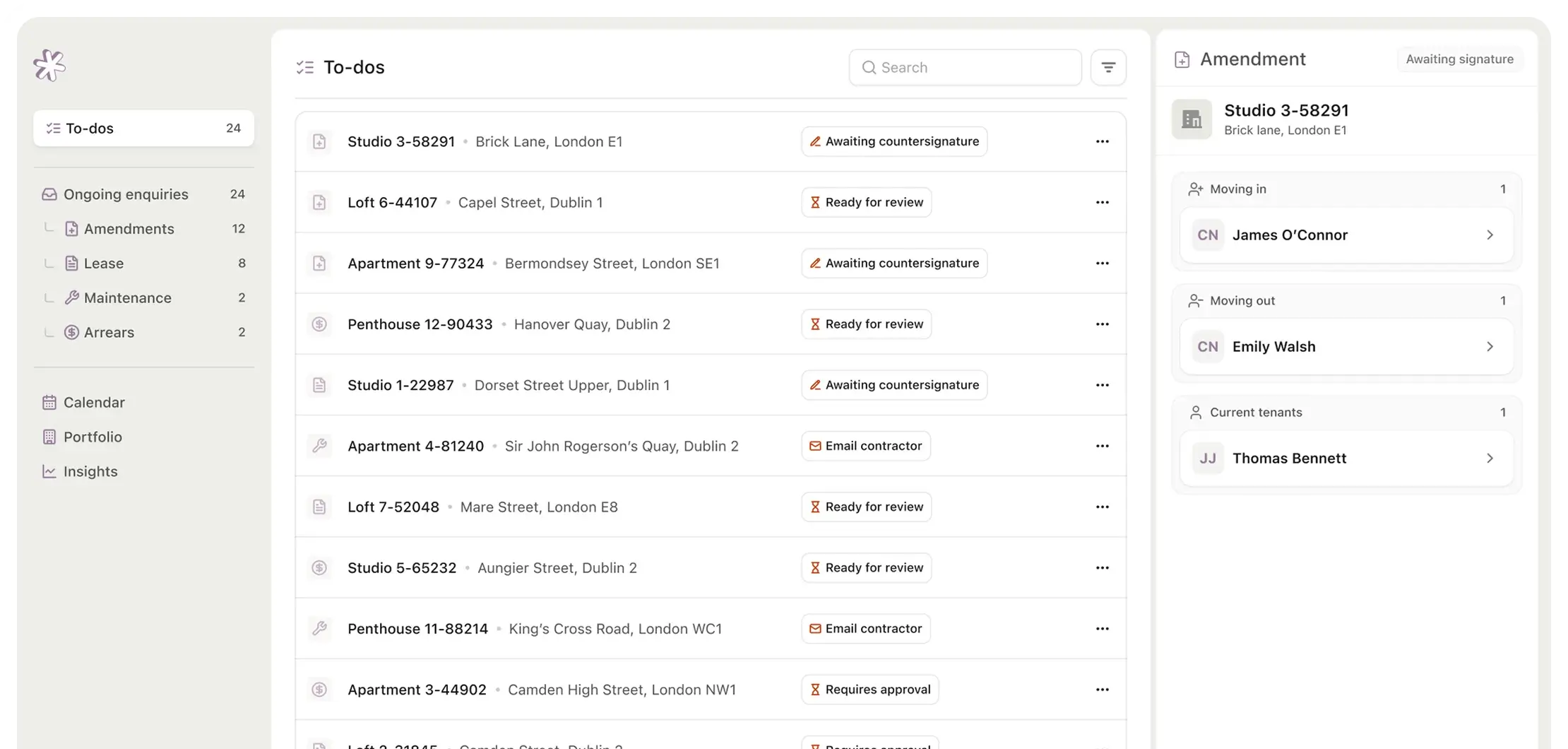
BTR teams can automate tasks that happen often and follow agreed rules. These include lead replies, viewing slots, reminders, file chases, routine resident updates, repair intake, basic triage, work orders, contractor routing, and status reports.
Workflow | Automation can help with | Work that stays with people | Measures |
Lettings | Lead replies, checks, viewing slots, reminders, application updates, file chases | Talks on terms, rare cases, sensitive choices, personal follow-up | First reply, lead to tour, tour to application, no-show rate |
Resident operations | Move-in prompts, renewal steps, tenancy change requests, arrears reminders, routine updates | Complaints, disputes, residents who need more care, complex changes | Completion time, renewal rate, backlog, handoff rate |
Maintenance | Issue intake, photo requests, basic triage, work orders, supplier routing, updates | Urgent risk, hard faults, access concerns, high-cost approval, resident care | First reply, time to fix, repeat visits, open jobs |
Portfolio reporting | Case summaries, service flags, backlog reports, site comparisons | Root-cause work, supplier plans, hiring, spend choices | Cost per home, team capacity, service level, resident score |
In lettings, the best gains sit between first contact and signed tenancy. A lettings automation workflow can check live homes, book a viewing, send reminders, and keep the PMS up to date.
The same model works after move-in. Resident operations software can keep renewals, tenancy changes, arrears steps, and routine messages on track. Property managers keep the cases that need care or a real decision.
For repairs, property maintenance automation can collect facts and photos, create the job, send it to an approved trade, and update the resident. A person takes over when there is risk, doubt, extra need, or a choice outside the rules.
What is exception-based property management?
Exception-based property management keeps normal cases on a set path and sends hard cases to a person. The tool manages the queue, while people make the call.
Teams must agree what stops the flow, who gets the case, what they can see, and how fast they should act. A handoff has failed if the property manager must search three tools to learn what happened.
The result should be a better human service, not a less human one. Industry guidance on the role of technology in BTR scale makes the same point. Tech can remove friction, but teams still protect trust, brand, and community.
How do you manage multiple BTR properties efficiently?
To scale BTR operations across several sites, use one core model for repeat work and keep local service at each building. Routine queues, shared data, and portfolio reports can sit with a central team. Site teams keep the building knowledge, resident ties, inspections, and urgent work.
What should be centralised and what should stay onsite?
Centralise work that gains from one queue or shared cover. Keep work onsite when it needs local facts, physical presence, or a trusted link with the resident.
Central team | Onsite team |
Lead capture and first checks | Viewings and local sales talks |
Viewing diary and reminders | Move-in welcome and community work |
Routine resident messages | Complaints and sensitive support |
Repair intake and first triage | Inspections and urgent site response |
Supplier status checks | Local supplier judgement and access |
Portfolio reports and queue control | Asset context and service recovery |
This split gives the portfolio more cover without removing each building's character. It also shows whether a slow case came from site demand, the central queue, a supplier, or an approval.
The developing BTR Code of Practice puts prompt repairs, clear service, and sound records at the heart of quality. A centralised property management model should make those aims easier to meet and prove.
Why is PMS integration important for BTR growth?
PMS integration matters because each tool needs live data, and every finished task must update the main record. If a tool can read the PMS but cannot write back, the team must still close the job by hand.
The PMS should remain the main record for homes, tenancies, balances, residents, and repairs. An AI work layer can sit above it, run approved steps, and write the result back. Lette uses this model with property systems such as Yardi and MRI.
This setup can improve work without a large replacement project. The guide to automating PMS tasks with AI shows how the PMS, work layer, and team can share clear roles.
When you review Build to Rent software, ask the vendor to show one full task. Watch a lead or repair move from the first message to the final PMS update. A polished screen is useful, but it does not prove that the work gets done.
How does a portfolio-wide view improve BTR operations?
A shared view helps leaders see why work has slowed before service starts to fall. It should show the size and age of each queue, the next owner, and gaps between sites.
Good reports should answer clear questions.
Which sites have the slowest first reply?
Where do leads leave the funnel?
Which repairs stay open the longest?
Which suppliers cause repeat visits?
Where are hard cases on the rise?
Which sites need more local support?
Modern BTR platforms can link shared workflows with portfolio reports. The aim is not more charts. It is to find the point where work waits and then fix it.
How can BTR operators measure efficiency and automation ROI?
As they scale BTR operations, operators should track team capacity, resident service, and business results. Homes per employee can help, but it should never stand alone. A higher ratio may hide slow replies, old cases, or weak resident care.
Which metrics show whether BTR operations are scaling well?
Use measures that show how much work the team can handle and what residents receive.
Measure | What it shows |
Cost per home | Whether the cost to serve is rising or falling |
Staff time per case | How much hands-on work each case needs |
First reply time | How fast a lead or resident gets useful help |
Application time | Whether the lettings path is moving or waiting |
Void days | Whether slow work is affecting income |
Repair time | How well triage, approval, access, and trades work |
Open cases and age | Whether demand is above real team capacity |
Renewal and resident score | Whether speed is protecting the lived experience |
Homes per employee | Whether the model supports scale without hiding service loss |
Track these measures before and after each change. A portfolio average can hide one weak site, so compare results by asset, workflow, channel, supplier, and case type.
How do you build a business case for property management automation?
Build the case around one real workflow, not a broad claim about AI. Record the monthly case count, hands-on staff time, wait time, handoffs, rework, service result, and cost of delay.
Then map the new path and use a simple value test.
Net annual value = staff time recovered + delay cost avoided + service cost reduced + tools retired - annual software and change cost
Do not frame saved time only as staff removed. The team may use that time to open a new site, reply faster, spend more time onsite, or finish work that was often left undone.
In one Lette deployment, an operator added more than 1,000 homes while its property management team stayed stable. The lesson is not that every group can do the same. It is that joined-up work can absorb part of the growth before staff must rise at the same rate.
How should BTR operators roll out automation?
Start with one busy workflow where delay harms income, cost, or resident trust. Choose a typical site, agree the current result, set the human stop points, and test the full route through the PMS.
Track reply time, time to close, staff time, handoff rate, accuracy, resident result, and record quality. If the test works, turn it into a shared template and allow clear changes for each brand, site, and supplier list.
Do not scale a weak test. Fix the data, rules, handoffs, and team training first. The aim is a work model that becomes easier to run as more sites join it.
How do you know when the team still needs more support?
The team needs more support when service still falls after waste and weak handoffs are fixed. More hard cases, residents who need added care, specialist roles, and greater onsite demand may all need more people.
Hiring is the right answer when the work needs human skill or time. It is a costly answer when new staff spend their days copying data, chasing routine updates, or making up for unclear ownership.
What do BTR operators ask about scaling portfolio operations?
BTR operators usually ask what they can automate, how they can protect service, and when they still need more people.
How can BTR operators improve operational efficiency?
Set one clear path for repeat work, remove double entry, automate safe steps, link work to the PMS, and track service by site. This is the base of sound BTR operational efficiency.
What property management tasks can be automated?
Teams can automate lead replies, viewing slots, reminders, file chases, resident updates, repair intake, basic triage, work orders, supplier routing, and reports. Each flow still needs clear rules and human stop points.
How does AI support property managers?
AI can run repeat steps, find live facts, update records, and flag hard cases. People still own complaints, urgent risk, talks on terms, residents who need care, and complex choices.
Can property managers handle more homes with software?
Yes, teams can often serve more homes when software cuts repeat admin and links broken steps. The safe limit depends on the asset, service promise, case mix, site needs, and team model.
Does automation reduce resident service quality?
It should improve service through faster replies, clear updates, and fewer missed tasks. Service can fall when rules are poor, data is wrong, or residents cannot reach a person when needed.
When should a property management team hire more staff?
Hire when workload still exceeds real capacity after double work, weak tools, and unclear ownership are fixed. More site work, specialist tasks, and complex resident needs are sound reasons to add people.
Should BTR operators pilot automation in one building first?
Yes, because one site or workflow gives the team a safe way to test data, rules, handoffs, PMS updates, and the resident result before a wider rollout.
What features should you look for in Build to Rent software?
Look for two-way PMS links, work that runs across several steps, shared reports, clear user rights, full activity records, human handoffs, and support for several sites with local control.
How can BTR operators scale without compromising service?
BTR operators can scale without losing service when growth rests on a better work model. Clear paths show who owns each step. Automation keeps routine work moving on time. PMS links protect the main record. Central teams give cover, while site teams keep the local trust that makes BTR service stand out.
Do not begin with software or a fixed headcount goal. Choose one workflow that slows the team each week. Map where it waits, where facts are copied, where ownership shifts, and where a person must make the call. This will show whether the true limit is process, tools, suppliers, or staff.
Then test the new path against both speed and care. Faster work matters, but so do clean records, sound handoffs, resident results, and the team's trust in the process. If speed rises while those measures fall, the model is not ready to grow.
The right outcome is not a portfolio with fewer people. It is a portfolio where each person has more time for skill, service, and work that protects long-term value. If you want to test that model on one of your own workflows, book a chat with Lette and bring the process that causes the most friction. A real start-to-finish review will tell you more than a generic software demo.
When a new 300-home BTR building joins a portfolio, the extra work does not arrive in one neat block. It shows up in late leads, full viewing diaries, move-in questions, repair photos, contractor calls, lease changes, and weekly reports.
At first, the team keeps up. Soon, replies slow and tasks pass through more hands. Site staff spend more time updating tools and less time with residents. The portfolio has grown, but the way its work moves has not.
That is why BTR growth is a work design problem before it is a hiring problem. More homes may still need more people, mainly for onsite service, hard cases, and expert work. Yet hiring into a broken process only gives the same delays to a larger team.
To scale BTR operations without losing service, operators need clear work paths, tools that run routine steps, one live record, and firm rules for human help. The aim is not a smaller team. It is a team with more time for work that needs skill, care, and trust.
Why does a growing BTR portfolio become harder to manage?
A BTR portfolio becomes harder to manage because each new site adds more than homes. It brings more residents, suppliers, messages, local needs, service standards, and links between onsite and central teams.
The UK BTR pipeline now includes more than 300,000 homes. Opening those homes is only one part of the job. The harder task is to give each site steady service, even when its tools, suppliers, and local needs differ.
Why does more volume expose weak workflows?
A small manual step becomes a large drain at scale. Typing one lead into the PMS may take only a few minutes. The cost appears when the team repeats it hundreds of times.
One repair can also touch the resident, site manager, central team, contractor, approver, and finance record. When no one owns the next step, the job waits between people instead of moving towards a result.
Operators cannot scale BTR operations by adding more hands to the same weak path. They first need to find where work waits, where data is copied, and where the next owner is unclear.
Why do fragmented systems make BTR growth harder?
Work slows when each step lives in a different tool. A lead starts in email, the viewing sits in a diary, and the unit data lives in the PMS. The team must notice each change and keep every record in step.
Leaders may see a staff shortage when the real gap sits in the workflow. Common signs include double entry, private spreadsheets, shared inboxes with no owner, different steps at each site, and reports that arrive too late to help.
The Association for Rental Living Best Practice Guide links a sound tech plan with lower costs, stronger income, and better operations. The key question is not whether the portfolio needs more software. It is whether work can move from request to result without being rebuilt by hand.
Why can resident service fall as teams get busier?
Service can fall when routine admin crowds out the moments residents remember. A site manager who chases updates has less time to solve a complaint, welcome a new resident, or help with a hard case.
This matters because service is part of the BTR product. Research on the BTR resident experience links strong management and resident satisfaction with occupancy, retention, lease-up, and rent.
A BTR mystery shopping review also found that missed enquiries and weak follow-up remain gaps in the lettings journey.
BTR operational efficiency must therefore improve both speed and care. A faster workflow has little value if the resident gets a worse result. This is the base operators need to scale BTR operations with steady service.
How can BTR operators create more capacity?
BTR operators create more capacity when they give repeat work one clear path. Property management automation can then run safe steps and send hard cases to the right person.
Which property management processes should be standardised?
Start with work that repeats at each site. Map enquiries, viewings, applications, move-ins, repairs, renewals, tenancy changes, arrears, and move-outs.
Each flow needs an owner, a target time, the facts needed, and a clear stop point. This does not force every site to sound the same. A city scheme and a family portfolio can keep their own tone, team, and supplier list while using the same core steps.
Use this check before changing a workflow.
Does the task happen often enough to matter?
Do most cases follow the same steps?
Are the needed facts live in the PMS?
Does a named person own hard cases?
Can you track time, cost, service, or income?
If the path is unclear, fix it before adding a tool. Automation cannot repair poor data or vague ownership on its own.
What property management tasks can BTR operators automate?
BTR teams can automate tasks that happen often and follow agreed rules. These include lead replies, viewing slots, reminders, file chases, routine resident updates, repair intake, basic triage, work orders, contractor routing, and status reports.
Workflow | Automation can help with | Work that stays with people | Measures |
Lettings | Lead replies, checks, viewing slots, reminders, application updates, file chases | Talks on terms, rare cases, sensitive choices, personal follow-up | First reply, lead to tour, tour to application, no-show rate |
Resident operations | Move-in prompts, renewal steps, tenancy change requests, arrears reminders, routine updates | Complaints, disputes, residents who need more care, complex changes | Completion time, renewal rate, backlog, handoff rate |
Maintenance | Issue intake, photo requests, basic triage, work orders, supplier routing, updates | Urgent risk, hard faults, access concerns, high-cost approval, resident care | First reply, time to fix, repeat visits, open jobs |
Portfolio reporting | Case summaries, service flags, backlog reports, site comparisons | Root-cause work, supplier plans, hiring, spend choices | Cost per home, team capacity, service level, resident score |
In lettings, the best gains sit between first contact and signed tenancy. A lettings automation workflow can check live homes, book a viewing, send reminders, and keep the PMS up to date.
The same model works after move-in. Resident operations software can keep renewals, tenancy changes, arrears steps, and routine messages on track. Property managers keep the cases that need care or a real decision.
For repairs, property maintenance automation can collect facts and photos, create the job, send it to an approved trade, and update the resident. A person takes over when there is risk, doubt, extra need, or a choice outside the rules.
What is exception-based property management?
Exception-based property management keeps normal cases on a set path and sends hard cases to a person. The tool manages the queue, while people make the call.
Teams must agree what stops the flow, who gets the case, what they can see, and how fast they should act. A handoff has failed if the property manager must search three tools to learn what happened.
The result should be a better human service, not a less human one. Industry guidance on the role of technology in BTR scale makes the same point. Tech can remove friction, but teams still protect trust, brand, and community.
How do you manage multiple BTR properties efficiently?
To scale BTR operations across several sites, use one core model for repeat work and keep local service at each building. Routine queues, shared data, and portfolio reports can sit with a central team. Site teams keep the building knowledge, resident ties, inspections, and urgent work.
What should be centralised and what should stay onsite?
Centralise work that gains from one queue or shared cover. Keep work onsite when it needs local facts, physical presence, or a trusted link with the resident.
Central team | Onsite team |
Lead capture and first checks | Viewings and local sales talks |
Viewing diary and reminders | Move-in welcome and community work |
Routine resident messages | Complaints and sensitive support |
Repair intake and first triage | Inspections and urgent site response |
Supplier status checks | Local supplier judgement and access |
Portfolio reports and queue control | Asset context and service recovery |
This split gives the portfolio more cover without removing each building's character. It also shows whether a slow case came from site demand, the central queue, a supplier, or an approval.
The developing BTR Code of Practice puts prompt repairs, clear service, and sound records at the heart of quality. A centralised property management model should make those aims easier to meet and prove.
Why is PMS integration important for BTR growth?
PMS integration matters because each tool needs live data, and every finished task must update the main record. If a tool can read the PMS but cannot write back, the team must still close the job by hand.
The PMS should remain the main record for homes, tenancies, balances, residents, and repairs. An AI work layer can sit above it, run approved steps, and write the result back. Lette uses this model with property systems such as Yardi and MRI.
This setup can improve work without a large replacement project. The guide to automating PMS tasks with AI shows how the PMS, work layer, and team can share clear roles.
When you review Build to Rent software, ask the vendor to show one full task. Watch a lead or repair move from the first message to the final PMS update. A polished screen is useful, but it does not prove that the work gets done.
How does a portfolio-wide view improve BTR operations?
A shared view helps leaders see why work has slowed before service starts to fall. It should show the size and age of each queue, the next owner, and gaps between sites.
Good reports should answer clear questions.
Which sites have the slowest first reply?
Where do leads leave the funnel?
Which repairs stay open the longest?
Which suppliers cause repeat visits?
Where are hard cases on the rise?
Which sites need more local support?
Modern BTR platforms can link shared workflows with portfolio reports. The aim is not more charts. It is to find the point where work waits and then fix it.
How can BTR operators measure efficiency and automation ROI?
As they scale BTR operations, operators should track team capacity, resident service, and business results. Homes per employee can help, but it should never stand alone. A higher ratio may hide slow replies, old cases, or weak resident care.
Which metrics show whether BTR operations are scaling well?
Use measures that show how much work the team can handle and what residents receive.
Measure | What it shows |
Cost per home | Whether the cost to serve is rising or falling |
Staff time per case | How much hands-on work each case needs |
First reply time | How fast a lead or resident gets useful help |
Application time | Whether the lettings path is moving or waiting |
Void days | Whether slow work is affecting income |
Repair time | How well triage, approval, access, and trades work |
Open cases and age | Whether demand is above real team capacity |
Renewal and resident score | Whether speed is protecting the lived experience |
Homes per employee | Whether the model supports scale without hiding service loss |
Track these measures before and after each change. A portfolio average can hide one weak site, so compare results by asset, workflow, channel, supplier, and case type.
How do you build a business case for property management automation?
Build the case around one real workflow, not a broad claim about AI. Record the monthly case count, hands-on staff time, wait time, handoffs, rework, service result, and cost of delay.
Then map the new path and use a simple value test.
Net annual value = staff time recovered + delay cost avoided + service cost reduced + tools retired - annual software and change cost
Do not frame saved time only as staff removed. The team may use that time to open a new site, reply faster, spend more time onsite, or finish work that was often left undone.
In one Lette deployment, an operator added more than 1,000 homes while its property management team stayed stable. The lesson is not that every group can do the same. It is that joined-up work can absorb part of the growth before staff must rise at the same rate.
How should BTR operators roll out automation?
Start with one busy workflow where delay harms income, cost, or resident trust. Choose a typical site, agree the current result, set the human stop points, and test the full route through the PMS.
Track reply time, time to close, staff time, handoff rate, accuracy, resident result, and record quality. If the test works, turn it into a shared template and allow clear changes for each brand, site, and supplier list.
Do not scale a weak test. Fix the data, rules, handoffs, and team training first. The aim is a work model that becomes easier to run as more sites join it.
How do you know when the team still needs more support?
The team needs more support when service still falls after waste and weak handoffs are fixed. More hard cases, residents who need added care, specialist roles, and greater onsite demand may all need more people.
Hiring is the right answer when the work needs human skill or time. It is a costly answer when new staff spend their days copying data, chasing routine updates, or making up for unclear ownership.
What do BTR operators ask about scaling portfolio operations?
BTR operators usually ask what they can automate, how they can protect service, and when they still need more people.
How can BTR operators improve operational efficiency?
Set one clear path for repeat work, remove double entry, automate safe steps, link work to the PMS, and track service by site. This is the base of sound BTR operational efficiency.
What property management tasks can be automated?
Teams can automate lead replies, viewing slots, reminders, file chases, resident updates, repair intake, basic triage, work orders, supplier routing, and reports. Each flow still needs clear rules and human stop points.
How does AI support property managers?
AI can run repeat steps, find live facts, update records, and flag hard cases. People still own complaints, urgent risk, talks on terms, residents who need care, and complex choices.
Can property managers handle more homes with software?
Yes, teams can often serve more homes when software cuts repeat admin and links broken steps. The safe limit depends on the asset, service promise, case mix, site needs, and team model.
Does automation reduce resident service quality?
It should improve service through faster replies, clear updates, and fewer missed tasks. Service can fall when rules are poor, data is wrong, or residents cannot reach a person when needed.
When should a property management team hire more staff?
Hire when workload still exceeds real capacity after double work, weak tools, and unclear ownership are fixed. More site work, specialist tasks, and complex resident needs are sound reasons to add people.
Should BTR operators pilot automation in one building first?
Yes, because one site or workflow gives the team a safe way to test data, rules, handoffs, PMS updates, and the resident result before a wider rollout.
What features should you look for in Build to Rent software?
Look for two-way PMS links, work that runs across several steps, shared reports, clear user rights, full activity records, human handoffs, and support for several sites with local control.
How can BTR operators scale without compromising service?
BTR operators can scale without losing service when growth rests on a better work model. Clear paths show who owns each step. Automation keeps routine work moving on time. PMS links protect the main record. Central teams give cover, while site teams keep the local trust that makes BTR service stand out.
Do not begin with software or a fixed headcount goal. Choose one workflow that slows the team each week. Map where it waits, where facts are copied, where ownership shifts, and where a person must make the call. This will show whether the true limit is process, tools, suppliers, or staff.
Then test the new path against both speed and care. Faster work matters, but so do clean records, sound handoffs, resident results, and the team's trust in the process. If speed rises while those measures fall, the model is not ready to grow.
The right outcome is not a portfolio with fewer people. It is a portfolio where each person has more time for skill, service, and work that protects long-term value. If you want to test that model on one of your own workflows, book a chat with Lette and bring the process that causes the most friction. A real start-to-finish review will tell you more than a generic software demo.

Ready to simplify your property operations?
See how Lette helps leasing and residential teams automate daily work, respond faster, and scale with confidence.

167-169 Great Portland Street 5th Floor London W1W 5PF
33 Fitzwilliam Place, Dublin 2 Carroll Estates Mews DUBLIN 2 D02 A5W0 IRELAND
info@lette.ai

Ready to simplify your property operations?
See how Lette helps leasing and residential teams automate daily work, respond faster, and scale with confidence.
167-169 Great Portland Street 5th Floor London W1W 5PF
33 Fitzwilliam Place, Dublin 2 Carroll Estates Mews DUBLIN 2 D02 A5W0 IRELAND
info@lette.ai
Ready to simplify your property operations?
See how Lette helps leasing and residential teams automate daily work, respond faster, and scale with confidence.
167-169 Great Portland Street 5th Floor London W1W 5PF
33 Fitzwilliam Place, Dublin 2 Carroll Estates Mews DUBLIN 2 D02 A5W0 IRELAND
info@lette.ai
Ready to simplify your property operations?
See how Lette helps leasing and residential teams automate daily work, respond faster, and scale with confidence.
167-169 Great Portland Street 5th Floor London W1W 5PF
33 Fitzwilliam Place, Dublin 2 Carroll Estates Mews DUBLIN 2 D02 A5W0 IRELAND
info@lette.ai