
Blog
Blog
A Complete Guide to Leasing Automation for Property Teams
A Complete Guide to Leasing Automation for Property Teams

Rental enquiries do not wait for office hours anymore. They come in after dinner, during viewings, across weekends and through WhatsApp, portals, email, voice and web chat.
A prospect wants to view tomorrow, a parent is asking about a student tenancy from another time zone, and the team is already busy updating the PMS, chasing documents and trying to keep void periods under control.
That is where leasing automation helps.
In simple terms, leasing automation is software that runs the lead to lease journey for property teams. It captures enquiries, qualifies prospects, books viewings, follows up, chases documents and updates your property management system without someone manually pushing every step along.
The best leasing automation does not replace your PMS. It sits on top of it as an AI operating layer.
Your PMS remains the system of record, while Lette becomes the layer that gets the work done. This guide is for property teams that want to move faster, reduce manual admin and stop good leads from going cold.
So, let’s get started!
What Is Leasing Automation?
Leasing automation is an AI workflow layer that manages the repeatable property management work between first enquiry and move in. It captures the lead, checks live availability, asks qualification questions, offers a viewing slot, sends reminders, follows up when the applicant goes quiet, supports referencing and updates the PMS record.
That makes leasing automation different from a basic website chatbot. A chatbot can answer a simple question or tell a prospect that someone will respond soon. Leasing automation can respond now, check the right unit, book the viewing and keep the record current.
This is why lead to lease automation matters for institutional property teams.
The real pain is not one missed email. It is the slow movement from channel to channel, from enquiry to calendar, from calendar to PMS, from PMS to referencing and from referencing to move in.
When every step needs manual handling, the funnel becomes fragile. Leasing automation makes the journey more consistent.
Here’s a simpler guide for you to understand the difference between a regular chatbot and a robust AI leasing agent like Lette.
Area | Basic chatbot | Leasing automation |
|---|---|---|
Main job | Answers simple questions | Runs the lead to lease workflow |
Data source | Static scripts or Knowledge base | PMS data, knowledge base, & smart data connections |
Action level | Routes or deflects the enquiry | Captures, qualifies, books, follows up and writes back |
Channel depth | Often web chat only | WhatsApp, email, voice, SMS, portals and web chat |
Team impact | Reduces a few repeated questions | Removes manual work across the leasing funnel |
Best fit | Simple website enquiry support | Institutional property operations |
For BTR, PBSA, co living, SFR and senior living rental teams, the value is consistent workflow across buildings, regions and brands while the PMS remains the trusted record.
How Does Leasing Automation Work?
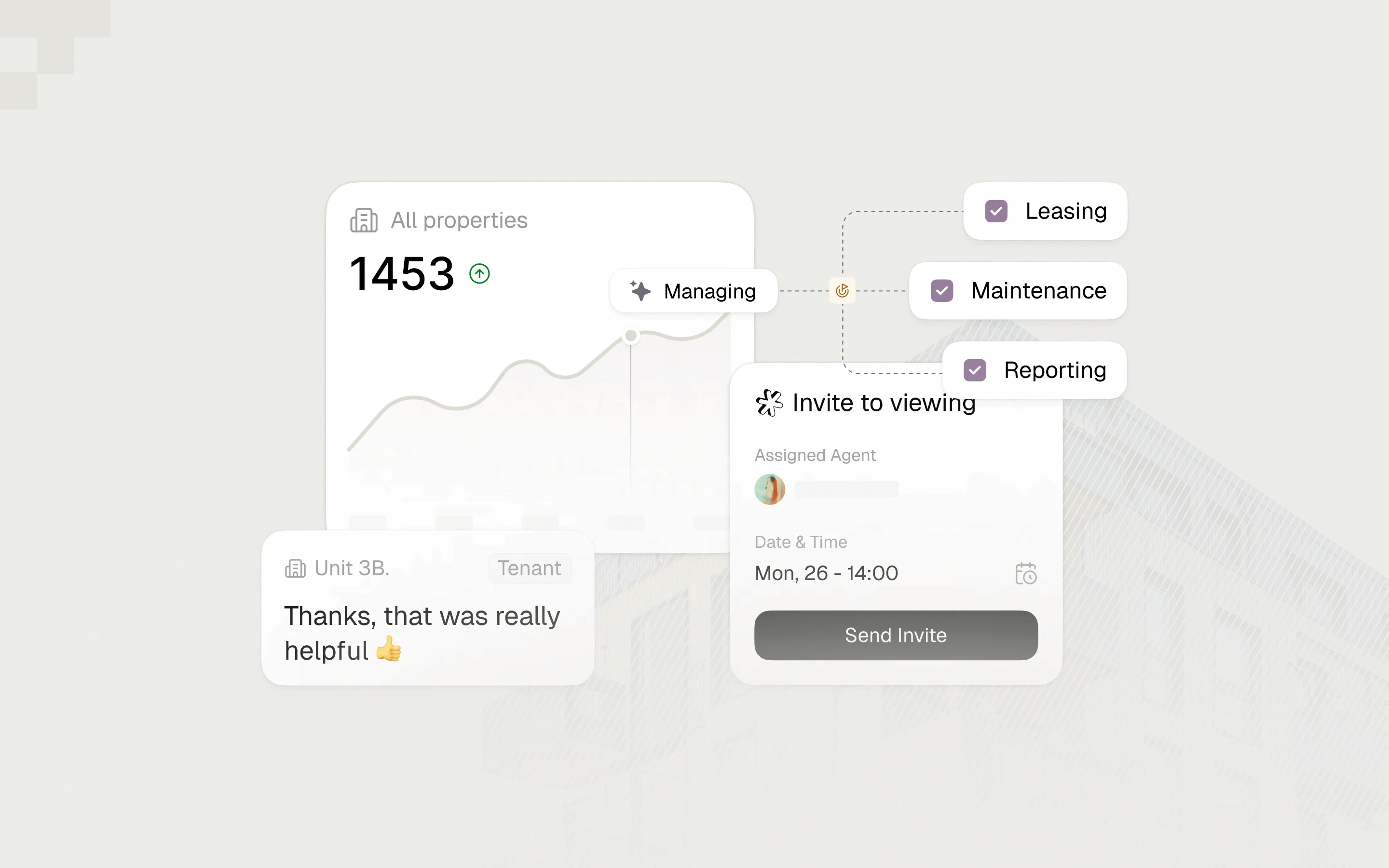
Leasing automation works by connecting the channels where prospects ask questions with the systems where property teams run the operation. A message arrives, the system reads the enquiry, identifies the intent, checks the right data, asks the next question and takes the next action.
In many teams, that journey is spread across a portal inbox, a shared email account, WhatsApp, a CRM, a calendar, a referencing provider and the PMS. Each system has a role, but the work between them still depends on a human remembering what needs to happen next.
That is why automation for property management needs to be built around workflow rather than conversation alone. A fast reply helps, but the real value comes when the workflow keeps moving after the first message.
Step | What happens | Why it matters |
|---|---|---|
Capture every enquiry | Leads from portals, WhatsApp, email, voice, SMS, web chat and forms are brought into one process. | No lead waits in an unchecked inbox. |
Qualify the prospect | The system asks move in, household, affordability, pet and preference questions. | The team spends less time on unsuitable enquiries. |
Check live availability | The system reads current unit data before offering a next step. | Prospects are not offered homes that are already gone. |
Book the viewing | Real slots are offered, confirmed and logged. | The calendar moves without manual back and forth. |
Follow up | No replies, no shows and missing steps are nudged through the right channel. | Warm leads are not lost because someone forgot to chase. |
Progress the application | Referencing, documents and move in details are chased and tracked. | The middle of the funnel keeps moving. |
Write back | Activity, records and progress are updated in the PMS. | The source of truth stays clean. |
The first job is to capture every enquiry the moment it arrives. For operators managing hundreds or thousands of homes, this protects the top of the funnel. A serious applicant who asks about a home in the evening should not have to wait until the next morning for a useful response. By then, they may already have booked somewhere else.
The second job is qualification. The system asks the practical questions a lettings agent would normally ask. When are you looking to move? How many people will live in the home? Do you meet the affordability criteria? Do you have pets? Are you enquiring for yourself or someone else. The answers are checked against the rules you control and the live availability in the PMS.
The third job is viewing booking. This is where manual processes often lose momentum. A prospect asks for a slot, the team replies with a time, the time does not work, another message is sent, the team is now in back to back viewings and the prospect moves on. Leasing automation removes that back and forth by offering real slots and confirming the appointment while intent is high.
The fourth job is application screening. After the viewing, the system can send the next step in the application process and collect a deeper understanding of the applicant. This can include household details, income information, employment status, guarantor details, documents and any asset specific questions the operator needs.
The fifth job is follow up. Most applicants do not move through the funnel in a perfect line. They compare homes, speak to a partner, check finances, wait for a parent or lose the thread during a busy day. Leasing automation can send a polite reminder after a missed reply, nudge someone before a viewing, follow up after a no show and re engage an applicant who started the process but did not finish.
The sixth job is document chasing and referencing. This is where the middle of the funnel slows down. One person needs to upload an ID. Another needs proof of income. A guarantor has not responded. A student needs a parent involved. A corporate applicant needs finance copied in. A strong digital leasing agent might handle the conversation, but an operating layer handles the process and keeps the team informed.
The final job is handover. The lead to lease journey does not end when someone agrees to take the home. Move in instructions, deposit details, key collection, building information, welcome packs and compliance documents all need to reach the right person at the right time. When leasing automation keeps the record clean, resident operations begin with context instead of confusion.
Automated Leasing Compared To The Old Way
Traditional leasing works when enquiry volume is low and the team has enough time to manage every step by hand. That changes when a new building launches, a portfolio expands, the PBSA season begins or a campaign starts bringing in more demand.
More enquiries arrive, but the process still depends on the same people, the same inboxes and the same manual updates.
The old way needs someone free at their desk. Automated leasing keeps the journey moving even when the team is busy.
Area | Traditional leasing | Automated leasing |
|---|---|---|
Working hours | Mostly office hours | Always on across evenings, weekends and peak periods |
Enquiry capture | Depends on people checking each channel | Captures enquiries as they arrive |
Qualification | Manual questions and notes | Questions are asked consistently and checked against criteria |
Viewing booking | Manual back and forth | Real slots are offered and booked automatically |
Follow up | Depends on someone remembering to chase | Runs based on the stage and channel |
PMS updates | Often entered later by the team | Written back as the journey progresses |
Scale | More volume usually means more headcount | More volume can be absorbed by the same workflow |
Human role | Admin heavy | Focused on judgement, service and exceptions |
The real contrast is not technology against people. It is capacity.
Traditional leasing makes the team the bottleneck because every action waits for a person. Leasing automation lets the repetitive work move while the team handles judgement, relationships and exceptions. That matters because the best property teams should not spend their day copying details between systems or chasing the same missing form for the third time.
This changes the economics of a portfolio. If homes are filled faster, void periods shrink. If the same team can manage more enquiries, headcount does not rise with every portfolio move. If records update automatically, reporting becomes clearer.
Automated leasing does not make the team less important. It gives the team a better operating model.
How Leasing Automation Works With The System You Already Use
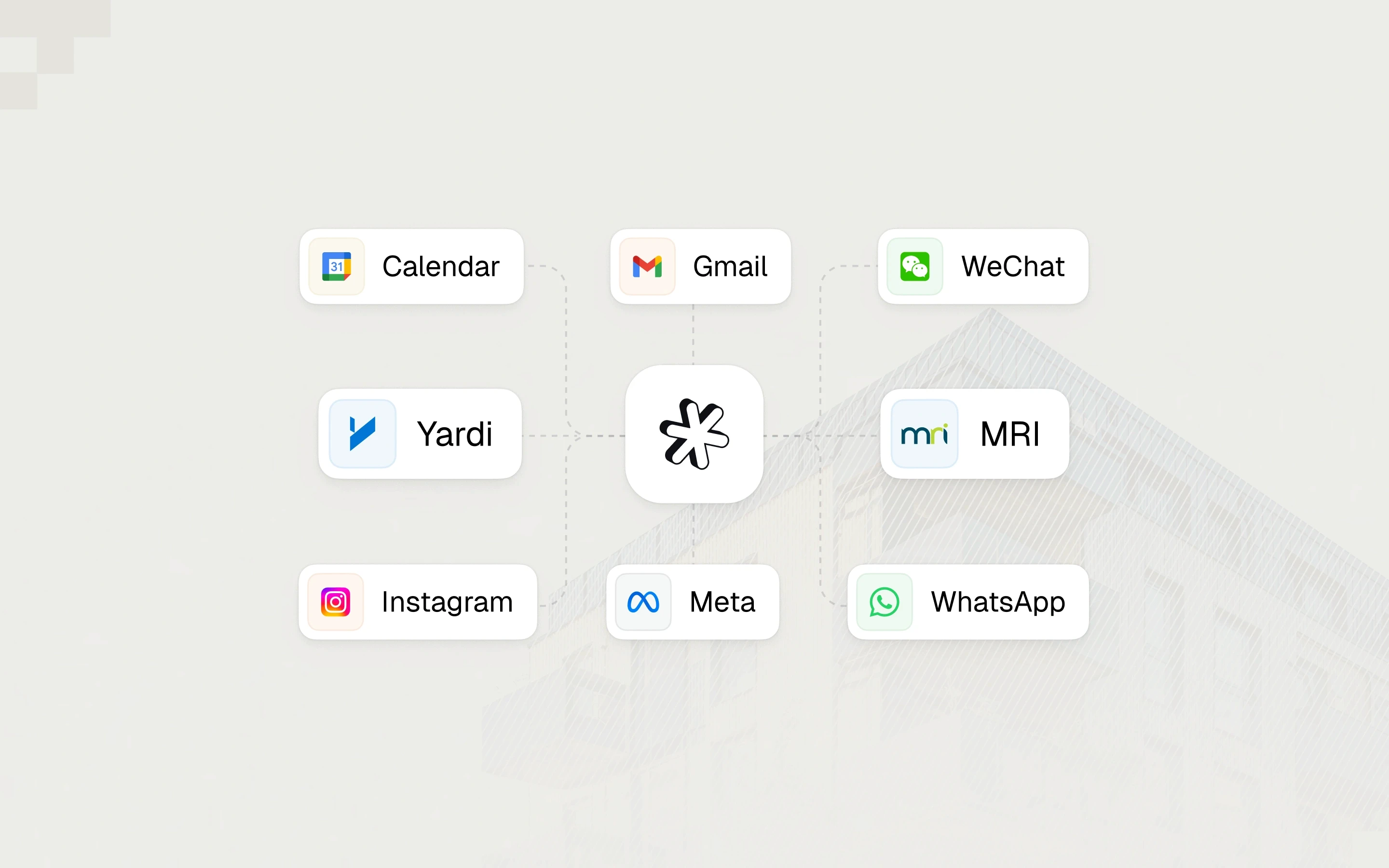
Most institutional property teams already have a PMS. They may also have a CRM, portal feeds, shared inboxes, calendars, WhatsApp, email, voice tools, reporting dashboards and referencing partners.
Your PMS holds the record, but it does not always answer the WhatsApp enquiry at night. It does not always chase the missing guarantor form. It does not always rebook a missed viewing. It does not always tell the lettings lead which applicants dropped off yesterday.
That is why PMS integration matters.
Lette sits on top of the PMS as an AI operating layer. Your PMS remains the system of record for units, tenancies, availability, financials and resident data. Lette becomes the system of action that runs the workflow across the channels and connected tools your team already uses.
This model avoids the usual pain of a replacement project. Finance keeps the system it trusts. Operations keep the source of truth. The lettings team gets the work moved for them.
Strong PMS integration should mean that live availability is checked before a viewing is offered, prospect details are captured once, guest cards are updated, viewing activity is logged and application progress is visible. Without PMS integration, a tool may answer quickly but still require admin later. With PMS integration, the source of truth stays clean while the repetitive work happens around it.
The Benefits Of Leasing Automation
Leasing automation is valuable because it improves the operating model, not because it adds another digital feature to the stack. The benefits show up in the places property leaders care about most.
Faster Response
A prospect who gets a useful answer quickly is more likely to stay engaged than one who waits until the next day. The word useful matters. A generic reply is not enough.
The system needs to answer the question, check availability, qualify the person and offer the next step while the prospect is still interested. That is why AI for property management has to be connected to real portfolio data.
Fewer Void Days
Every empty day has a cost. Across one home, that cost is visible. Across a portfolio, it compounds.
Leasing automation helps reduce that pressure by speeding up the journey from first enquiry to booked viewing, then from viewing to application, then from application to move in.
Less Manual Admin
Most lettings teams do not need more dashboards. They need less repetitive work. Replying to similar enquiries, asking the same questions, checking availability, offering viewing times, sending confirmations, following up after silence, chasing documents and updating records are all important tasks.
They are also too repeatable to depend on manual effort every time.
Scalability
If the portfolio doubles, does the team need to double as well. In a manual model, the answer is often yes.
More units create more enquiries, more viewings, more paperwork, more follow up and more reporting. Leasing automation changes that equation because the same workflow can absorb more volume.
Visibility
Manual leasing processes make reporting harder because enquiries, viewings, documents and notes sit across different tools.
When the workflow is handled consistently, operators can see which channels generate qualified leads, how quickly enquiries are answered, where applicants drop off and which buildings are moving fastest.
Other Benefits
For UK and Ireland operators, the regional context matters too. UK teams think in lettings, void periods, compliance records, resident experience and portfolio efficiency. Ireland teams often face intense rental demand, documentation pressure, RTB-related processes and a need to keep communication clean across fast moving enquiries.
PBSA teams deal with September intake, international students, parents, guarantors, multiple languages and time zones. BTR teams need fast response without weakening a premium resident experience.
That is why automation for property management should never flatten every operator into the same workflow. It should adapt to sector, region, PMS, team structure and escalation rules.
How To Choose The Right Leasing Automation Software
Not every platform that mentions AI or automated leasing is right for an institutional property team. Some tools are simple chat widgets.
Some are built for small letting agencies. Some help with communication but do not write back to the PMS. Some look useful in one channel but fail when the real operation stretches across portals, WhatsApp, email, voice and multiple systems.
The best way to choose leasing management software is to judge it by the work it completes.
A strong leasing management software platform should sit on top of your PMS, not replace it. It should read live availability, qualify prospects, book viewings, follow up, support referencing, update records and keep the team in control when a human decision is needed.
Criteria | What to ask | Why it matters |
|---|---|---|
PMS integration | Does the platform read from and write back to the PMS | Prevents double entry and keeps one source of truth |
Workflow depth | Does it only answer enquiries or complete the lead to lease workflow | Separates a communication tool from true lead to lease automation |
Channel coverage | Does it support WhatsApp, email, voice, SMS, web chat and portal leads | Matches how prospects actually communicate |
Document support | Can it chase missing documents, guarantors and referencing steps | Protects the middle of the funnel where applications slow down |
Human escalation | Does it pause and hand over complex cases with full context | Keeps judgement with the team where it belongs |
Scale | Can it handle more units, buildings and peak enquiry volume | Supports portfolio growth without proportional admin growth |
Security and trust | How is resident and applicant data handled | Institutional operators need safe data handling and clear controls |
Regional fit | Does it understand UK, Ireland and European operating realities | Avoids forcing local teams into a generic workflow |
The most revealing question is simple. Does the platform only answer the enquiry, or does it complete the workflow and write the result back to the PMS.
That question usually separates a communication tool from a true operating layer. If it only replies, it is not enough. If it acts, writes back and keeps the source of truth clean, it is much closer to what institutional operators need.
Be careful with any tool that cannot explain escalation. Good AI for property management should hand sensitive questions, unusual applicant situations, pricing decisions, complaints and edge cases to a person with full context.
Be equally careful with any tool that creates another dashboard without improving the PMS record. If your team still has to copy details later, the work has not disappeared. It has moved.
The right leasing management software should make the stack feel calmer, not busier.
Common Questions People Ask
What is leasing automation?
Leasing automation is software that runs the lead to lease process for property teams. It captures enquiries, qualifies prospects, books viewings, follows up, supports referencing and updates the PMS. For large operators, leasing automation helps reduce manual admin, improve response times and fill homes faster.
Is leasing automation just a chatbot?
No. A chatbot usually answers simple questions. Leasing automation runs the workflow. It can read live PMS data, qualify a prospect, book a viewing, chase missing documents and update the record. The difference is action. The system does not just talk. It moves the process forward.
What is automated leasing?
Automated leasing is the use of software to handle repeatable leasing tasks such as enquiry capture, qualification, viewing booking, reminders, follow up, document chasing and record updates. Automated leasing helps the human team focus on judgement, exceptions and relationships rather than repetitive admin.
What is lead to lease automation?
Lead to lease automation is the process of automating the full journey from first enquiry to signed agreement. It covers lead capture, qualification, viewing booking, follow up, referencing, move in preparation and PMS updates. Lead to lease automation is most useful when enquiry volume is too high for manual handling.
Is a digital leasing agent the same as Lette?
A digital leasing agent is often used to describe software that answers enquiries or helps prospects move through the rental journey. Lette is one of the top rated digital leasing agent and it acts as an AI operating layer for the PMS. It does the work a digital leasing agent is expected to do, but it is built as a platform rather than a personified assistant.
Does leasing automation replace our PMS?
No. The automation sits on top of your PMS. Your PMS remains the system of record for units, tenancies, financials and operational data. Leasing automation acts as the system of action that reads from it, runs the workflow and writes updates back.
Why does PMS integration matter?
PMS integration matters because leasing automation needs live data to act safely. Without PMS integration, a tool may answer quickly but still quote outdated availability or create double entry. With PMS integration, the platform can read live records, take action and write updates back to the source of truth.
Can it reply in the evening and on WhatsApp?
Yes. Leasing automation should work outside office hours and across channels such as WhatsApp, email, voice, SMS, web chat and portal leads. This is especially important because many serious rental enquiries arrive when the lettings team is not at a desk.
What happens when a prospect goes quiet or misses a viewing?
The system can send polite follow ups across the right channel. If someone drops off after an enquiry, misses a viewing or forgets to submit a document, the automation can re-engage them and offer the next step. The lead no longer depends on someone remembering to chase manually.
Can automation for property management support more than leasing?
Yes. Automation for property management can support leasing, resident operations, maintenance, renewals, arrears, compliance workflows and reporting. Leasing is often the first place operators start because the commercial impact of faster lead response and shorter void periods is easy to see.
How is AI for property management different from normal automation?
AI for property management can understand intent, route workflows, handle natural language and support more flexible conversations than rigid rule based automation. The important point is that AI for property management should still be grounded in live PMS data and should escalate to humans when judgement is needed.
Can leasing automation cope when we grow?
Yes. That is one of the main reasons large operators use leasing automation. More units create more enquiries, more viewings and more admin. Leasing automation helps the same team absorb more volume by handling capture, qualification, booking, follow up and record updates.
What’s Next?
Leasing automation is not about replacing the people who make property operations work. It is about removing the repeatable work that stops those people from moving quickly.
When every enquiry needs a manual reply, every viewing needs a manual booking, every document needs a manual chase and every update needs manual entry, the team becomes the bottleneck. Not because the team is weak. Because the process was built for a quieter market.
Modern property teams need a different model. The PMS should remain the system of record. The automation layer should run the repeatable work around it. The human team should step in where judgement, empathy and commercial context matter most.
That is how operators respond faster, reduce void periods, protect the resident experience and scale without turning every new unit into another admin hire.
Lette is built for that model. It sits on top of your existing PMS, runs the lead to lease journey across the channels your prospects already use and writes the work back so your records stay clean.
To see how Lette works with your own property management systems, book a chat.
Rental enquiries do not wait for office hours anymore. They come in after dinner, during viewings, across weekends and through WhatsApp, portals, email, voice and web chat.
A prospect wants to view tomorrow, a parent is asking about a student tenancy from another time zone, and the team is already busy updating the PMS, chasing documents and trying to keep void periods under control.
That is where leasing automation helps.
In simple terms, leasing automation is software that runs the lead to lease journey for property teams. It captures enquiries, qualifies prospects, books viewings, follows up, chases documents and updates your property management system without someone manually pushing every step along.
The best leasing automation does not replace your PMS. It sits on top of it as an AI operating layer.
Your PMS remains the system of record, while Lette becomes the layer that gets the work done. This guide is for property teams that want to move faster, reduce manual admin and stop good leads from going cold.
So, let’s get started!
What Is Leasing Automation?
Leasing automation is an AI workflow layer that manages the repeatable property management work between first enquiry and move in. It captures the lead, checks live availability, asks qualification questions, offers a viewing slot, sends reminders, follows up when the applicant goes quiet, supports referencing and updates the PMS record.
That makes leasing automation different from a basic website chatbot. A chatbot can answer a simple question or tell a prospect that someone will respond soon. Leasing automation can respond now, check the right unit, book the viewing and keep the record current.
This is why lead to lease automation matters for institutional property teams.
The real pain is not one missed email. It is the slow movement from channel to channel, from enquiry to calendar, from calendar to PMS, from PMS to referencing and from referencing to move in.
When every step needs manual handling, the funnel becomes fragile. Leasing automation makes the journey more consistent.
Here’s a simpler guide for you to understand the difference between a regular chatbot and a robust AI leasing agent like Lette.
Area | Basic chatbot | Leasing automation |
|---|---|---|
Main job | Answers simple questions | Runs the lead to lease workflow |
Data source | Static scripts or Knowledge base | PMS data, knowledge base, & smart data connections |
Action level | Routes or deflects the enquiry | Captures, qualifies, books, follows up and writes back |
Channel depth | Often web chat only | WhatsApp, email, voice, SMS, portals and web chat |
Team impact | Reduces a few repeated questions | Removes manual work across the leasing funnel |
Best fit | Simple website enquiry support | Institutional property operations |
For BTR, PBSA, co living, SFR and senior living rental teams, the value is consistent workflow across buildings, regions and brands while the PMS remains the trusted record.
How Does Leasing Automation Work?
Leasing automation works by connecting the channels where prospects ask questions with the systems where property teams run the operation. A message arrives, the system reads the enquiry, identifies the intent, checks the right data, asks the next question and takes the next action.
In many teams, that journey is spread across a portal inbox, a shared email account, WhatsApp, a CRM, a calendar, a referencing provider and the PMS. Each system has a role, but the work between them still depends on a human remembering what needs to happen next.
That is why automation for property management needs to be built around workflow rather than conversation alone. A fast reply helps, but the real value comes when the workflow keeps moving after the first message.
Step | What happens | Why it matters |
|---|---|---|
Capture every enquiry | Leads from portals, WhatsApp, email, voice, SMS, web chat and forms are brought into one process. | No lead waits in an unchecked inbox. |
Qualify the prospect | The system asks move in, household, affordability, pet and preference questions. | The team spends less time on unsuitable enquiries. |
Check live availability | The system reads current unit data before offering a next step. | Prospects are not offered homes that are already gone. |
Book the viewing | Real slots are offered, confirmed and logged. | The calendar moves without manual back and forth. |
Follow up | No replies, no shows and missing steps are nudged through the right channel. | Warm leads are not lost because someone forgot to chase. |
Progress the application | Referencing, documents and move in details are chased and tracked. | The middle of the funnel keeps moving. |
Write back | Activity, records and progress are updated in the PMS. | The source of truth stays clean. |
The first job is to capture every enquiry the moment it arrives. For operators managing hundreds or thousands of homes, this protects the top of the funnel. A serious applicant who asks about a home in the evening should not have to wait until the next morning for a useful response. By then, they may already have booked somewhere else.
The second job is qualification. The system asks the practical questions a lettings agent would normally ask. When are you looking to move? How many people will live in the home? Do you meet the affordability criteria? Do you have pets? Are you enquiring for yourself or someone else. The answers are checked against the rules you control and the live availability in the PMS.
The third job is viewing booking. This is where manual processes often lose momentum. A prospect asks for a slot, the team replies with a time, the time does not work, another message is sent, the team is now in back to back viewings and the prospect moves on. Leasing automation removes that back and forth by offering real slots and confirming the appointment while intent is high.
The fourth job is application screening. After the viewing, the system can send the next step in the application process and collect a deeper understanding of the applicant. This can include household details, income information, employment status, guarantor details, documents and any asset specific questions the operator needs.
The fifth job is follow up. Most applicants do not move through the funnel in a perfect line. They compare homes, speak to a partner, check finances, wait for a parent or lose the thread during a busy day. Leasing automation can send a polite reminder after a missed reply, nudge someone before a viewing, follow up after a no show and re engage an applicant who started the process but did not finish.
The sixth job is document chasing and referencing. This is where the middle of the funnel slows down. One person needs to upload an ID. Another needs proof of income. A guarantor has not responded. A student needs a parent involved. A corporate applicant needs finance copied in. A strong digital leasing agent might handle the conversation, but an operating layer handles the process and keeps the team informed.
The final job is handover. The lead to lease journey does not end when someone agrees to take the home. Move in instructions, deposit details, key collection, building information, welcome packs and compliance documents all need to reach the right person at the right time. When leasing automation keeps the record clean, resident operations begin with context instead of confusion.
Automated Leasing Compared To The Old Way
Traditional leasing works when enquiry volume is low and the team has enough time to manage every step by hand. That changes when a new building launches, a portfolio expands, the PBSA season begins or a campaign starts bringing in more demand.
More enquiries arrive, but the process still depends on the same people, the same inboxes and the same manual updates.
The old way needs someone free at their desk. Automated leasing keeps the journey moving even when the team is busy.
Area | Traditional leasing | Automated leasing |
|---|---|---|
Working hours | Mostly office hours | Always on across evenings, weekends and peak periods |
Enquiry capture | Depends on people checking each channel | Captures enquiries as they arrive |
Qualification | Manual questions and notes | Questions are asked consistently and checked against criteria |
Viewing booking | Manual back and forth | Real slots are offered and booked automatically |
Follow up | Depends on someone remembering to chase | Runs based on the stage and channel |
PMS updates | Often entered later by the team | Written back as the journey progresses |
Scale | More volume usually means more headcount | More volume can be absorbed by the same workflow |
Human role | Admin heavy | Focused on judgement, service and exceptions |
The real contrast is not technology against people. It is capacity.
Traditional leasing makes the team the bottleneck because every action waits for a person. Leasing automation lets the repetitive work move while the team handles judgement, relationships and exceptions. That matters because the best property teams should not spend their day copying details between systems or chasing the same missing form for the third time.
This changes the economics of a portfolio. If homes are filled faster, void periods shrink. If the same team can manage more enquiries, headcount does not rise with every portfolio move. If records update automatically, reporting becomes clearer.
Automated leasing does not make the team less important. It gives the team a better operating model.
How Leasing Automation Works With The System You Already Use
Most institutional property teams already have a PMS. They may also have a CRM, portal feeds, shared inboxes, calendars, WhatsApp, email, voice tools, reporting dashboards and referencing partners.
Your PMS holds the record, but it does not always answer the WhatsApp enquiry at night. It does not always chase the missing guarantor form. It does not always rebook a missed viewing. It does not always tell the lettings lead which applicants dropped off yesterday.
That is why PMS integration matters.
Lette sits on top of the PMS as an AI operating layer. Your PMS remains the system of record for units, tenancies, availability, financials and resident data. Lette becomes the system of action that runs the workflow across the channels and connected tools your team already uses.
This model avoids the usual pain of a replacement project. Finance keeps the system it trusts. Operations keep the source of truth. The lettings team gets the work moved for them.
Strong PMS integration should mean that live availability is checked before a viewing is offered, prospect details are captured once, guest cards are updated, viewing activity is logged and application progress is visible. Without PMS integration, a tool may answer quickly but still require admin later. With PMS integration, the source of truth stays clean while the repetitive work happens around it.
The Benefits Of Leasing Automation
Leasing automation is valuable because it improves the operating model, not because it adds another digital feature to the stack. The benefits show up in the places property leaders care about most.
Faster Response
A prospect who gets a useful answer quickly is more likely to stay engaged than one who waits until the next day. The word useful matters. A generic reply is not enough.
The system needs to answer the question, check availability, qualify the person and offer the next step while the prospect is still interested. That is why AI for property management has to be connected to real portfolio data.
Fewer Void Days
Every empty day has a cost. Across one home, that cost is visible. Across a portfolio, it compounds.
Leasing automation helps reduce that pressure by speeding up the journey from first enquiry to booked viewing, then from viewing to application, then from application to move in.
Less Manual Admin
Most lettings teams do not need more dashboards. They need less repetitive work. Replying to similar enquiries, asking the same questions, checking availability, offering viewing times, sending confirmations, following up after silence, chasing documents and updating records are all important tasks.
They are also too repeatable to depend on manual effort every time.
Scalability
If the portfolio doubles, does the team need to double as well. In a manual model, the answer is often yes.
More units create more enquiries, more viewings, more paperwork, more follow up and more reporting. Leasing automation changes that equation because the same workflow can absorb more volume.
Visibility
Manual leasing processes make reporting harder because enquiries, viewings, documents and notes sit across different tools.
When the workflow is handled consistently, operators can see which channels generate qualified leads, how quickly enquiries are answered, where applicants drop off and which buildings are moving fastest.
Other Benefits
For UK and Ireland operators, the regional context matters too. UK teams think in lettings, void periods, compliance records, resident experience and portfolio efficiency. Ireland teams often face intense rental demand, documentation pressure, RTB-related processes and a need to keep communication clean across fast moving enquiries.
PBSA teams deal with September intake, international students, parents, guarantors, multiple languages and time zones. BTR teams need fast response without weakening a premium resident experience.
That is why automation for property management should never flatten every operator into the same workflow. It should adapt to sector, region, PMS, team structure and escalation rules.
How To Choose The Right Leasing Automation Software
Not every platform that mentions AI or automated leasing is right for an institutional property team. Some tools are simple chat widgets.
Some are built for small letting agencies. Some help with communication but do not write back to the PMS. Some look useful in one channel but fail when the real operation stretches across portals, WhatsApp, email, voice and multiple systems.
The best way to choose leasing management software is to judge it by the work it completes.
A strong leasing management software platform should sit on top of your PMS, not replace it. It should read live availability, qualify prospects, book viewings, follow up, support referencing, update records and keep the team in control when a human decision is needed.
Criteria | What to ask | Why it matters |
|---|---|---|
PMS integration | Does the platform read from and write back to the PMS | Prevents double entry and keeps one source of truth |
Workflow depth | Does it only answer enquiries or complete the lead to lease workflow | Separates a communication tool from true lead to lease automation |
Channel coverage | Does it support WhatsApp, email, voice, SMS, web chat and portal leads | Matches how prospects actually communicate |
Document support | Can it chase missing documents, guarantors and referencing steps | Protects the middle of the funnel where applications slow down |
Human escalation | Does it pause and hand over complex cases with full context | Keeps judgement with the team where it belongs |
Scale | Can it handle more units, buildings and peak enquiry volume | Supports portfolio growth without proportional admin growth |
Security and trust | How is resident and applicant data handled | Institutional operators need safe data handling and clear controls |
Regional fit | Does it understand UK, Ireland and European operating realities | Avoids forcing local teams into a generic workflow |
The most revealing question is simple. Does the platform only answer the enquiry, or does it complete the workflow and write the result back to the PMS.
That question usually separates a communication tool from a true operating layer. If it only replies, it is not enough. If it acts, writes back and keeps the source of truth clean, it is much closer to what institutional operators need.
Be careful with any tool that cannot explain escalation. Good AI for property management should hand sensitive questions, unusual applicant situations, pricing decisions, complaints and edge cases to a person with full context.
Be equally careful with any tool that creates another dashboard without improving the PMS record. If your team still has to copy details later, the work has not disappeared. It has moved.
The right leasing management software should make the stack feel calmer, not busier.
Common Questions People Ask
What is leasing automation?
Leasing automation is software that runs the lead to lease process for property teams. It captures enquiries, qualifies prospects, books viewings, follows up, supports referencing and updates the PMS. For large operators, leasing automation helps reduce manual admin, improve response times and fill homes faster.
Is leasing automation just a chatbot?
No. A chatbot usually answers simple questions. Leasing automation runs the workflow. It can read live PMS data, qualify a prospect, book a viewing, chase missing documents and update the record. The difference is action. The system does not just talk. It moves the process forward.
What is automated leasing?
Automated leasing is the use of software to handle repeatable leasing tasks such as enquiry capture, qualification, viewing booking, reminders, follow up, document chasing and record updates. Automated leasing helps the human team focus on judgement, exceptions and relationships rather than repetitive admin.
What is lead to lease automation?
Lead to lease automation is the process of automating the full journey from first enquiry to signed agreement. It covers lead capture, qualification, viewing booking, follow up, referencing, move in preparation and PMS updates. Lead to lease automation is most useful when enquiry volume is too high for manual handling.
Is a digital leasing agent the same as Lette?
A digital leasing agent is often used to describe software that answers enquiries or helps prospects move through the rental journey. Lette is one of the top rated digital leasing agent and it acts as an AI operating layer for the PMS. It does the work a digital leasing agent is expected to do, but it is built as a platform rather than a personified assistant.
Does leasing automation replace our PMS?
No. The automation sits on top of your PMS. Your PMS remains the system of record for units, tenancies, financials and operational data. Leasing automation acts as the system of action that reads from it, runs the workflow and writes updates back.
Why does PMS integration matter?
PMS integration matters because leasing automation needs live data to act safely. Without PMS integration, a tool may answer quickly but still quote outdated availability or create double entry. With PMS integration, the platform can read live records, take action and write updates back to the source of truth.
Can it reply in the evening and on WhatsApp?
Yes. Leasing automation should work outside office hours and across channels such as WhatsApp, email, voice, SMS, web chat and portal leads. This is especially important because many serious rental enquiries arrive when the lettings team is not at a desk.
What happens when a prospect goes quiet or misses a viewing?
The system can send polite follow ups across the right channel. If someone drops off after an enquiry, misses a viewing or forgets to submit a document, the automation can re-engage them and offer the next step. The lead no longer depends on someone remembering to chase manually.
Can automation for property management support more than leasing?
Yes. Automation for property management can support leasing, resident operations, maintenance, renewals, arrears, compliance workflows and reporting. Leasing is often the first place operators start because the commercial impact of faster lead response and shorter void periods is easy to see.
How is AI for property management different from normal automation?
AI for property management can understand intent, route workflows, handle natural language and support more flexible conversations than rigid rule based automation. The important point is that AI for property management should still be grounded in live PMS data and should escalate to humans when judgement is needed.
Can leasing automation cope when we grow?
Yes. That is one of the main reasons large operators use leasing automation. More units create more enquiries, more viewings and more admin. Leasing automation helps the same team absorb more volume by handling capture, qualification, booking, follow up and record updates.
What’s Next?
Leasing automation is not about replacing the people who make property operations work. It is about removing the repeatable work that stops those people from moving quickly.
When every enquiry needs a manual reply, every viewing needs a manual booking, every document needs a manual chase and every update needs manual entry, the team becomes the bottleneck. Not because the team is weak. Because the process was built for a quieter market.
Modern property teams need a different model. The PMS should remain the system of record. The automation layer should run the repeatable work around it. The human team should step in where judgement, empathy and commercial context matter most.
That is how operators respond faster, reduce void periods, protect the resident experience and scale without turning every new unit into another admin hire.
Lette is built for that model. It sits on top of your existing PMS, runs the lead to lease journey across the channels your prospects already use and writes the work back so your records stay clean.
To see how Lette works with your own property management systems, book a chat.

Ready to simplify your property operations?
See how Lette helps leasing and residential teams automate daily work, respond faster, and scale with confidence.

167-169 Great Portland Street 5th Floor London W1W 5PF
33 Fitzwilliam Place, Dublin 2 Carroll Estates Mews DUBLIN 2 D02 A5W0 IRELAND
info@lette.ai

Ready to simplify your property operations?
See how Lette helps leasing and residential teams automate daily work, respond faster, and scale with confidence.
167-169 Great Portland Street 5th Floor London W1W 5PF
33 Fitzwilliam Place, Dublin 2 Carroll Estates Mews DUBLIN 2 D02 A5W0 IRELAND
info@lette.ai
Ready to simplify your property operations?
See how Lette helps leasing and residential teams automate daily work, respond faster, and scale with confidence.
167-169 Great Portland Street 5th Floor London W1W 5PF
33 Fitzwilliam Place, Dublin 2 Carroll Estates Mews DUBLIN 2 D02 A5W0 IRELAND
info@lette.ai
Ready to simplify your property operations?
See how Lette helps leasing and residential teams automate daily work, respond faster, and scale with confidence.
167-169 Great Portland Street 5th Floor London W1W 5PF
33 Fitzwilliam Place, Dublin 2 Carroll Estates Mews DUBLIN 2 D02 A5W0 IRELAND
info@lette.ai