
Blog
Blog
How Tenant Management Software Runs Resident Operations at Scale
How Tenant Management Software Runs Resident Operations at Scale

Property teams already keep every tenant record. The problem is finding time to do the daily work that starts after move in.
That work is renewals, rent reviews, late rent, lease changes, move ins, move outs, notices and resident questions. None of it is glamorous. All of it matters when you manage hundreds or thousands of homes.
In this guide, we will look into what tenant management software actually does across resident operations for large landlords in the UK and Ireland, and how it helps teams run the work instead of only storing it.
In short, tenant management software helps property teams run the resident lifecycle after move in. It handles renewals, rent reviews, arrears, lease changes, move ins, move outs, compliance notices and resident communication.
The strongest systems do more than keep records - they trigger the next step, chase the resident, create the notice, update the PMS and escalate to a person when judgement is needed.
For institutional operators, the value of implementing a tenant management system is simple. It cuts down the boring work so that the same team can look after more homes without letting routine resident work pile up in inboxes and spreadsheets.
What is Tenant Management Software?
Tenant management software is software that helps property teams manage the work around people who already live in their homes.
Most property technology is built around finding new tenants. Listings, enquiries, viewing booking and applications all matter, but they end at move in. Tenant management starts after that.
Once someone is living in a home, the daily work changes. The team has to manage renewals, rent increases, late rent, lease changes, resident questions, documents, notices, people moving out and people moving in.
A basic tenant management system stores these records. A better one helps the team act on them.
The difference matters because resident operations are where scale becomes painful. One renewal is easy. A thousand renewals, each with different dates, rules, replies and exceptions, becomes a system problem.
That is why tenant management software is not only a database. At its best, it is an operating layer for the post move in lifecycle.
Understanding the Types of Tenant Management Software
There are two broad types of tenant management software that are available.
The first type keeps records. It stores tenancy dates, balances, documents, resident notes and communication history. This is useful, but it still leaves the work to the team.
The second type runs the work. It reads the record, takes the next action, writes down what happened and asks a person to step in when the case needs judgement.
For large landlords, the second type is where the value lives.
Job | Record keeping software | Workflow based tenant management software |
|---|---|---|
Renewal | Stores the end date | Starts the renewal early and chases the signature |
Rent review | Shows the current rent | Calculates the increase and prepares the notice |
Late rent | Shows the balance | Sends reminders and logs every contact |
Lease change | Stores the document | Starts the amendment and triggers the right checks |
Move out | Records the notice | Runs the handover and feeds the home into relet |
Resident message | Saves the thread | Understands the request and moves the workflow forward |
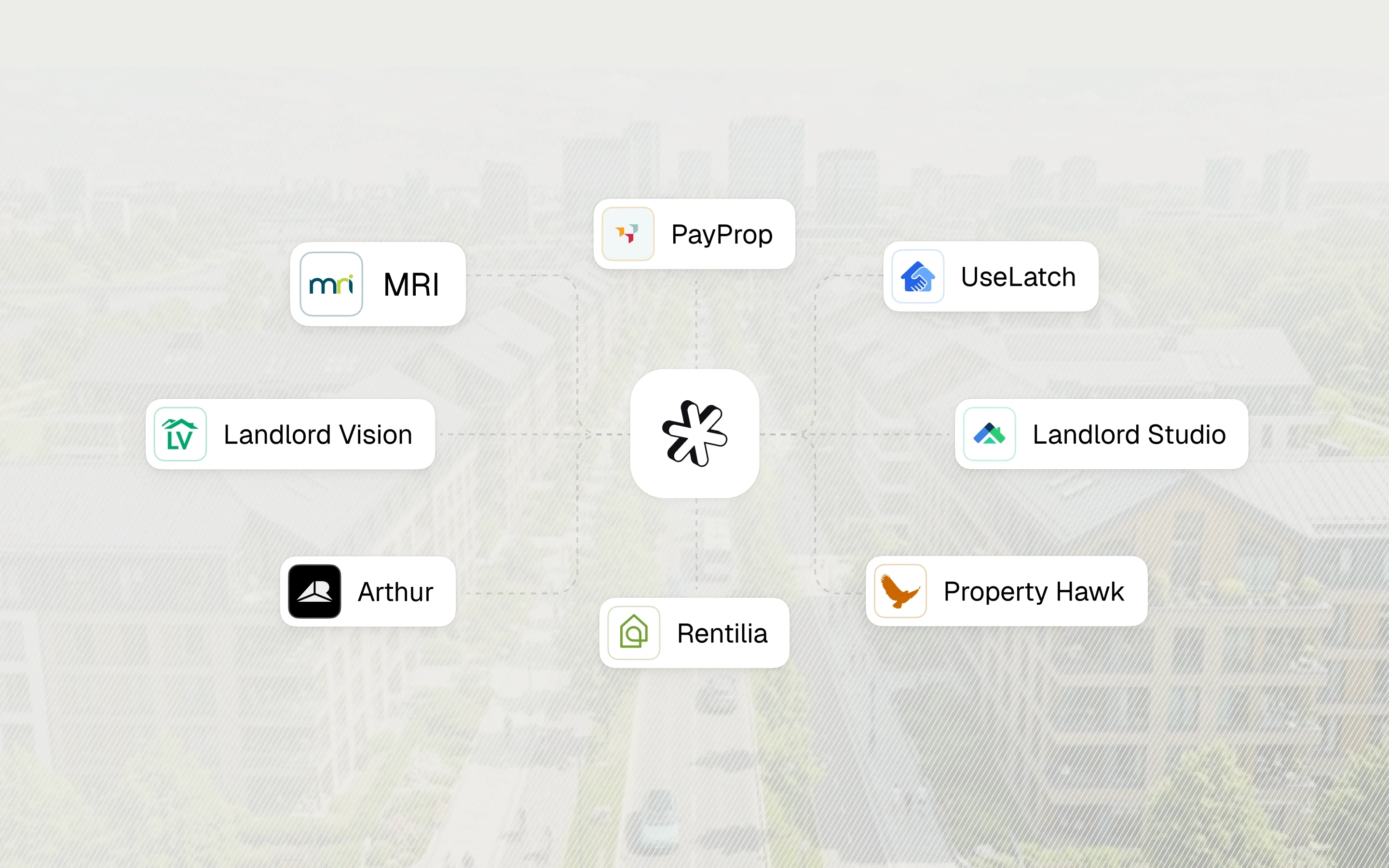
This does not mean replacing the PMS. The PMS remains the system of record. Tenant management software should sit on top of it, connect to the data already trusted by finance and operations, then write clean updates back.
That is the model behind Lette, which acts as the operating layer on top of the existing property stack rather than asking teams to rip out the systems they already use.
How Tenant Management Systems Help Property Management
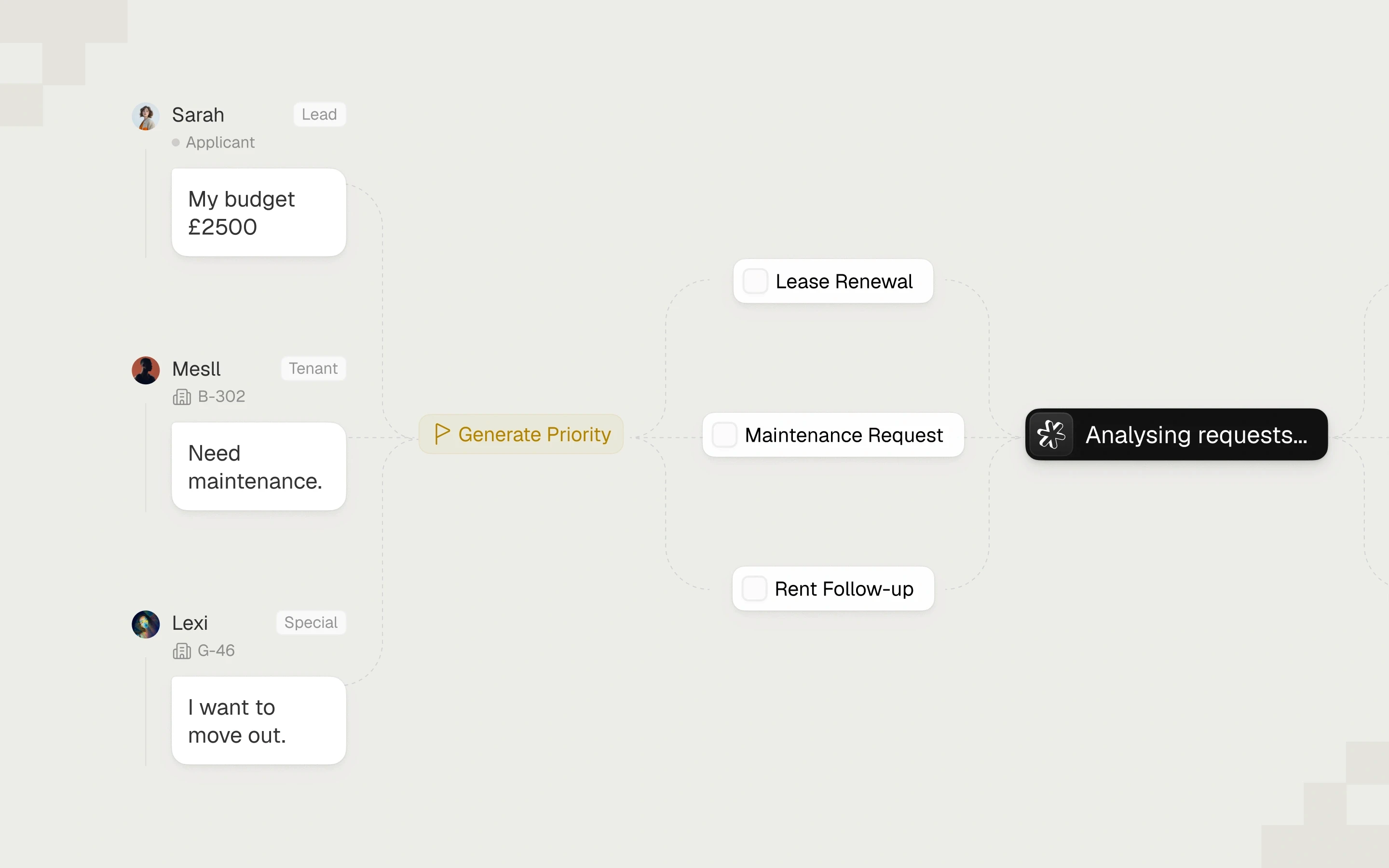
Tenant management systems help property management by removing the manual chasing around the most common resident workflows.
The team still owns the relationship and the final judgement, but the system keeps the process moving.
On Time Renewals
Renewals fail when they rely on someone noticing a date and remembering every follow up.
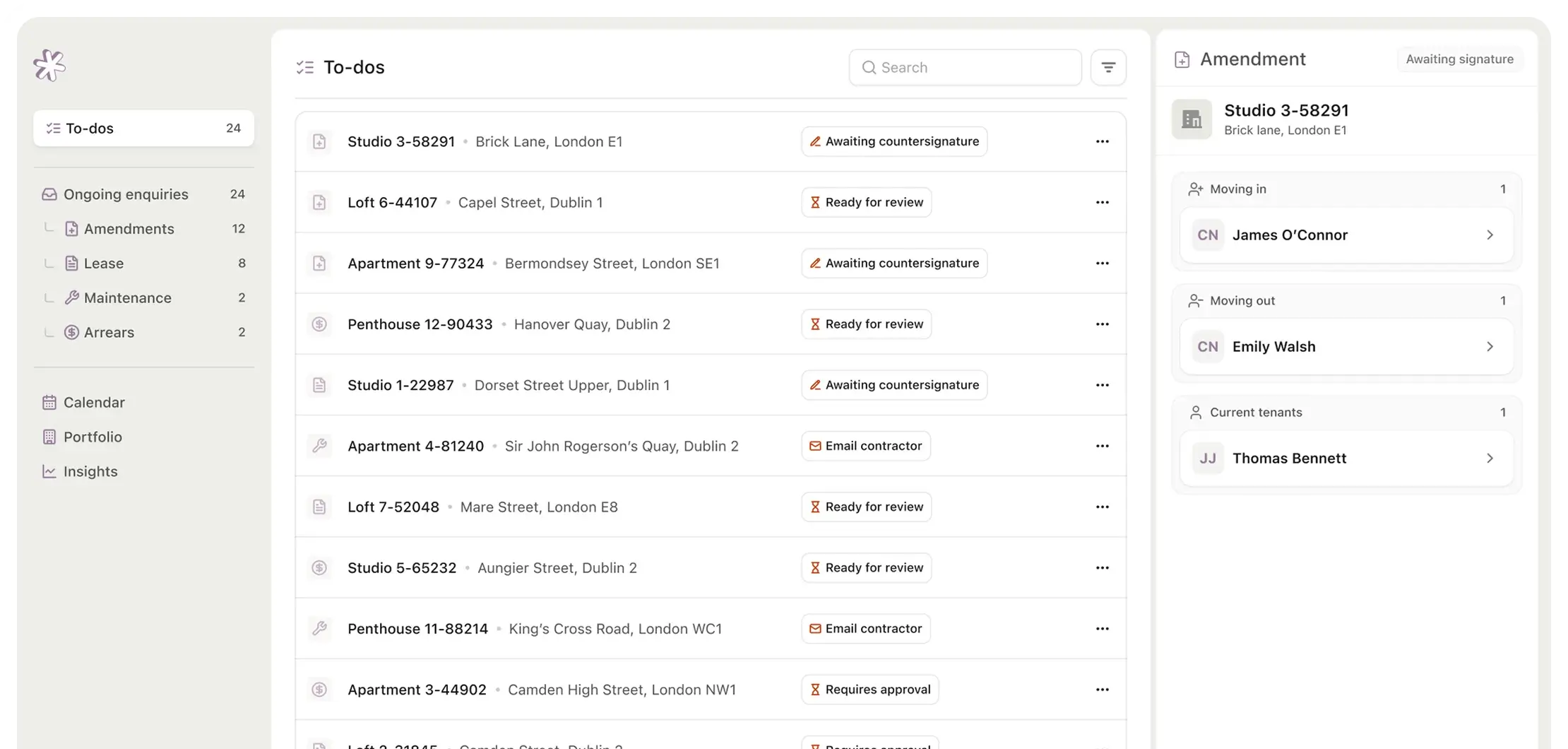
A strong tenant management system can start the renewal before expiry, send the offer, follow up when the resident goes quiet, collect the signature and update the PMS when the agreement is done.
The property manager only steps in when the resident wants to negotiate, asks for something unusual or raises a concern.
That changes the rhythm. Renewals stop being a spreadsheet chase and become a managed workflow.
Automated Rent Reviews
Rent reviews are not just admin. They are regulated actions that need the right figure, the right timing and the right record.
In England, the Renters’ Rights Act changed how landlords let private properties and include new rules around tenancy structure and rent.
In Ireland, RTB guidance says that a national rent control system applies to private tenancies and student specific accommodation. Rent can usually be increased once per year by 2% or CPI, whichever is lower.
Tenant management software can help by applying the approved rule, preparing the notice, sending it on the correct day and logging the evidence.
The point is not to remove oversight. The point is to stop routine compliance work depending on memory.
Changes To Lease Agreements
Lease changes are small until there are hundreds of them.
A housemate swap, pet request, guarantor update, name change or lease amendment can touch documents, checks, signatures, resident communication and PMS records.
In England, landlords and letting agents must carry out right to rent checks before entering into a tenancy agreement. That makes process control important when someone new joins a tenancy.
Tenant management software can start the amendment, collect the right information, trigger the required checks, chase signatures and update the record once complete.
The team handles exceptions. The system handles the sequence.
Move In and Move Out
Move out and move in workflows decide how long a home sits empty.
A manual process often waits for handover, inspection, deposit steps, listing updates and move in documents to happen in sequence. Each delay adds time between tenancies.
A better system connects the work. Notice received, move out checklist sent, inspection booked, relet process started, incoming resident documents chased, move in instructions sent.
This is where tenant management software becomes a performance tool, not just an admin tool.
Fewer lost days means less rent leakage.
How Does it Handle Resident Communication and Late Payments?
Resident communication is not just messaging. In resident operations, every message should lead somewhere.
A resident asks about a renewal. The system should know the renewal stage. A resident reports a change. The system should start the right workflow. A resident asks about rent. The system should check the record and respond with the correct next step.
That is the difference between resident communication software and a basic inbox tool.
Resident Communication Happens Where People Already Are
Large operators cannot rely on one channel. Residents use email, WhatsApp, SMS, voice, web chat and sometimes more than one language.
Tenant management software should bring those messages into one resident history and keep the workflow attached to the conversation.
A useful system should also work outside office hours. Residents do not wait until 9am to ask a question, report a problem or reply to a notice.
The goal is not to send faster auto replies. The goal is to respond, act and record the outcome.
Late Rent Becomes a Managed Sequence
Arrears management software is strongest when it sits inside the resident operations layer.
Late rent should not depend on someone manually checking balances and writing awkward emails every week. The system can send the first reminder, follow up on schedule, change tone according to the agreed process, stop when payment arrives and escalate when the case needs a person.
Every contact is recorded. Every pause is visible. Every handover includes the full history.
That matters because arrears are not only financial. They can involve hardship, dispute, vulnerability or complaint. The software should manage the routine steps, but a real person should handle the sensitive cases.
How Does It Keep Resident Operations Compliant and Auditable?
Resident operations become compliant when the right step happens at the right time and the proof is created as the work happens.
That means notices, rent reviews, renewal communication, arrears contact, repair escalation, move out records and lease changes should all leave a clear audit trail.
The best tenant management software does not ask the team to rebuild that history later. It writes the record while the workflow runs.
Timing
Regulation rewards consistency. A rent review sent late, a notice served incorrectly or a follow up missed during a complaint can create risk.
In Ireland, the RTB says a rent review notice must be sent to the tenant and the RTB on the same day for private tenancies covered by the 2026 rules. That kind of requirement is exactly where automated workflows help.
In England, the Renters’ Rights Act has raised the importance of clear records across tenancy changes, rent and resident rights.
The system should not guess. It should follow approved workflows and stop when something falls outside the rules.
Human oversight
AI and automation should not make sensitive resident decisions on their own.
The EU AI Act uses a risk based approach for AI developers and deployers. In plain terms, the more sensitive the use case, the more important oversight, logging and accountability become.
The ICO guidance on AI and data protection is also relevant when resident or applicant data is involved. Operators should expect clear answers on lawfulness, fairness, transparency, accuracy, security, data minimisation and individual rights.
That is why a good system knows when to pause.
A routine reminder can run automatically. A disputed balance, vulnerable resident, complaint or legal risk should be handed to a person with the full context attached.
Scale
Auditability is easy in one building. It becomes difficult across thousands of homes.
A large landlord needs the same process followed in every building, by every team, across every resident workflow. That is hard to maintain through shared inboxes and local spreadsheets.
Workflow based tenant management software creates consistency because the process is not rebuilt by each manager. The same approved path runs each time, and exceptions are escalated with a record.
That is how compliance becomes part of the operating model rather than a month end clean up job.
What To Look For When Choosing Tenant Management Software
The buying question is simple. Does the software actually run resident operations, or does it only store resident data?
Use this checklist before choosing.
What to check | Why it matters |
|---|---|
Works with your PMS | The PMS should remain the source of truth |
Reads and writes data | Without write back, the team still has double entry |
Runs full workflows | A tool that only messages residents will not remove admin |
Supports UK and Ireland rules | Rent reviews, notices and tenancy changes need local logic |
Keeps an audit trail | Evidence should be created as work happens |
Escalates to people | Sensitive cases need human judgement |
Protects resident data | GDPR, UK GDPR, access control and hosting all matter |
Gives portfolio visibility | Leaders need to see bottlenecks across homes and teams |
The biggest mistake is buying a tool that looks helpful in the conversation layer but stops before the work is done.
A good question to ask in a demo is simple.
What happens after the resident replies?
If the answer is that someone on the team has to take over every time, the software is not running resident operations. It is only forwarding the queue.
How It Helps Scale Resident Operations Without Hiring More People
The commercial case for tenant management software is scale.
More homes normally mean more renewals, more rent reviews, more arrears, more resident questions, more move outs, more move ins and more reporting. In a manual model, that usually means more people.
Workflow based software breaks that straight line.
One early Lette customer added more than 1,000 homes in a year without hiring another property manager. The reason was not that the work disappeared. The routine work moved through the system, and the team focused on exceptions, residents and decisions.
That is the real shift. Unit growth no longer has to drag admin headcount up at the same speed.
The wider market direction supports this. McKinsey estimates that generative AI could create $110 billion to $180 billion or more in value for real estate. McKinsey also notes that real estate companies have seen more than 10% NOI gains through better operating models, customer experience, tenant retention, new revenue streams and smarter asset selection.
For resident operations, the lesson is practical. The value comes from turning daily work into repeatable workflows, not from adding another dashboard.
Common Questions People Ask
How does it handle renewals?
Tenant management software can start the renewal before expiry, send the offer, chase the signature and write the completed agreement back to the PMS. A property manager steps in when the resident wants to negotiate or the case needs judgement.
How does it work out a rent increase under the rules?
The system should use the approved rent review rules for the market, calculate the permitted increase, prepare the correct notice and send it on the right date. For Ireland, that means following the national rent control rules that apply from 1 March 2026. For England, it means aligning rent workflows with the post 1 May 2026 tenancy rules.
How does it chase late rent?
It runs a scheduled reminder sequence, logs each contact and pauses when payment or an agreed arrangement is recorded. If the resident disputes the balance or shows signs of vulnerability, the case should move to a person with the full history attached.
How does it handle lease changes or swapping a housemate?
It collects the required information, starts the amendment, triggers checks such as right to rent where relevant, chases signatures and updates the record. The team only needs to step in for exceptions or approvals.
How does it handle people moving in and moving out?
For move out, it can trigger notices, checklists, inspection steps and relet preparation. For move in, it can chase documents, send instructions, confirm payments and keep communication in one resident record.
How does it send the right notices on time?
The system uses approved templates, dates and workflow rules. It sends the notice at the right stage and records the time, recipient, content and outcome. That makes the audit trail part of the work, not a separate admin task.
How does it talk to residents?
It should communicate through the channels residents already use, such as email, WhatsApp, SMS, voice and web chat. The important part is that the message connects to a workflow and updates the record, rather than becoming another inbox to manage.
Is this just an automatic chat reply?
No. An automatic reply answers and stops. Tenant management software should act. It should start the renewal, send the notice, chase the signature, run the arrears sequence, update the PMS and escalate when the case needs a person.
Conclusion
Resident operations is not one single task. These are the daily lifecycle of every occupied home.
The question for large landlords is not whether the records exist. The real question is whether the software runs the work behind those records.
If your current system stores renewals, rent reviews, arrears and resident communication but still leaves the team to chase every step, there is a clear bottleneck in your system.
Tenant management software should move the work forward, keep the record clean and bring people in when judgement matters.
To see how a smart AI Operating Layer works on top of an existing property management system, book a friendly chat with Lette.
Property teams already keep every tenant record. The problem is finding time to do the daily work that starts after move in.
That work is renewals, rent reviews, late rent, lease changes, move ins, move outs, notices and resident questions. None of it is glamorous. All of it matters when you manage hundreds or thousands of homes.
In this guide, we will look into what tenant management software actually does across resident operations for large landlords in the UK and Ireland, and how it helps teams run the work instead of only storing it.
In short, tenant management software helps property teams run the resident lifecycle after move in. It handles renewals, rent reviews, arrears, lease changes, move ins, move outs, compliance notices and resident communication.
The strongest systems do more than keep records - they trigger the next step, chase the resident, create the notice, update the PMS and escalate to a person when judgement is needed.
For institutional operators, the value of implementing a tenant management system is simple. It cuts down the boring work so that the same team can look after more homes without letting routine resident work pile up in inboxes and spreadsheets.
What is Tenant Management Software?
Tenant management software is software that helps property teams manage the work around people who already live in their homes.
Most property technology is built around finding new tenants. Listings, enquiries, viewing booking and applications all matter, but they end at move in. Tenant management starts after that.
Once someone is living in a home, the daily work changes. The team has to manage renewals, rent increases, late rent, lease changes, resident questions, documents, notices, people moving out and people moving in.
A basic tenant management system stores these records. A better one helps the team act on them.
The difference matters because resident operations are where scale becomes painful. One renewal is easy. A thousand renewals, each with different dates, rules, replies and exceptions, becomes a system problem.
That is why tenant management software is not only a database. At its best, it is an operating layer for the post move in lifecycle.
Understanding the Types of Tenant Management Software
There are two broad types of tenant management software that are available.
The first type keeps records. It stores tenancy dates, balances, documents, resident notes and communication history. This is useful, but it still leaves the work to the team.
The second type runs the work. It reads the record, takes the next action, writes down what happened and asks a person to step in when the case needs judgement.
For large landlords, the second type is where the value lives.
Job | Record keeping software | Workflow based tenant management software |
|---|---|---|
Renewal | Stores the end date | Starts the renewal early and chases the signature |
Rent review | Shows the current rent | Calculates the increase and prepares the notice |
Late rent | Shows the balance | Sends reminders and logs every contact |
Lease change | Stores the document | Starts the amendment and triggers the right checks |
Move out | Records the notice | Runs the handover and feeds the home into relet |
Resident message | Saves the thread | Understands the request and moves the workflow forward |
This does not mean replacing the PMS. The PMS remains the system of record. Tenant management software should sit on top of it, connect to the data already trusted by finance and operations, then write clean updates back.
That is the model behind Lette, which acts as the operating layer on top of the existing property stack rather than asking teams to rip out the systems they already use.
How Tenant Management Systems Help Property Management
Tenant management systems help property management by removing the manual chasing around the most common resident workflows.
The team still owns the relationship and the final judgement, but the system keeps the process moving.
On Time Renewals
Renewals fail when they rely on someone noticing a date and remembering every follow up.
A strong tenant management system can start the renewal before expiry, send the offer, follow up when the resident goes quiet, collect the signature and update the PMS when the agreement is done.
The property manager only steps in when the resident wants to negotiate, asks for something unusual or raises a concern.
That changes the rhythm. Renewals stop being a spreadsheet chase and become a managed workflow.
Automated Rent Reviews
Rent reviews are not just admin. They are regulated actions that need the right figure, the right timing and the right record.
In England, the Renters’ Rights Act changed how landlords let private properties and include new rules around tenancy structure and rent.
In Ireland, RTB guidance says that a national rent control system applies to private tenancies and student specific accommodation. Rent can usually be increased once per year by 2% or CPI, whichever is lower.
Tenant management software can help by applying the approved rule, preparing the notice, sending it on the correct day and logging the evidence.
The point is not to remove oversight. The point is to stop routine compliance work depending on memory.
Changes To Lease Agreements
Lease changes are small until there are hundreds of them.
A housemate swap, pet request, guarantor update, name change or lease amendment can touch documents, checks, signatures, resident communication and PMS records.
In England, landlords and letting agents must carry out right to rent checks before entering into a tenancy agreement. That makes process control important when someone new joins a tenancy.
Tenant management software can start the amendment, collect the right information, trigger the required checks, chase signatures and update the record once complete.
The team handles exceptions. The system handles the sequence.
Move In and Move Out
Move out and move in workflows decide how long a home sits empty.
A manual process often waits for handover, inspection, deposit steps, listing updates and move in documents to happen in sequence. Each delay adds time between tenancies.
A better system connects the work. Notice received, move out checklist sent, inspection booked, relet process started, incoming resident documents chased, move in instructions sent.
This is where tenant management software becomes a performance tool, not just an admin tool.
Fewer lost days means less rent leakage.
How Does it Handle Resident Communication and Late Payments?
Resident communication is not just messaging. In resident operations, every message should lead somewhere.
A resident asks about a renewal. The system should know the renewal stage. A resident reports a change. The system should start the right workflow. A resident asks about rent. The system should check the record and respond with the correct next step.
That is the difference between resident communication software and a basic inbox tool.
Resident Communication Happens Where People Already Are
Large operators cannot rely on one channel. Residents use email, WhatsApp, SMS, voice, web chat and sometimes more than one language.
Tenant management software should bring those messages into one resident history and keep the workflow attached to the conversation.
A useful system should also work outside office hours. Residents do not wait until 9am to ask a question, report a problem or reply to a notice.
The goal is not to send faster auto replies. The goal is to respond, act and record the outcome.
Late Rent Becomes a Managed Sequence
Arrears management software is strongest when it sits inside the resident operations layer.
Late rent should not depend on someone manually checking balances and writing awkward emails every week. The system can send the first reminder, follow up on schedule, change tone according to the agreed process, stop when payment arrives and escalate when the case needs a person.
Every contact is recorded. Every pause is visible. Every handover includes the full history.
That matters because arrears are not only financial. They can involve hardship, dispute, vulnerability or complaint. The software should manage the routine steps, but a real person should handle the sensitive cases.
How Does It Keep Resident Operations Compliant and Auditable?
Resident operations become compliant when the right step happens at the right time and the proof is created as the work happens.
That means notices, rent reviews, renewal communication, arrears contact, repair escalation, move out records and lease changes should all leave a clear audit trail.
The best tenant management software does not ask the team to rebuild that history later. It writes the record while the workflow runs.
Timing
Regulation rewards consistency. A rent review sent late, a notice served incorrectly or a follow up missed during a complaint can create risk.
In Ireland, the RTB says a rent review notice must be sent to the tenant and the RTB on the same day for private tenancies covered by the 2026 rules. That kind of requirement is exactly where automated workflows help.
In England, the Renters’ Rights Act has raised the importance of clear records across tenancy changes, rent and resident rights.
The system should not guess. It should follow approved workflows and stop when something falls outside the rules.
Human oversight
AI and automation should not make sensitive resident decisions on their own.
The EU AI Act uses a risk based approach for AI developers and deployers. In plain terms, the more sensitive the use case, the more important oversight, logging and accountability become.
The ICO guidance on AI and data protection is also relevant when resident or applicant data is involved. Operators should expect clear answers on lawfulness, fairness, transparency, accuracy, security, data minimisation and individual rights.
That is why a good system knows when to pause.
A routine reminder can run automatically. A disputed balance, vulnerable resident, complaint or legal risk should be handed to a person with the full context attached.
Scale
Auditability is easy in one building. It becomes difficult across thousands of homes.
A large landlord needs the same process followed in every building, by every team, across every resident workflow. That is hard to maintain through shared inboxes and local spreadsheets.
Workflow based tenant management software creates consistency because the process is not rebuilt by each manager. The same approved path runs each time, and exceptions are escalated with a record.
That is how compliance becomes part of the operating model rather than a month end clean up job.
What To Look For When Choosing Tenant Management Software
The buying question is simple. Does the software actually run resident operations, or does it only store resident data?
Use this checklist before choosing.
What to check | Why it matters |
|---|---|
Works with your PMS | The PMS should remain the source of truth |
Reads and writes data | Without write back, the team still has double entry |
Runs full workflows | A tool that only messages residents will not remove admin |
Supports UK and Ireland rules | Rent reviews, notices and tenancy changes need local logic |
Keeps an audit trail | Evidence should be created as work happens |
Escalates to people | Sensitive cases need human judgement |
Protects resident data | GDPR, UK GDPR, access control and hosting all matter |
Gives portfolio visibility | Leaders need to see bottlenecks across homes and teams |
The biggest mistake is buying a tool that looks helpful in the conversation layer but stops before the work is done.
A good question to ask in a demo is simple.
What happens after the resident replies?
If the answer is that someone on the team has to take over every time, the software is not running resident operations. It is only forwarding the queue.
How It Helps Scale Resident Operations Without Hiring More People
The commercial case for tenant management software is scale.
More homes normally mean more renewals, more rent reviews, more arrears, more resident questions, more move outs, more move ins and more reporting. In a manual model, that usually means more people.
Workflow based software breaks that straight line.
One early Lette customer added more than 1,000 homes in a year without hiring another property manager. The reason was not that the work disappeared. The routine work moved through the system, and the team focused on exceptions, residents and decisions.
That is the real shift. Unit growth no longer has to drag admin headcount up at the same speed.
The wider market direction supports this. McKinsey estimates that generative AI could create $110 billion to $180 billion or more in value for real estate. McKinsey also notes that real estate companies have seen more than 10% NOI gains through better operating models, customer experience, tenant retention, new revenue streams and smarter asset selection.
For resident operations, the lesson is practical. The value comes from turning daily work into repeatable workflows, not from adding another dashboard.
Common Questions People Ask
How does it handle renewals?
Tenant management software can start the renewal before expiry, send the offer, chase the signature and write the completed agreement back to the PMS. A property manager steps in when the resident wants to negotiate or the case needs judgement.
How does it work out a rent increase under the rules?
The system should use the approved rent review rules for the market, calculate the permitted increase, prepare the correct notice and send it on the right date. For Ireland, that means following the national rent control rules that apply from 1 March 2026. For England, it means aligning rent workflows with the post 1 May 2026 tenancy rules.
How does it chase late rent?
It runs a scheduled reminder sequence, logs each contact and pauses when payment or an agreed arrangement is recorded. If the resident disputes the balance or shows signs of vulnerability, the case should move to a person with the full history attached.
How does it handle lease changes or swapping a housemate?
It collects the required information, starts the amendment, triggers checks such as right to rent where relevant, chases signatures and updates the record. The team only needs to step in for exceptions or approvals.
How does it handle people moving in and moving out?
For move out, it can trigger notices, checklists, inspection steps and relet preparation. For move in, it can chase documents, send instructions, confirm payments and keep communication in one resident record.
How does it send the right notices on time?
The system uses approved templates, dates and workflow rules. It sends the notice at the right stage and records the time, recipient, content and outcome. That makes the audit trail part of the work, not a separate admin task.
How does it talk to residents?
It should communicate through the channels residents already use, such as email, WhatsApp, SMS, voice and web chat. The important part is that the message connects to a workflow and updates the record, rather than becoming another inbox to manage.
Is this just an automatic chat reply?
No. An automatic reply answers and stops. Tenant management software should act. It should start the renewal, send the notice, chase the signature, run the arrears sequence, update the PMS and escalate when the case needs a person.
Conclusion
Resident operations is not one single task. These are the daily lifecycle of every occupied home.
The question for large landlords is not whether the records exist. The real question is whether the software runs the work behind those records.
If your current system stores renewals, rent reviews, arrears and resident communication but still leaves the team to chase every step, there is a clear bottleneck in your system.
Tenant management software should move the work forward, keep the record clean and bring people in when judgement matters.
To see how a smart AI Operating Layer works on top of an existing property management system, book a friendly chat with Lette.

Ready to simplify your property operations?
See how Lette helps leasing and residential teams automate daily work, respond faster, and scale with confidence.

167-169 Great Portland Street 5th Floor London W1W 5PF
33 Fitzwilliam Place, Dublin 2 Carroll Estates Mews DUBLIN 2 D02 A5W0 IRELAND
info@lette.ai

Ready to simplify your property operations?
See how Lette helps leasing and residential teams automate daily work, respond faster, and scale with confidence.
167-169 Great Portland Street 5th Floor London W1W 5PF
33 Fitzwilliam Place, Dublin 2 Carroll Estates Mews DUBLIN 2 D02 A5W0 IRELAND
info@lette.ai
Ready to simplify your property operations?
See how Lette helps leasing and residential teams automate daily work, respond faster, and scale with confidence.
167-169 Great Portland Street 5th Floor London W1W 5PF
33 Fitzwilliam Place, Dublin 2 Carroll Estates Mews DUBLIN 2 D02 A5W0 IRELAND
info@lette.ai
Ready to simplify your property operations?
See how Lette helps leasing and residential teams automate daily work, respond faster, and scale with confidence.
167-169 Great Portland Street 5th Floor London W1W 5PF
33 Fitzwilliam Place, Dublin 2 Carroll Estates Mews DUBLIN 2 D02 A5W0 IRELAND
info@lette.ai