
Blog
Blog
How to Reduce Void Periods and Fill Properties Faster
How to Reduce Void Periods and Fill Properties Faster

A home can be ready to let, correctly priced and generating enquiries, yet still sit empty because a promising applicant waited until Monday for a reply. For one property, that delay is frustrating. Across hundreds or thousands of homes, it becomes a measurable loss of rental income.
The most effective way to reduce avoidable void periods is to remove delays between enquiry, qualification, viewing, application and move-in. For large residential operators, that means combining good property preparation and pricing with always-on lettings workflows, accurate availability data and clear funnel reporting.
Traditional inboxes, spreadsheets and manually updated calendars can work at a quiet site. They struggle during a building launch, a PBSA intake or a portfolio-wide re-letting peak. Enquiries arrive through portals, email, web chat and WhatsApp while the team is showing homes, processing applications and helping current residents.
This is where AI for property managers in Europe has a practical role. It can capture and respond to enquiries, ask approved pre-qualification questions, offer available viewing slots, follow up and update the property management system. The human team remains responsible for judgement, exceptions and decisions that affect access to housing.
This guide focuses on that operating problem rather than repeating a general explanation of the complete lead-to-lease journey.
What Is a Void Period and How Do You Reduce It?
A void period is the time when a rental home has no tenant paying rent. You reduce it by preparing the home early, pricing it correctly and moving suitable applicants through the lettings journey with as little waiting as possible.
Not every void day is avoidable. A property may need safety work, repairs, cleaning or a planned upgrade between tenancies. Those days protect the asset and the next resident. The avoidable part is the time lost because an enquiry was missed, a viewing was not booked, a follow-up was forgotten or an application sat in a queue.
That distinction matters. A target of zero void days can encourage rushed decisions or poor property preparation. A better goal is to separate necessary turnaround time from preventable process delay, then reduce the second number without weakening compliance or applicant checks.
For institutional BTR, PBSA and residential portfolios, the practical answer is to manage the full sequence as one connected workflow.
Confirm the expected move-out date and readiness plan.
Publish accurate availability and property information.
Capture every enquiry from every approved channel.
Respond while interest is still high.
Pre-qualify using consistent and lawful criteria.
Offer a suitable viewing slot immediately.
Remind the prospect and recover cancellations.
Move interested viewers into application and referencing.
Keep each status current in the PMS.
Measure where prospects stop progressing.
If one step waits for a person to notice an email or copy information between systems, the whole journey slows down.
The Operational Impact of Void Periods
Void periods reduce rental income while many ownership and operating costs continue. At portfolio scale, even one unnecessary day per re-let can create a meaningful gap between expected and collected rent.
How Much Does One Empty Day Cost
The rental income at risk for one empty day is the annual rent divided by 365. Multiply that figure by the number of avoidable void days and annual re-lets to estimate the portfolio impact.
The core calculation is simple.
Daily rent at risk = Monthly rent × 12 ÷ 365
Annual rent at risk = Daily rent × avoidable void days per re-let × re-lets per year
Average monthly rent | Rent at risk per empty day | Rent at risk over 10 days | Rent at risk across 280 re-lets |
|---|---|---|---|
£1,500 PCM | £49.32 | £493 | £138,082 |
£2,000 PCM | £65.75 | £658 | £184,110 |
£2,500 PCM | £82.19 | £822 | £230,137 |
These are modelled figures, not promised savings.
They assume that the removed days would otherwise have remained empty and that a suitable tenant is ready to start paying rent. They also exclude continued costs such as utilities, council tax where applicable, insurance, finance and security.
The method is still useful because it turns a vague efficiency goal into a commercial measure. If a portfolio completes 280 re-lets a year at an average rent of £2,000 PCM, removing 10 avoidable days from each journey protects about £184,000 in annual rent. The calculation uses a conservative 10-day reduction and makes every assumption visible.
How Slow Replies Turn Warm Enquiries Cold
Slow replies cost opportunities because applicants usually consider several homes at once. A response that arrives after another operator has answered the questions and booked a viewing may be accurate but commercially too late.
Rental-specific evidence supports this point. Zillow's rental lead guidance reports that replying within one or two minutes made direct engagement 40% more likely than waiting a day or longer.
It also found that the likelihood of connecting fell to about 10% after a 30-minute wait. The figures come from the US market and should not be treated as a European benchmark, but the operational lesson is relevant. Applicant intent decays quickly.
Wider research reaches the same conclusion. The Harvard Business Review study on online lead response found that organisations were generally responding too slowly and that faster contact materially improved qualification. Again, it is cross-industry evidence rather than a residential lettings benchmark.
Property teams should therefore measure their own relationship between first response time and progression. Compare response-time bands with lead-to-viewing, viewing-to-application and application-to-closed-lease conversion.
Your own PMS and channel data will provide a more useful business case than a generic market statistic.
Why Manual Void Management Fails During Demand Spikes
Manual void management fails when enquiry volume grows faster than the team's ability to read, reply, schedule and update records. The problem is queue capacity, not a lack of effort.
Consider a PBSA intake or a new BTR building launch. Hundreds of applicants may ask similar questions within a short window.
Some are in other countries and message outside local office hours. Others reply through a different channel from the one they first used. The lettings team is also running viewings, collecting documents and handling exceptions.
Several failure points appear at once.
Shared inboxes hide ownership and response status.
Portal leads wait for someone to copy them into the PMS.
Availability changes before every channel is updated.
Viewing calendars require several messages to confirm a time.
Staff repeat the same pre-qualification questions.
Cancellations leave unused slots that are not offered to another prospect.
Follow-up depends on personal reminders.
Managers cannot see where the funnel is slowing until the weekly report.
Adding more people can increase capacity, but it also increases handovers, training and operating cost. A scalable process removes repeatable steps from the queue and sends only exceptions to the team.
How to Reduce Void Periods Across a Large Portfolio
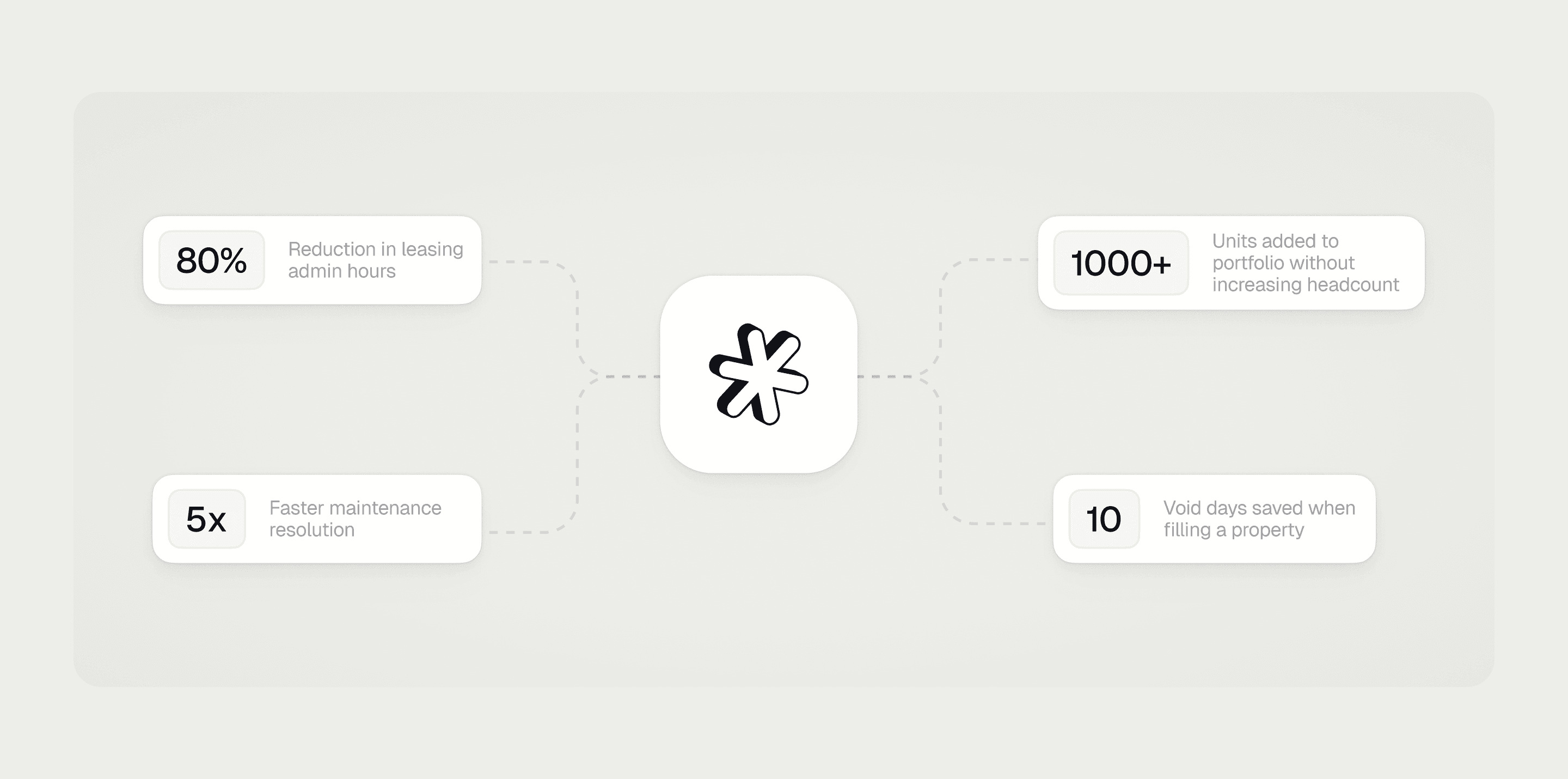
Large portfolios reduce void periods by starting the re-let early, capturing every enquiry, qualifying consistently, booking viewings immediately and keeping the PMS current. Each improvement removes waiting from a different part of the journey.
Start the Re-Let Before the Home Is Empty
The re-let should begin as soon as the operator has reliable notice and a realistic readiness date. Early marketing creates demand while cleaning, inspections and planned works are being scheduled.
This requires coordination between resident operations, maintenance and lettings. A listing should not promise an availability date that the property team cannot meet. At the same time, the team should not wait for every key to be returned before preparing the next tenancy.
A practical readiness workflow should include the confirmed move-out date, inspection date, scope of work, contractor appointment, photography or listing refresh, compliance checks and earliest safe move-in date. The PMS should hold the current status so the lettings workflow only offers a home that can genuinely be viewed or reserved.
This article does not repeat the full property-turnaround process because the main focus is lead conversion. The important point is that faster applicant handling cannot compensate for inaccurate availability or an unprepared home.
Capture Every Enquiry as Soon as It Arrives
Every enquiry should enter one queue with its source, property, time and contact history attached. WhatsApp, email, web chat and portal messages should not become separate versions of the same prospect.
Instant capture prevents two expensive problems. The first is a lead waiting unnoticed in a low-priority inbox. The second is two team members replying separately and creating duplicate records.
An effective capture workflow should do four things immediately.
Acknowledge the enquiry in the same channel.
Identify the property or unit type requested.
Check current availability and approved property information.
Create or match the prospect record in the PMS.
The first reply should help the applicant take the next step. A generic confirmation that someone will be in touch does not shorten the journey. A useful response answers the immediate question, gathers the missing information and offers a relevant action.
Pre-Qualify Applicants With Consistent Rules
Automated pre-qualification should collect the information needed to route a prospect, not make an unchecked decision about who deserves a home. It saves time by identifying fit and missing information before a viewing is arranged.
Approved questions may cover move-in date, household size, affordability against a documented policy, tenancy length, pets where the property has a relevant policy and any required guarantor route. The system can then show suitable options, request clarification or escalate the case.
This is particularly useful when one enquiry does not fit the original home but may fit another available unit. A prospect seeking a two-bedroom home next month should not be discarded simply because the first listing is unavailable. Good portfolio matching can retain the lead and improve absorption across unit types.
Pre-qualification must also be fair. Age, country of origin, employment sector or another demographic attribute should not be used to reject or deprioritise an applicant. For UK portfolios, the ICO guidance on automated decisions and profiling explains the need for a lawful basis, transparency, safeguards and human review where decisions have legal or similarly significant effects. The European Commission gives similar guidance under EU GDPR.
The safest operational model is straightforward. Automate information collection and routine routing. Keep the operator in control of material applicant decisions.
Let High-Intent Prospects Book a Viewing Immediately
Automated viewing booking shortens the gap between interest and action by offering suitable, available slots in the conversation. The prospect does not need to wait for a staff member to compare calendars.
The workflow should use live availability, site opening rules, unit access and staff capacity. It should confirm the property, date, time, location and any arrival instructions. The record should then be written to the viewing diary and PMS.
Booking is only half the process. Automated reminders can ask the prospect to confirm, reschedule or cancel. A released slot can then return to the available pool instead of becoming dead time. After the viewing, the workflow should ask whether the prospect wants to apply, needs another option or has decided not to proceed.
This is where teams can improve both speed and learning. A prospect who declines because the unit is too small creates a different signal from someone who never received a reminder. One is product fit. The other is process leakage.
Lette's leasing automation platform is designed to connect lead response, qualification, viewing booking and document progress in one workflow.
Recover No-Shows and Stalled Applications
No-shows and incomplete applications should trigger a defined recovery workflow while intent may still be present. A missed viewing should not disappear into a calendar with no next action.
For a cancelled viewing, offer alternative times or another suitable property. For a no-show, send a polite check-in and an easy rebooking path. For an invited prospect who never chooses a slot, identify whether the issue is timing, location, affordability, channel friction or loss of interest.
Applications need the same discipline. A missing document, unanswered referencing request or unsigned agreement should create a specific follow-up, due time and escalation. The system should stop chasing when the applicant opts out or the case needs human judgement.
The aim is not to send more messages. It is to send the right next action while giving the prospect a clear way to proceed, pause or decline.
Leasing Automation Goes Beyond a Basic Chatbot
A basic chatbot answers questions. True leasing automation completes approved actions across the front office and back office, then keeps the PMS record aligned with what happened.
The distinction matters because a quick conversation alone does not reduce a void. The journey only moves when the prospect is matched to live availability, qualified, booked, followed up and progressed into an application.
What Front Office and Back Office Automation Mean
Front office automation handles the applicant-facing steps, while back office automation completes the related operational work. Both sides must stay connected for the lettings journey to move without creating extra admin.
Part of the operation | Typical automated work | Result for the team |
|---|---|---|
Front office | Reply to enquiries, answer approved property questions, collect pre-qualification details, offer viewing slots, send reminders and support multiple languages | Faster service and fewer missed leads |
Back office | Check availability, create or match records, update lead stages, write viewing details to the PMS, flag missing documents, route exceptions and produce funnel data | Cleaner records and less manual entry |
A chatbot may tell an applicant that a two-bedroom home is available. An automation platform can check the live record, confirm the applicant's requirements, offer a viewing, write the booking back and start the next workflow.
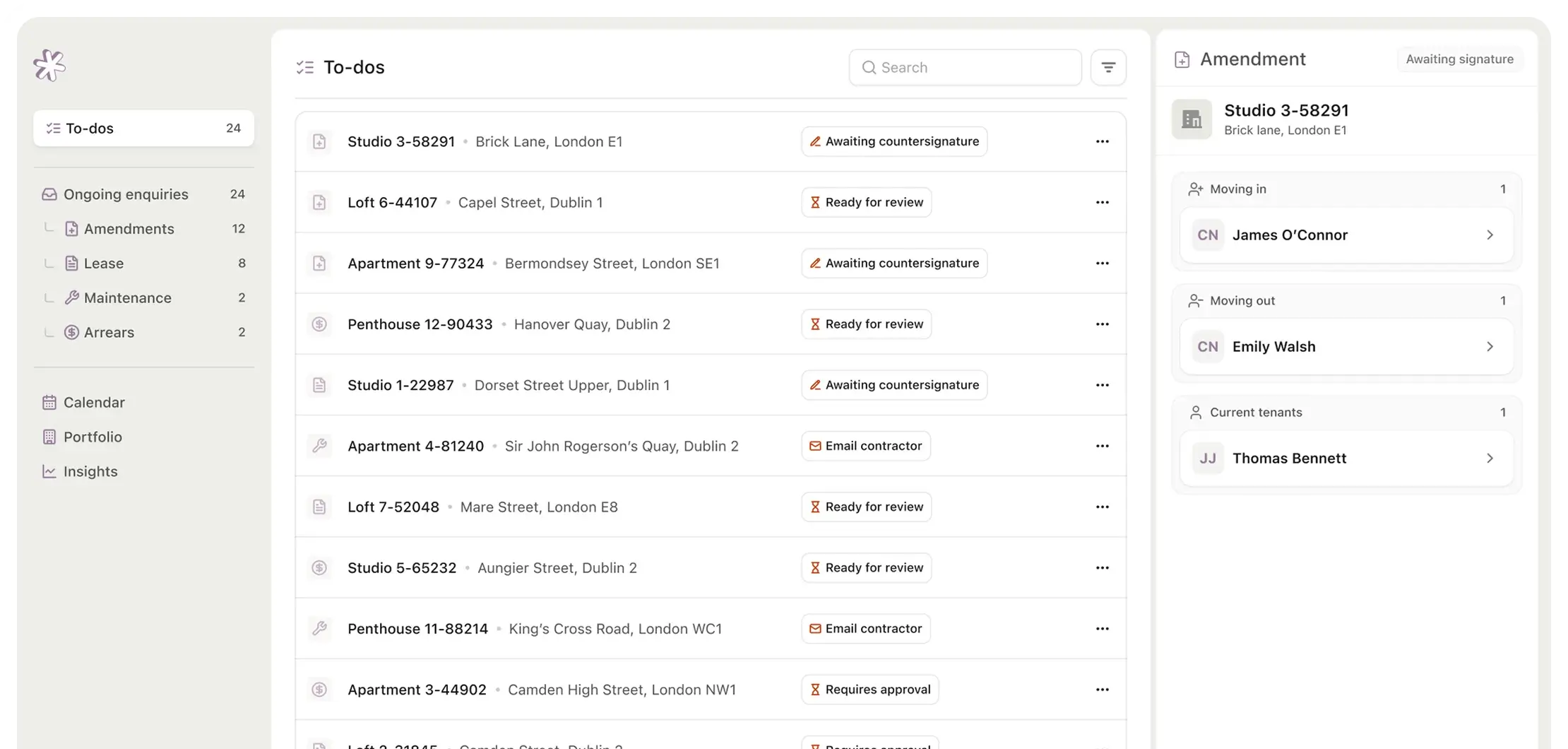
Lette is a Property Management and Leasing Automation Platform that connects these front office and back office steps. It is not positioned as a replacement for the property team. It runs repeatable work and sends uncertain, sensitive or commercially important cases to a person with the conversation and record attached.
Why Bi-Directional PMS Integration Reduces Delays
Bi-directional integration lets the automation read current PMS data and write completed actions back. Without both directions, teams risk offering unavailable homes or maintaining a second, incomplete record.
The PMS should remain the system of record. Lette acts as an operating layer around it, using approved property and prospect data to complete workflows. For example, it can read a unit's availability, use that information in an applicant conversation, book a viewing and write the new status back.
This matters when several people or channels touch the same lead. A site manager opening the PMS should see the same viewing and application status that the central lettings team sees. A future follow-up should use the latest information rather than restarting the conversation.
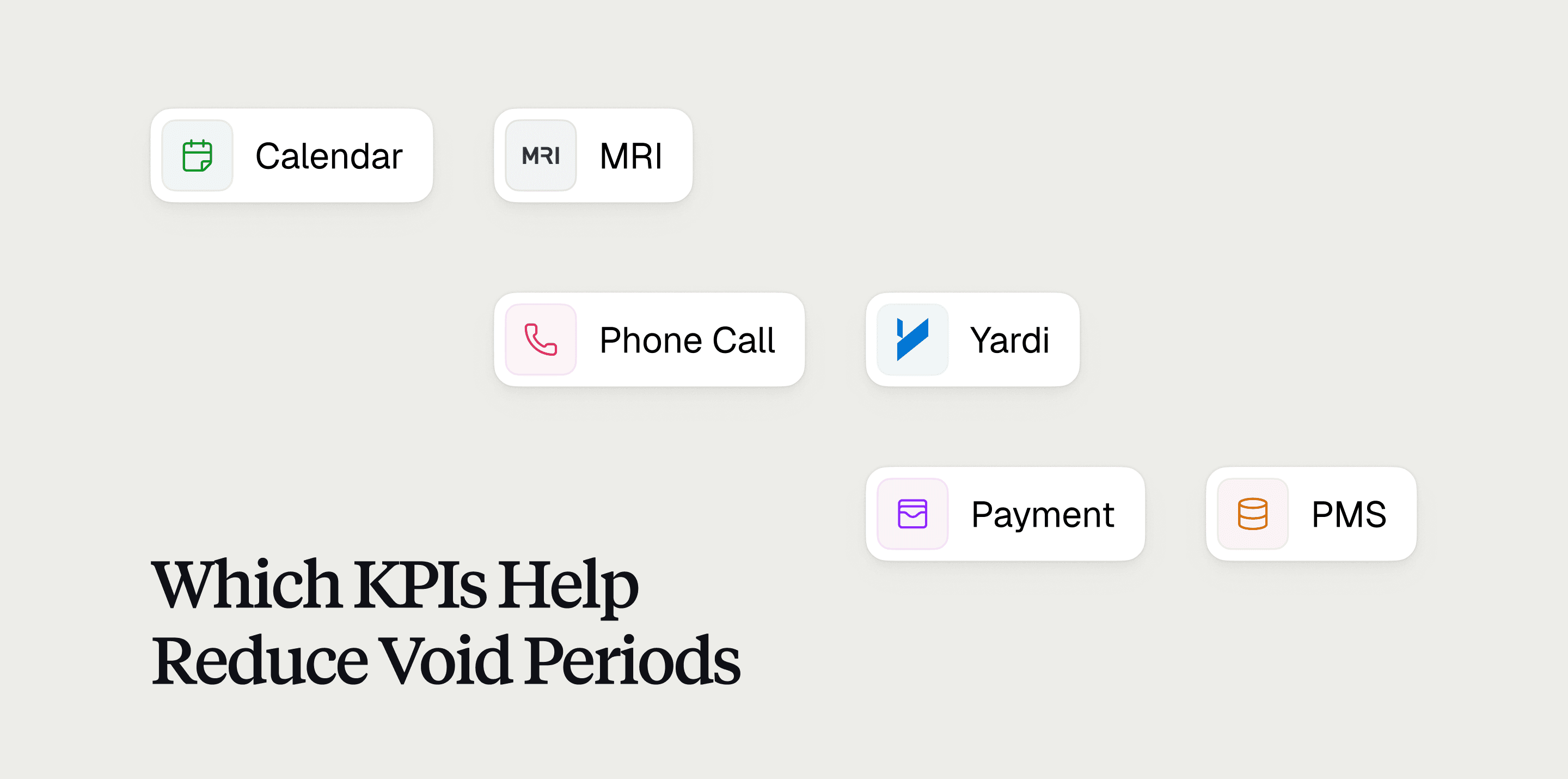
Lette has published a dedicated explanation of its Yardi integration and also supports connected workflows with MRI Software. The correct integration design will depend on the operator's PMS configuration, data governance, workflow rules and other systems in the lettings stack.
Which Lead-to-Lease KPIs Help Reduce Void Periods
The most useful lead-to-lease KPIs show where prospects wait, withdraw or fail to progress. Response time matters, but it must be read alongside conversion, no-show, source and stale-unit data.
L2L reporting should connect operational activity to an outcome. A higher lead count is not automatically good if the additional enquiries never reach a viewing. A full viewing diary is not automatically good if no-shows rise or applications stall.
KPI | How to calculate it | What it can reveal |
|---|---|---|
Lead to Tour | Completed or booked tours ÷ eligible leads | Whether response, qualification and booking are turning interest into viewings |
Tour to App | Applications started or submitted ÷ completed tours | Whether the property, price and post-viewing follow-up support progression |
Cancelled Tours and No-Show Rate | Cancelled tours and no-shows ÷ booked tours | Whether reminders, slot choice, directions or lead quality need attention |
App to Closed Lease | Signed tenancies ÷ completed applications | Whether referencing, document collection, approvals or agreement steps are slowing completion |
Leads by Source | Enquiries grouped by portal, campaign, website, WhatsApp, email or other source | Which sources produce volume and which produce qualified progression |
Stale Units by Unit Type | Available homes with no stage movement beyond an agreed number of days, grouped by unit type | Where pricing, condition, listing quality, demand or workflow delays may be extending voids |
Channel Breakdown Across the Funnel | Lead, viewing, application and closed-lease results by source and communication channel | Whether a channel creates real tenancies or only top-of-funnel activity |
Invited to Viewing Drop-Off | Prospects invited to view who do not book ÷ prospects invited | Whether slot availability, booking friction, timing or unclear information is losing intent |
Use clear definitions before comparing sites. One team may count a viewing when it is booked and another when it is completed. One may count an application when it starts and another only after submission. Inconsistent definitions create misleading portfolio averages.
Segment each KPI by building, unit type, channel and time period. A low tour-to-application rate in one building may indicate a property or pricing issue. The same fall across every building after a workflow change may indicate a process issue.
Lette's Intelligence and Reporting gives operators a way to review operational performance without rebuilding the funnel in spreadsheets. The important outcome is not the dashboard itself. It is the ability to identify a leak and act while homes are still available.
Which Demographic Insights Are Useful and Safe
Aggregated demographic reporting can help operators understand demand and improve unit mix, communication and affordability planning. It should never be used as a shortcut for discriminatory applicant decisions.
The client-supplied reporting priorities include the following measures.
Insight | Appropriate portfolio use | Guardrail |
|---|---|---|
Tenant Mix | Understand household and resident composition at an aggregated building or portfolio level | Do not use it to impose unlawful quotas or exclude applicants |
Affordability by Unit Type | Compare documented affordability outcomes with rent and unit mix | Apply a consistent policy and offer human review for exceptions |
Employment Sector | Understand broad demand patterns and corporate or local-market exposure | Do not treat a sector as a proxy for individual reliability |
Age Range | Plan communication, accessibility and product strategy using aggregated data | Do not use age to rank or reject applicants except where a lawful scheme specifically requires it |
Country of Origin | Understand language and international applicant support needs at an aggregated level | Never use origin or nationality as a negative selection factor |
Collect only what has a clear purpose and lawful basis. Limit access, define retention and use aggregation or anonymisation where individual detail is not needed.
If the operator wants to use AI with personal data, automated profiling or applicant decisions, the legal and data protection teams should review the workflow. Lette's guide to GDPR for property management covers the wider due-diligence questions.
How AI Helps Fill Properties Faster in Europe
AI helps European property teams fill homes faster by providing consistent out-of-hours coverage, multilingual communication and connected workflows while keeping people in control of material decisions. The platform must also fit local data-protection and operational requirements.
Multilingual and Out-of-Hours Enquiries
Multilingual, 24-hour response helps international and weekend applicants take the next step without waiting for the local office to reopen. This is especially valuable for PBSA, BTR launches and portfolios attracting relocating households.
The initial workflow can identify the preferred language, answer approved questions, collect requirements and offer a viewing or handover. Translation should not change policy, rent, availability or qualification criteria. Key details written to the PMS should remain structured and clear for the property team.
Always-on does not mean unsupervised. Operators need escalation rules for complaints, accessibility needs, unclear affordability cases, suspected fraud, sensitive personal circumstances and anything that may materially affect an applicant.
GDPR and Fair Applicant Handling
GDPR-compliant automation starts with purpose, data minimisation, transparency, security and human oversight. Speed is valuable only when the workflow treats applicants fairly and keeps their information under control.
For UK and European portfolios, procurement should confirm where applicant data is processed, which sub-processors are involved, how long information is retained, how rights requests are handled and whether data is used to train external models. The operator should also know which actions are fully automated and which require human approval.
Pre-qualification is usually safest when it follows documented rules and supports a person rather than making a final tenancy decision alone. Operators should provide a route for applicants to correct information and ask for review.
What the ROI Can Look Like
The ROI of faster lettings comes from rent protected through shorter avoidable voids and time returned to the team. It should be measured against a documented baseline and the actual cost of implementation.
If you’re interested, here’s a read on how we’ve helped property teams reduce re-let time from 25 days to 5 days.
The more conservative model used earlier in this guide assumes 10 days removed from each re-let. At £2,000 PCM and 280 re-lets a year, that protects about £184,000 in rent. The calculation is transparent.
Daily rent at risk is £2,000 × 12 ÷ 365, or about £65.75.
Ten days saved across 280 re-lets equals 2,800 occupied days recovered.
£65.75 × 2,800 equals about £184,110 in modelled annual rent protection.
Do not add every possible benefit into one headline ROI number. Report void-day improvement separately from admin time, lead conversion and headcount capacity. This makes the business case easier to audit and prevents the same benefit being counted twice.
A Practical Void Reduction Playbook for Property Teams
A strong void-reduction programme starts with a clean baseline, fixes the largest delay first and tests the workflow on a controlled part of the portfolio. Technology should support an agreed operating process rather than automate confusion.
1. Separate Property Delay From Lettings Delay
Measure when the home became physically and legally ready, when marketing started, when the first suitable enquiry arrived and when the new tenancy began. This separates maintenance turnaround from lead-to-lease delay.
2. Establish the Funnel Baseline
Record first response time, lead-to-tour, tour-to-application, no-show rate, application-to-closed-lease, invited-to-viewing drop-off and void days by unit type. Use the same definitions across every site in scope.
3. Find the Largest Source of Waiting
Review stage duration, not only conversion. A stage may have a reasonable completion rate but still add several days. Common examples include waiting for a viewing slot, waiting for missing documents and waiting for the PMS to be updated.
4. Define What Can Be Automated
Approve the property information, questions, calendars, follow-up rules, escalation paths and record-writing permissions. Keep sensitive decisions and unusual cases with the property team.
5. Connect the PMS Before Expanding Channels
Confirm that availability, prospect identity, viewing status and application stage remain consistent. Adding faster channels to inaccurate data will create faster mistakes.
6. Pilot With a Measurable Comparison
Choose a building, region or unit type with enough volume to show a result. Compare it with its own prior performance and, where possible, a similar control group. Track both outcomes and exceptions.
7. Review the Funnel Every Week
Look for stale units, slow response bands, high no-show slots, channel drop-off and unresolved applications. Assign an owner and next action to each material issue.
8. Scale the Proven Workflow
Expand after data quality, applicant experience and staff handover have been tested. Recheck the baseline after each major change in pricing, demand, building mix or channel strategy.
This approach creates a credible before-and-after view. It also shows whether automation is protecting rent, improving applicant service or simply moving work to another queue.
Common Questions About Void Management
These short answers cover the most common operational questions about reducing void periods in large residential portfolios.
What Are the Main Causes of Long Void Periods in Large Portfolios
The main causes are slow property turnaround, inaccurate pricing, poor listing quality, missed enquiries, delayed viewings, no-shows, slow referencing and incomplete PMS records. The right fix depends on whether the delay is in property readiness, demand or the lettings workflow.
How Does Leasing Automation Reduce the Time to Fill a Home
It removes waiting between enquiry, qualification, viewing, application and follow-up. It can respond immediately, offer available viewing slots, send reminders and update the PMS while staff handle exceptions and final decisions.
Can AI Handle Property Enquiries Outside Office Hours
Yes. AI can answer approved questions, collect requirements and book viewings at night or over the weekend. Sensitive, unclear or high-impact cases should be escalated to a person.
Does AI Require Replacing the Current Property Management System
No. A platform such as Lette can work on top of Yardi, MRI Software and other existing systems. The PMS remains the system of record while automation reads current data and writes completed actions back.
Which KPI Should a Property Team Improve First
Start with the stage causing the most lost time or prospects. For many teams this is first response, invited-to-viewing drop-off or application delay. Use your baseline to choose rather than assuming the same bottleneck exists at every site.
Can Automated Pre-Qualification Reject Applicants
Routine questions and routing can be automated, but final decisions that materially affect access to housing should remain subject to lawful policy, safeguards and meaningful human review. Never use protected or demographic traits as a shortcut for suitability.
Reduce Waiting Without Reducing Standards
Reducing void periods is not about pressuring applicants or rushing homes back to market. It is about removing preventable waiting from a journey that should already be accurate, fair and well controlled.
For large operators, the biggest gains often sit between systems and shifts. An enquiry arrives after hours. A viewing slot is available but not offered. A prospect qualifies but the PMS still shows an old status. A cancellation is recorded but the slot is never reopened. Each gap looks small. Across a portfolio, they add up to empty days and lost rent.
The better model is an always-on workflow around a trusted PMS. Lette connects applicant communication, qualification, viewing booking, follow-up and reporting so property teams can focus on judgement, relationships and closing the right tenancy.
If you want to see where the avoidable days sit in your own funnel, book a Lette demo and bring your current L2L metrics. The most useful starting point is not a generic automation pitch. It is your response time, conversion, no-show, stale-unit and void-day baseline.
A home can be ready to let, correctly priced and generating enquiries, yet still sit empty because a promising applicant waited until Monday for a reply. For one property, that delay is frustrating. Across hundreds or thousands of homes, it becomes a measurable loss of rental income.
The most effective way to reduce avoidable void periods is to remove delays between enquiry, qualification, viewing, application and move-in. For large residential operators, that means combining good property preparation and pricing with always-on lettings workflows, accurate availability data and clear funnel reporting.
Traditional inboxes, spreadsheets and manually updated calendars can work at a quiet site. They struggle during a building launch, a PBSA intake or a portfolio-wide re-letting peak. Enquiries arrive through portals, email, web chat and WhatsApp while the team is showing homes, processing applications and helping current residents.
This is where AI for property managers in Europe has a practical role. It can capture and respond to enquiries, ask approved pre-qualification questions, offer available viewing slots, follow up and update the property management system. The human team remains responsible for judgement, exceptions and decisions that affect access to housing.
This guide focuses on that operating problem rather than repeating a general explanation of the complete lead-to-lease journey.
What Is a Void Period and How Do You Reduce It?
A void period is the time when a rental home has no tenant paying rent. You reduce it by preparing the home early, pricing it correctly and moving suitable applicants through the lettings journey with as little waiting as possible.
Not every void day is avoidable. A property may need safety work, repairs, cleaning or a planned upgrade between tenancies. Those days protect the asset and the next resident. The avoidable part is the time lost because an enquiry was missed, a viewing was not booked, a follow-up was forgotten or an application sat in a queue.
That distinction matters. A target of zero void days can encourage rushed decisions or poor property preparation. A better goal is to separate necessary turnaround time from preventable process delay, then reduce the second number without weakening compliance or applicant checks.
For institutional BTR, PBSA and residential portfolios, the practical answer is to manage the full sequence as one connected workflow.
Confirm the expected move-out date and readiness plan.
Publish accurate availability and property information.
Capture every enquiry from every approved channel.
Respond while interest is still high.
Pre-qualify using consistent and lawful criteria.
Offer a suitable viewing slot immediately.
Remind the prospect and recover cancellations.
Move interested viewers into application and referencing.
Keep each status current in the PMS.
Measure where prospects stop progressing.
If one step waits for a person to notice an email or copy information between systems, the whole journey slows down.
The Operational Impact of Void Periods
Void periods reduce rental income while many ownership and operating costs continue. At portfolio scale, even one unnecessary day per re-let can create a meaningful gap between expected and collected rent.
How Much Does One Empty Day Cost
The rental income at risk for one empty day is the annual rent divided by 365. Multiply that figure by the number of avoidable void days and annual re-lets to estimate the portfolio impact.
The core calculation is simple.
Daily rent at risk = Monthly rent × 12 ÷ 365
Annual rent at risk = Daily rent × avoidable void days per re-let × re-lets per year
Average monthly rent | Rent at risk per empty day | Rent at risk over 10 days | Rent at risk across 280 re-lets |
|---|---|---|---|
£1,500 PCM | £49.32 | £493 | £138,082 |
£2,000 PCM | £65.75 | £658 | £184,110 |
£2,500 PCM | £82.19 | £822 | £230,137 |
These are modelled figures, not promised savings.
They assume that the removed days would otherwise have remained empty and that a suitable tenant is ready to start paying rent. They also exclude continued costs such as utilities, council tax where applicable, insurance, finance and security.
The method is still useful because it turns a vague efficiency goal into a commercial measure. If a portfolio completes 280 re-lets a year at an average rent of £2,000 PCM, removing 10 avoidable days from each journey protects about £184,000 in annual rent. The calculation uses a conservative 10-day reduction and makes every assumption visible.
How Slow Replies Turn Warm Enquiries Cold
Slow replies cost opportunities because applicants usually consider several homes at once. A response that arrives after another operator has answered the questions and booked a viewing may be accurate but commercially too late.
Rental-specific evidence supports this point. Zillow's rental lead guidance reports that replying within one or two minutes made direct engagement 40% more likely than waiting a day or longer.
It also found that the likelihood of connecting fell to about 10% after a 30-minute wait. The figures come from the US market and should not be treated as a European benchmark, but the operational lesson is relevant. Applicant intent decays quickly.
Wider research reaches the same conclusion. The Harvard Business Review study on online lead response found that organisations were generally responding too slowly and that faster contact materially improved qualification. Again, it is cross-industry evidence rather than a residential lettings benchmark.
Property teams should therefore measure their own relationship between first response time and progression. Compare response-time bands with lead-to-viewing, viewing-to-application and application-to-closed-lease conversion.
Your own PMS and channel data will provide a more useful business case than a generic market statistic.
Why Manual Void Management Fails During Demand Spikes
Manual void management fails when enquiry volume grows faster than the team's ability to read, reply, schedule and update records. The problem is queue capacity, not a lack of effort.
Consider a PBSA intake or a new BTR building launch. Hundreds of applicants may ask similar questions within a short window.
Some are in other countries and message outside local office hours. Others reply through a different channel from the one they first used. The lettings team is also running viewings, collecting documents and handling exceptions.
Several failure points appear at once.
Shared inboxes hide ownership and response status.
Portal leads wait for someone to copy them into the PMS.
Availability changes before every channel is updated.
Viewing calendars require several messages to confirm a time.
Staff repeat the same pre-qualification questions.
Cancellations leave unused slots that are not offered to another prospect.
Follow-up depends on personal reminders.
Managers cannot see where the funnel is slowing until the weekly report.
Adding more people can increase capacity, but it also increases handovers, training and operating cost. A scalable process removes repeatable steps from the queue and sends only exceptions to the team.
How to Reduce Void Periods Across a Large Portfolio
Large portfolios reduce void periods by starting the re-let early, capturing every enquiry, qualifying consistently, booking viewings immediately and keeping the PMS current. Each improvement removes waiting from a different part of the journey.
Start the Re-Let Before the Home Is Empty
The re-let should begin as soon as the operator has reliable notice and a realistic readiness date. Early marketing creates demand while cleaning, inspections and planned works are being scheduled.
This requires coordination between resident operations, maintenance and lettings. A listing should not promise an availability date that the property team cannot meet. At the same time, the team should not wait for every key to be returned before preparing the next tenancy.
A practical readiness workflow should include the confirmed move-out date, inspection date, scope of work, contractor appointment, photography or listing refresh, compliance checks and earliest safe move-in date. The PMS should hold the current status so the lettings workflow only offers a home that can genuinely be viewed or reserved.
This article does not repeat the full property-turnaround process because the main focus is lead conversion. The important point is that faster applicant handling cannot compensate for inaccurate availability or an unprepared home.
Capture Every Enquiry as Soon as It Arrives
Every enquiry should enter one queue with its source, property, time and contact history attached. WhatsApp, email, web chat and portal messages should not become separate versions of the same prospect.
Instant capture prevents two expensive problems. The first is a lead waiting unnoticed in a low-priority inbox. The second is two team members replying separately and creating duplicate records.
An effective capture workflow should do four things immediately.
Acknowledge the enquiry in the same channel.
Identify the property or unit type requested.
Check current availability and approved property information.
Create or match the prospect record in the PMS.
The first reply should help the applicant take the next step. A generic confirmation that someone will be in touch does not shorten the journey. A useful response answers the immediate question, gathers the missing information and offers a relevant action.
Pre-Qualify Applicants With Consistent Rules
Automated pre-qualification should collect the information needed to route a prospect, not make an unchecked decision about who deserves a home. It saves time by identifying fit and missing information before a viewing is arranged.
Approved questions may cover move-in date, household size, affordability against a documented policy, tenancy length, pets where the property has a relevant policy and any required guarantor route. The system can then show suitable options, request clarification or escalate the case.
This is particularly useful when one enquiry does not fit the original home but may fit another available unit. A prospect seeking a two-bedroom home next month should not be discarded simply because the first listing is unavailable. Good portfolio matching can retain the lead and improve absorption across unit types.
Pre-qualification must also be fair. Age, country of origin, employment sector or another demographic attribute should not be used to reject or deprioritise an applicant. For UK portfolios, the ICO guidance on automated decisions and profiling explains the need for a lawful basis, transparency, safeguards and human review where decisions have legal or similarly significant effects. The European Commission gives similar guidance under EU GDPR.
The safest operational model is straightforward. Automate information collection and routine routing. Keep the operator in control of material applicant decisions.
Let High-Intent Prospects Book a Viewing Immediately
Automated viewing booking shortens the gap between interest and action by offering suitable, available slots in the conversation. The prospect does not need to wait for a staff member to compare calendars.
The workflow should use live availability, site opening rules, unit access and staff capacity. It should confirm the property, date, time, location and any arrival instructions. The record should then be written to the viewing diary and PMS.
Booking is only half the process. Automated reminders can ask the prospect to confirm, reschedule or cancel. A released slot can then return to the available pool instead of becoming dead time. After the viewing, the workflow should ask whether the prospect wants to apply, needs another option or has decided not to proceed.
This is where teams can improve both speed and learning. A prospect who declines because the unit is too small creates a different signal from someone who never received a reminder. One is product fit. The other is process leakage.
Lette's leasing automation platform is designed to connect lead response, qualification, viewing booking and document progress in one workflow.
Recover No-Shows and Stalled Applications
No-shows and incomplete applications should trigger a defined recovery workflow while intent may still be present. A missed viewing should not disappear into a calendar with no next action.
For a cancelled viewing, offer alternative times or another suitable property. For a no-show, send a polite check-in and an easy rebooking path. For an invited prospect who never chooses a slot, identify whether the issue is timing, location, affordability, channel friction or loss of interest.
Applications need the same discipline. A missing document, unanswered referencing request or unsigned agreement should create a specific follow-up, due time and escalation. The system should stop chasing when the applicant opts out or the case needs human judgement.
The aim is not to send more messages. It is to send the right next action while giving the prospect a clear way to proceed, pause or decline.
Leasing Automation Goes Beyond a Basic Chatbot
A basic chatbot answers questions. True leasing automation completes approved actions across the front office and back office, then keeps the PMS record aligned with what happened.
The distinction matters because a quick conversation alone does not reduce a void. The journey only moves when the prospect is matched to live availability, qualified, booked, followed up and progressed into an application.
What Front Office and Back Office Automation Mean
Front office automation handles the applicant-facing steps, while back office automation completes the related operational work. Both sides must stay connected for the lettings journey to move without creating extra admin.
Part of the operation | Typical automated work | Result for the team |
|---|---|---|
Front office | Reply to enquiries, answer approved property questions, collect pre-qualification details, offer viewing slots, send reminders and support multiple languages | Faster service and fewer missed leads |
Back office | Check availability, create or match records, update lead stages, write viewing details to the PMS, flag missing documents, route exceptions and produce funnel data | Cleaner records and less manual entry |
A chatbot may tell an applicant that a two-bedroom home is available. An automation platform can check the live record, confirm the applicant's requirements, offer a viewing, write the booking back and start the next workflow.
Lette is a Property Management and Leasing Automation Platform that connects these front office and back office steps. It is not positioned as a replacement for the property team. It runs repeatable work and sends uncertain, sensitive or commercially important cases to a person with the conversation and record attached.
Why Bi-Directional PMS Integration Reduces Delays
Bi-directional integration lets the automation read current PMS data and write completed actions back. Without both directions, teams risk offering unavailable homes or maintaining a second, incomplete record.
The PMS should remain the system of record. Lette acts as an operating layer around it, using approved property and prospect data to complete workflows. For example, it can read a unit's availability, use that information in an applicant conversation, book a viewing and write the new status back.
This matters when several people or channels touch the same lead. A site manager opening the PMS should see the same viewing and application status that the central lettings team sees. A future follow-up should use the latest information rather than restarting the conversation.
Lette has published a dedicated explanation of its Yardi integration and also supports connected workflows with MRI Software. The correct integration design will depend on the operator's PMS configuration, data governance, workflow rules and other systems in the lettings stack.
Which Lead-to-Lease KPIs Help Reduce Void Periods
The most useful lead-to-lease KPIs show where prospects wait, withdraw or fail to progress. Response time matters, but it must be read alongside conversion, no-show, source and stale-unit data.
L2L reporting should connect operational activity to an outcome. A higher lead count is not automatically good if the additional enquiries never reach a viewing. A full viewing diary is not automatically good if no-shows rise or applications stall.
KPI | How to calculate it | What it can reveal |
|---|---|---|
Lead to Tour | Completed or booked tours ÷ eligible leads | Whether response, qualification and booking are turning interest into viewings |
Tour to App | Applications started or submitted ÷ completed tours | Whether the property, price and post-viewing follow-up support progression |
Cancelled Tours and No-Show Rate | Cancelled tours and no-shows ÷ booked tours | Whether reminders, slot choice, directions or lead quality need attention |
App to Closed Lease | Signed tenancies ÷ completed applications | Whether referencing, document collection, approvals or agreement steps are slowing completion |
Leads by Source | Enquiries grouped by portal, campaign, website, WhatsApp, email or other source | Which sources produce volume and which produce qualified progression |
Stale Units by Unit Type | Available homes with no stage movement beyond an agreed number of days, grouped by unit type | Where pricing, condition, listing quality, demand or workflow delays may be extending voids |
Channel Breakdown Across the Funnel | Lead, viewing, application and closed-lease results by source and communication channel | Whether a channel creates real tenancies or only top-of-funnel activity |
Invited to Viewing Drop-Off | Prospects invited to view who do not book ÷ prospects invited | Whether slot availability, booking friction, timing or unclear information is losing intent |
Use clear definitions before comparing sites. One team may count a viewing when it is booked and another when it is completed. One may count an application when it starts and another only after submission. Inconsistent definitions create misleading portfolio averages.
Segment each KPI by building, unit type, channel and time period. A low tour-to-application rate in one building may indicate a property or pricing issue. The same fall across every building after a workflow change may indicate a process issue.
Lette's Intelligence and Reporting gives operators a way to review operational performance without rebuilding the funnel in spreadsheets. The important outcome is not the dashboard itself. It is the ability to identify a leak and act while homes are still available.
Which Demographic Insights Are Useful and Safe
Aggregated demographic reporting can help operators understand demand and improve unit mix, communication and affordability planning. It should never be used as a shortcut for discriminatory applicant decisions.
The client-supplied reporting priorities include the following measures.
Insight | Appropriate portfolio use | Guardrail |
|---|---|---|
Tenant Mix | Understand household and resident composition at an aggregated building or portfolio level | Do not use it to impose unlawful quotas or exclude applicants |
Affordability by Unit Type | Compare documented affordability outcomes with rent and unit mix | Apply a consistent policy and offer human review for exceptions |
Employment Sector | Understand broad demand patterns and corporate or local-market exposure | Do not treat a sector as a proxy for individual reliability |
Age Range | Plan communication, accessibility and product strategy using aggregated data | Do not use age to rank or reject applicants except where a lawful scheme specifically requires it |
Country of Origin | Understand language and international applicant support needs at an aggregated level | Never use origin or nationality as a negative selection factor |
Collect only what has a clear purpose and lawful basis. Limit access, define retention and use aggregation or anonymisation where individual detail is not needed.
If the operator wants to use AI with personal data, automated profiling or applicant decisions, the legal and data protection teams should review the workflow. Lette's guide to GDPR for property management covers the wider due-diligence questions.
How AI Helps Fill Properties Faster in Europe
AI helps European property teams fill homes faster by providing consistent out-of-hours coverage, multilingual communication and connected workflows while keeping people in control of material decisions. The platform must also fit local data-protection and operational requirements.
Multilingual and Out-of-Hours Enquiries
Multilingual, 24-hour response helps international and weekend applicants take the next step without waiting for the local office to reopen. This is especially valuable for PBSA, BTR launches and portfolios attracting relocating households.
The initial workflow can identify the preferred language, answer approved questions, collect requirements and offer a viewing or handover. Translation should not change policy, rent, availability or qualification criteria. Key details written to the PMS should remain structured and clear for the property team.
Always-on does not mean unsupervised. Operators need escalation rules for complaints, accessibility needs, unclear affordability cases, suspected fraud, sensitive personal circumstances and anything that may materially affect an applicant.
GDPR and Fair Applicant Handling
GDPR-compliant automation starts with purpose, data minimisation, transparency, security and human oversight. Speed is valuable only when the workflow treats applicants fairly and keeps their information under control.
For UK and European portfolios, procurement should confirm where applicant data is processed, which sub-processors are involved, how long information is retained, how rights requests are handled and whether data is used to train external models. The operator should also know which actions are fully automated and which require human approval.
Pre-qualification is usually safest when it follows documented rules and supports a person rather than making a final tenancy decision alone. Operators should provide a route for applicants to correct information and ask for review.
What the ROI Can Look Like
The ROI of faster lettings comes from rent protected through shorter avoidable voids and time returned to the team. It should be measured against a documented baseline and the actual cost of implementation.
If you’re interested, here’s a read on how we’ve helped property teams reduce re-let time from 25 days to 5 days.
The more conservative model used earlier in this guide assumes 10 days removed from each re-let. At £2,000 PCM and 280 re-lets a year, that protects about £184,000 in rent. The calculation is transparent.
Daily rent at risk is £2,000 × 12 ÷ 365, or about £65.75.
Ten days saved across 280 re-lets equals 2,800 occupied days recovered.
£65.75 × 2,800 equals about £184,110 in modelled annual rent protection.
Do not add every possible benefit into one headline ROI number. Report void-day improvement separately from admin time, lead conversion and headcount capacity. This makes the business case easier to audit and prevents the same benefit being counted twice.
A Practical Void Reduction Playbook for Property Teams
A strong void-reduction programme starts with a clean baseline, fixes the largest delay first and tests the workflow on a controlled part of the portfolio. Technology should support an agreed operating process rather than automate confusion.
1. Separate Property Delay From Lettings Delay
Measure when the home became physically and legally ready, when marketing started, when the first suitable enquiry arrived and when the new tenancy began. This separates maintenance turnaround from lead-to-lease delay.
2. Establish the Funnel Baseline
Record first response time, lead-to-tour, tour-to-application, no-show rate, application-to-closed-lease, invited-to-viewing drop-off and void days by unit type. Use the same definitions across every site in scope.
3. Find the Largest Source of Waiting
Review stage duration, not only conversion. A stage may have a reasonable completion rate but still add several days. Common examples include waiting for a viewing slot, waiting for missing documents and waiting for the PMS to be updated.
4. Define What Can Be Automated
Approve the property information, questions, calendars, follow-up rules, escalation paths and record-writing permissions. Keep sensitive decisions and unusual cases with the property team.
5. Connect the PMS Before Expanding Channels
Confirm that availability, prospect identity, viewing status and application stage remain consistent. Adding faster channels to inaccurate data will create faster mistakes.
6. Pilot With a Measurable Comparison
Choose a building, region or unit type with enough volume to show a result. Compare it with its own prior performance and, where possible, a similar control group. Track both outcomes and exceptions.
7. Review the Funnel Every Week
Look for stale units, slow response bands, high no-show slots, channel drop-off and unresolved applications. Assign an owner and next action to each material issue.
8. Scale the Proven Workflow
Expand after data quality, applicant experience and staff handover have been tested. Recheck the baseline after each major change in pricing, demand, building mix or channel strategy.
This approach creates a credible before-and-after view. It also shows whether automation is protecting rent, improving applicant service or simply moving work to another queue.
Common Questions About Void Management
These short answers cover the most common operational questions about reducing void periods in large residential portfolios.
What Are the Main Causes of Long Void Periods in Large Portfolios
The main causes are slow property turnaround, inaccurate pricing, poor listing quality, missed enquiries, delayed viewings, no-shows, slow referencing and incomplete PMS records. The right fix depends on whether the delay is in property readiness, demand or the lettings workflow.
How Does Leasing Automation Reduce the Time to Fill a Home
It removes waiting between enquiry, qualification, viewing, application and follow-up. It can respond immediately, offer available viewing slots, send reminders and update the PMS while staff handle exceptions and final decisions.
Can AI Handle Property Enquiries Outside Office Hours
Yes. AI can answer approved questions, collect requirements and book viewings at night or over the weekend. Sensitive, unclear or high-impact cases should be escalated to a person.
Does AI Require Replacing the Current Property Management System
No. A platform such as Lette can work on top of Yardi, MRI Software and other existing systems. The PMS remains the system of record while automation reads current data and writes completed actions back.
Which KPI Should a Property Team Improve First
Start with the stage causing the most lost time or prospects. For many teams this is first response, invited-to-viewing drop-off or application delay. Use your baseline to choose rather than assuming the same bottleneck exists at every site.
Can Automated Pre-Qualification Reject Applicants
Routine questions and routing can be automated, but final decisions that materially affect access to housing should remain subject to lawful policy, safeguards and meaningful human review. Never use protected or demographic traits as a shortcut for suitability.
Reduce Waiting Without Reducing Standards
Reducing void periods is not about pressuring applicants or rushing homes back to market. It is about removing preventable waiting from a journey that should already be accurate, fair and well controlled.
For large operators, the biggest gains often sit between systems and shifts. An enquiry arrives after hours. A viewing slot is available but not offered. A prospect qualifies but the PMS still shows an old status. A cancellation is recorded but the slot is never reopened. Each gap looks small. Across a portfolio, they add up to empty days and lost rent.
The better model is an always-on workflow around a trusted PMS. Lette connects applicant communication, qualification, viewing booking, follow-up and reporting so property teams can focus on judgement, relationships and closing the right tenancy.
If you want to see where the avoidable days sit in your own funnel, book a Lette demo and bring your current L2L metrics. The most useful starting point is not a generic automation pitch. It is your response time, conversion, no-show, stale-unit and void-day baseline.

Ready to simplify your property operations?
See how Lette helps leasing and residential teams automate daily work, respond faster, and scale with confidence.

167-169 Great Portland Street 5th Floor London W1W 5PF
33 Fitzwilliam Place, Dublin 2 Carroll Estates Mews DUBLIN 2 D02 A5W0 IRELAND
info@lette.ai

Ready to simplify your property operations?
See how Lette helps leasing and residential teams automate daily work, respond faster, and scale with confidence.
167-169 Great Portland Street 5th Floor London W1W 5PF
33 Fitzwilliam Place, Dublin 2 Carroll Estates Mews DUBLIN 2 D02 A5W0 IRELAND
info@lette.ai
Ready to simplify your property operations?
See how Lette helps leasing and residential teams automate daily work, respond faster, and scale with confidence.
167-169 Great Portland Street 5th Floor London W1W 5PF
33 Fitzwilliam Place, Dublin 2 Carroll Estates Mews DUBLIN 2 D02 A5W0 IRELAND
info@lette.ai
Ready to simplify your property operations?
See how Lette helps leasing and residential teams automate daily work, respond faster, and scale with confidence.
167-169 Great Portland Street 5th Floor London W1W 5PF
33 Fitzwilliam Place, Dublin 2 Carroll Estates Mews DUBLIN 2 D02 A5W0 IRELAND
info@lette.ai