
Blog
Blog
Can AI Be Trusted in Property Management?
Can AI Be Trusted in Property Management?

This is a question that most property teams ask when they’re even thinking of using AI in their workflow.
In today’s world, you deal with thousands of leads a month, which puts significant workloads for larger portfolios. Leads need fast replies. Viewings need booking. Repairs need the right contractor. Residents want answers. Your PMS still needs to stay correct.
AI can help you move all of that work faster. But it should work like a good team member. Give it the right task, the right access and clear rules for when to ask for help.
So, can AI be trusted in property management? The answer comes down to how the workflow is built and checked. This guide shows you what a good workflow looks like.
Trustworthy AI in Property Management
Trustworthy property management AI should do a clear job and leave a clear record of what it did.
For example, it may check viewing times, reply to a lead, open a repair case or send a routine resident update. It should use approved data and stay inside the rules you set.
If the case is unclear, it should stop and send it to a person.
That simple model is close to what the NIST AI Risk Management Framework calls for: AI should be safe, reliable, clear and well managed.
Your source data matters. Access should be limited. People should stay in charge of key choices. Every key step should be easy to trace.
If you are still mapping where AI fits in your operation, our guide to how AI is changing property management covers the main use cases.
Trust Is a Workflow Decision
Can AI be trusted in property management for every task? No. Some jobs are a better fit than others.
AI is well suited to repeat work with clear rules. Think lead follow-up, viewing booking, repair intake, routine resident questions and reminders.
Other tasks need human judgement. A housing decision, serious complaint, safety issue or money dispute should not be left to AI alone.
A useful rule is simple: the bigger the impact of a wrong choice, the more human control you need.
That is why property AI governance should start with the workflow, not the tool. Define the task first. Then decide what AI may do, what it may not do and when a person takes over.
What Trust Evidence Does a Property Team Need?
Before you trust an AI workflow, ask five simple questions:
What data does it use?
What can it do?
When does it stop?
What can my team review later?
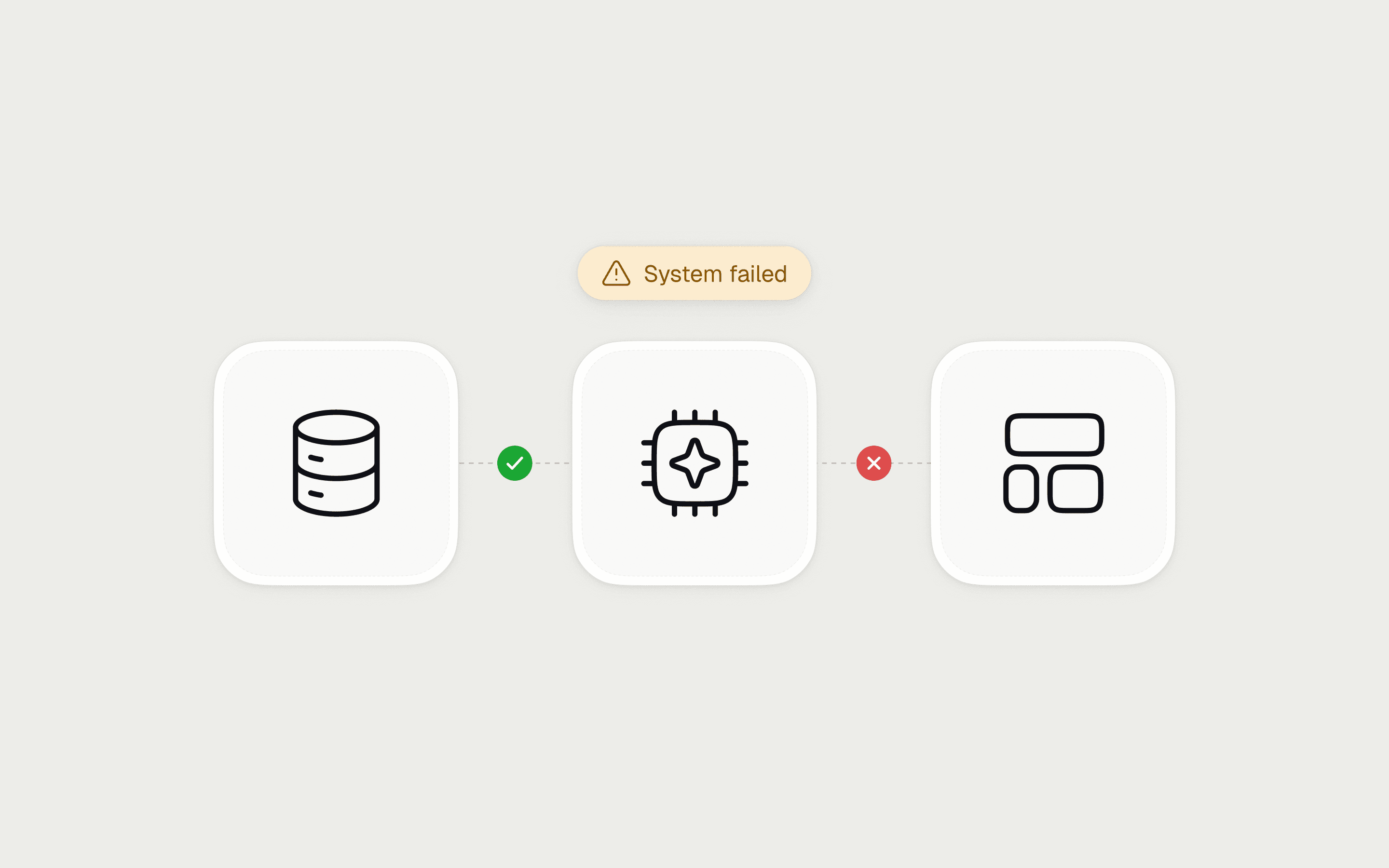
What happens if a system fails?
This is the core safety test.
A good demo should show more than the happy path. Ask what happens when unit data is missing. Remove a viewing slot. Make a PMS update fail. Send a repair message with a safety concern.
The workflow should stay calm and clear. It should not guess. It should hand the case to the right person and leave an AI audit trail.
Task | Allowed AI role | Human gate | Proof |
|---|---|---|---|
Viewing booking | Check and book set slots | Missing stock or clash | PMS and calendar match |
Repair intake | Gather facts and make a case | Safety or urgency doubt | Work order and hand-off |
Resident question | Answer approved facts | Policy or personal exception | Contact record and owner |
Housing decision | None | Qualified person | Full human decision trail |
AI Failure Modes in Property Workflows
Can AI be trusted in property management if it sometimes gets things wrong? It can, if the workflow is built to catch problems before they become real-world mistakes.
Property teams should check four things:
Is the answer right?
Is it for the right person and property?
Is the action allowed?
Did the right record update?
A polished message is not enough. If the viewing is booked but the PMS still shows the old slot, the job is not done.
This is also why the PMS should stay the source of record. AI can move the work, but it should not create a second version of the truth for your team to clean up later.
Wrong Answers in Property Workflows
Wrong answers often start with bad inputs. This is one reason teams worry about using AI in live property work.
The unit data may be old. A policy may be unclear. A resident may ask something outside the set workflow.
A safe system should not fill the gap with a confident guess. It should use the approved source. If that source is missing or unclear, it should stop and hand the case to a person.
That is good AI human oversight, not failed automation.
The UK Government AI Playbook also calls for meaningful human control at the right stage. For property teams, that means people take over when the case carries more risk or needs judgement.
Context, Action, and Record Errors
A fact can be right but still belong to the wrong resident, unit or case. So when you assess AI, context matters as much as the answer.
The action can also be wrong. A tool may try to change a field it should only read. Or it may send a message before the PMS update is complete.
So AI safety in property management is not only about good text. It is also about identity, access and write-back.
The resident journey and the source record should tell the same story. If they do not match, the task needs attention.
Can AI Hallucinations Be Eliminated in Property Management?
No AI model can promise that every open-ended answer will be perfect. The better question is: can a weak answer turn into a bad action?
With a well-built workflow, that risk can be cut down sharply.
Use live source data. Keep the task narrow. Set clear rules. Check key actions. Send unclear cases to people.
That is how trustworthy property management AI should work.
The aim is not blind trust. It is controlled automation. AI does the repeat work. People keep control of the hard calls.
Grounding, Rules, Live Checks, and Escalation
Can AI be trusted in property management when it uses live data from the PMS? That is a much safer starting point than letting it answer from loose or old information.
Use the PMS, CRM or other named system for live facts. Give the workflow a small set of approved actions. Add more checks as the risk rises.
If the data is missing, stale or in conflict, stop the task and send it to a person.
This keeps the job simple. AI moves routine work. Your team handles the edge cases.
How Can a Property Team Verify That an AI Answer Is Grounded?
Ask one question: where did this answer come from?
Your team should be able to trace it back to a source record or approved rule.
Then test the workflow with four cases:
a normal request
old data
two records that do not match
a question outside scope
You should see why the workflow acted or why it stopped.
This is where a clear activity log becomes useful. It gives your team a simple way to check the facts after the task is done.
AI Authority and Decision Rights
Can AI be trusted in property management with full access to everything? It should not need full access in the first place.
Give each workflow only the access it needs.
Reading, drafting, sending, editing a PMS record and dispatching a contractor are different actions. Treat them that way.
The UK National Cyber Security Centre recommends a least-privilege approach for secure AI systems. In simple terms, give the system the smallest amount of access needed to do its job.
That makes governance easier to understand and easier to control.
Read, Draft, Send, Write, and Dispatch Rights
Start small.
A workflow may first read data and draft a reply. Once it has been tested, it may be allowed to send the reply. Later, it may write an approved update back to the PMS.
Each step adds more power, so each step needs proof.
Keep a simple list of what the workflow can do. Your task owner and PMS owner should both understand it.
Good AI safety in property management should feel boring in the best way. Everyone knows the rules. Nothing important happens by surprise.
What Must Be Checked Before AI Sends a Resident Message?
Before a message goes out, check five things: person, channel, reason, content and hand-off rule.
If the identity is unclear or the case needs policy judgement, send it to a person.
The activity log should show what was sent, when it went out and what data supported it.
That gives your team a quick answer if a resident asks, “Why did I get this message?”
What Must Be Checked Before AI Changes a Property Record or Dispatches Work?
Check the source record, the field to change and whether that change is allowed.
For repairs, also check the urgency route and contractor rules.
If the PMS update fails, the workflow should not act as if the job is complete. It should flag the case and send it to the right person.
The resident, contractor and PMS should end up with the same result.
Which Property Decisions Should AI Never Take Alone?
Keep high-impact choices with people.
That includes housing access, affordability, safety, safeguarding, serious complaints, legal disputes, money and cases involving vulnerable residents.
AI can collect the facts. It can route the case. It can help your team move faster. AI human oversight should still protect the final call.
But people should make the final call when the result may have a serious effect on someone.
The ICO guidance on automated decisions also sets extra rules for some solely automated decisions that have legal or similar effects.
When Is Human Oversight Meaningful Rather Than Nominal?
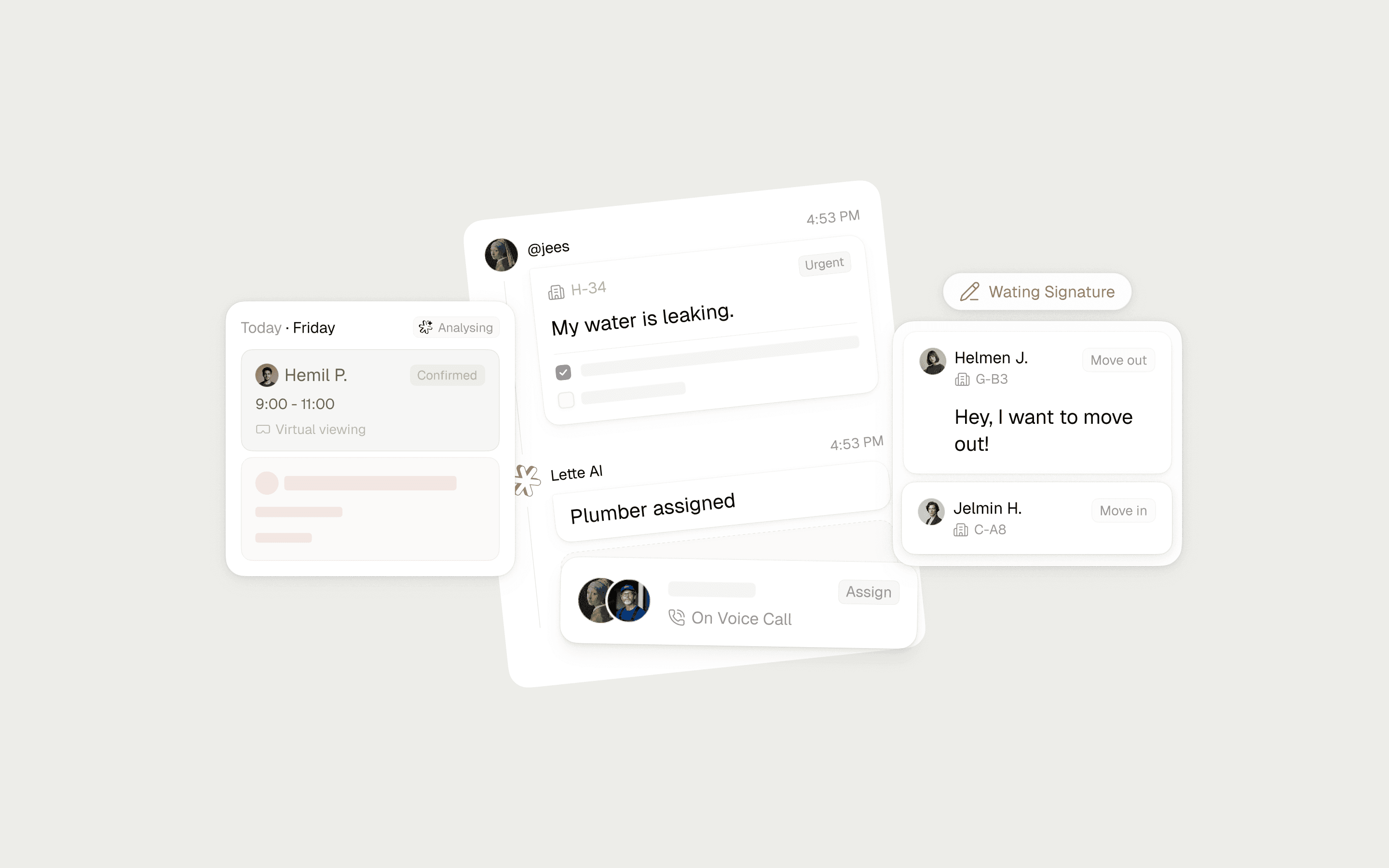
AI human oversight is useful only if the person can really act.
A name in a process map is not enough. The reviewer needs the full case, enough time and the power to change or stop the next step.
Think of it like a good hand-off between two team members. Nobody wants to hear, “Can you start from the beginning?”
When AI hands over a case, the context should come with it.
That is a key part of trustworthy property management AI because it keeps service moving even when automation reaches its limit.
Immediate Handover Triggers
Set clear triggers before the workflow goes live.
Common triggers include missing data, uncertain identity, safety words, distress, complaints, policy exceptions and failed system updates.
When one appears, send the full case to the right team.
Do not make the resident repeat the story. Good AI human oversight should make the hand-off feel smooth, not like a dead end.
What Does a Human Reviewer Need to Make a Meaningful Decision?
Give the reviewer:
the original message
case history
key PMS facts
what AI already did
the reason for the hand-off
the next step that may be needed
That is enough for most reviewers to understand the case fast.
It also makes the activity record useful in daily work, not just during an audit.
Can AI Treat Applicants and Residents Fairly?
Yes, if the rules are fair, the data is good and people can step in when needed. So can AI be trusted in property management for applicant and resident service? It can, with those checks in place.
AI can help teams apply routine steps in a more consistent way. But it can also repeat a bad rule or a bad data pattern if nobody checks the outcome.
That is why property AI governance should include fairness tests.
The ICO's AI and data protection guidance covers fairness, accuracy, data use and individual rights. It is a useful source for teams that want to check how AI uses personal data.
Where Can Bias Affect Property Operations?
Bias can enter through old records, unclear policy, language gaps or uneven rules.
Look closely at screening, priority, complaints, access needs and resident messages.
A workflow is not “better” just because it is faster.
If similar cases get very different outcomes, stop and review the rule or data behind them.
That is part of trustworthy property management AI. Speed matters, but fair service matters too.
Fairness and Accessibility Testing
Test the cases your team sees in real life.
Try different languages, uncommon names, shared homes, access needs and policy exceptions.
Ask frontline staff to review the result. They often spot issues faster than a project team because they know how residents actually ask for help.
Also keep a clear human route. Residents should not have to fight the system to reach a person.
Is Applicant and Resident Data Safe With AI?
Can AI be trusted in property management with resident data? Yes, when data use is clear, access is controlled and the vendor can show strong evidence. For many teams, this is the first test of whether AI belongs in live operations.
For any platform, start with four questions: what data is used, why it is needed, who can access it and how long it is kept. More data does not always make a workflow better.
AI safety in property management starts with using the minimum data needed for the job and keeping access easy to review.
Do AI Vendors Train on Customer Data?
Different vendors have different rules, so always check.
Ask every provider for a plain answer in its contract or published security material. You should not need to dig through pages of legal text to learn whether your data is used for model training.
This is one of the first checks to make when you compare platforms, because the answer affects both trust and data governance.
Is EU Data Hosting Enough to Meet GDPR Duties?
No. Hosting is only one part of good data care.
You still need a clear purpose for the data, the right access rules, sensible retention and the right contract terms.
Hosting location does not remove the need to review the workflow, data purpose and access model.
If you need the legal context without the jargon, our guide to GDPR and the EU AI Act for property teams explains the main points.
How Secure and Resilient Should Property AI Be?
Property AI should be as secure as any system that touches resident data or live operations. Can AI be trusted in property management at scale? Only if security grows with the workload. Security has to be part of the answer.
That means secure access, logs, monitoring, backups and a plan for what happens when something breaks.
The NCSC secure AI guidelines cover secure design, development, deployment and live operation. They also stress logging and monitoring after an AI system goes live.
What Security and Recovery Evidence Should an Operator Request?
Ask for the basics first:
access controls
incident process
backup and recovery plan
logging
system ownership
Then make it real.
Ask, “What happens if the PMS link fails at 8pm?”
Who sees the problem? Who stops more actions? Who fixes the record? Who decides when to restart?
Good property AI governance should answer those questions before go-live.
How Should a Trust Centre Be Used in Procurement?
A trust centre should save your team time.
It should give security, legal, data and procurement teams one place to check current evidence.
A useful trust centre should show current policies, controls, subprocessors and assurance material in one place. Use that company-level evidence alongside your own workflow test. The two answer different questions, and you need both.
Transparency and Auditability in Property AI
Can AI be trusted in property management if nobody can explain what it did? No.
Your team should be able to see the data used, the action taken, the hand-off and the final system update. That traceability is a big part of trust.
That is what the audit trail is for.
Good logs make daily work easier. They help when a resident asks a question, when a team member needs to fix a case or when a manager wants to check why a workflow stopped.
For a deeper look at source records, events and measurement, see our data and KPI guide for property teams.
Should Residents Be Told They Are Interacting With AI?
Use clear wording when the task calls for it.
Tell residents what the service can help with and how they can reach a person.
Keep the message short. It should not read like a software manual.
Your legal and resident teams should approve the wording for each market and channel.
The goal is simple: people should know how the service works and where to go if they need human help.
What Must an AI Audit Trail Record?
A useful AI audit trail should show:
the source record
the key input
the action
any hand-off
the time
the owner
the write-back result
You do not need a wall of technical logs for every user.
You need enough detail for a team member to understand what happened without guessing.
What Do GDPR, UK GDPR, and the EU AI Act Mean for Property AI?
These rules shape how property teams use data, explain automated work and keep people in control.
The exact duty depends on the country, data and task.
For higher-risk AI systems, the EU AI Act includes rules on human oversight. The UK also has data protection rules that may apply to automated decisions with serious effects.
Do not turn this into a legal lecture for the whole team. Make the workflow clear, then bring in the right data or legal expert where needed.
That is practical governance for property AI.
How Should Property Teams Assess UK and EU Requirements Separately?
Start with a simple list.
Which countries are in scope? Which legal entity runs the service? What resident data is used? Where does the data move?
Then review the UK and EU position for that workflow.
A setup that works in one market may need a change in another.
What Duties Still Apply to Lower Risk AI Workflows?
Lower risk does not mean no rules.
Even a simple workflow needs clear ownership, safe access, good records and a route to a person.
It should be easy to explain. Easy to test. Easy to stop.
That is the kind of property AI governance that helps teams move fast without making the process heavy.
How Should a Property Team Test AI Before It Goes Live?
Can AI be trusted in property management after one smooth demo? No. Test the real job. The answer should come from real cases, not a perfect sales flow.
Check the message, data, action, PMS update and human hand-off together.
Use easy cases and awkward ones. Break the PMS link. Remove a contractor. Change the language. Add a complaint.
A good test is not about trying to make the AI fail. It is about seeing whether the workflow stays safe when real life gets messy.
Which Scenarios Should a Property Team Test Before AI Goes Live?
Start with these:
missing unit data
duplicate contact
language change
urgent repair wording
unavailable contractor
complaint
failed PMS update
full human take-over
Write down the result you expect for each one.
Then keep the list. Run it again after a major workflow change.
This makes AI safety in property management practical. Your team has a repeatable test, not just a feeling that the tool “looks good.”
Which Metrics Show Whether a Property AI Workflow Is Trustworthy?
Track outcomes, not just replies.
Useful measures include correct task completion, correct PMS records, safe hand-offs, reopened cases, bad updates and resident complaints.
Also track time in the human queue. If AI passes too many simple cases to people, the workflow may need work.
If your team wants one view of what is happening across live workflows, operational reporting can make these measures easier to follow.
How Should Acceptance Thresholds Change With the Consequence of an Error?
The higher the risk, the higher the bar.
A minor wording issue in a viewing reminder may be easy to fix.
A housing, safety or money decision needs a much stronger human gate.
Set that rule before go-live. Do not make it up after the first hard case appears.
When Should a Property Team Retest an AI Workflow?
Retest when something important changes.
That may be a new PMS version, policy, market, channel, data source or action type.
Also retest after a serious issue.
The NCSC says changes to data, models or prompts can change system behaviour, so live systems need ongoing checks and monitoring.
AI safety in property management is a habit, not a one-time sign-off.
Who Is Accountable When AI Fails?
The property operator still owns the service it gives residents and applicants. That matters when teams ask can AI be trusted in property management, because clear ownership makes safe automation possible.
That does not mean every issue sits with one person. Each part of the workflow should have a clear owner.
The workflow owner owns the service result. The PMS owner owns the source record and access. The duty team owns live hand-offs. The vendor owns its agreed product support.
How Should a Property Team Respond When AI Gets Something Wrong?
Keep it simple:
Stop the affected action.
Send the case to a person.
Keep the facts and logs.
Fix the resident outcome and source record.
Find the cause.
Retest before restart.
A good AI audit trail makes this much faster.
The goal is not to prove that nothing will ever go wrong. It is to make sure your team can spot, contain and fix a problem quickly.
Who Is Responsible for Each Part of an AI Workflow?
Write the names down before launch.
You need an owner for the workflow, PMS, access, human queue, security review and vendor support.
That is good property AI governance because it removes the worst phrase in any incident: “I thought another team owned that.”
What Trust Evidence Should Operators Request From an AI Vendor?
Can AI be trusted in property management without vendor proof? You should not have to take it on faith. Good evidence makes the answer much easier.
Ask for evidence on data use, security, access, human control, logs, support and recovery.
Then test the exact workflow you want to run.
Property teams should be able to review vendor evidence before a platform touches live work.
This is also in line with NIST's approach to trustworthy AI, which focuses on governance, measurement and ongoing risk management.
What Do ISO 27001, SOC 2, and a Trust Centre Actually Prove?
They give useful evidence about how a company manages security and controls.
They do not prove that every workflow will be right for your portfolio. You still need to test the task.
Think of company-level assurance as the foundation. Workflow testing shows how that foundation works in your day-to-day operation.
How Should Property Teams Evaluate Lette's Trust Evidence?
If Lette is on your shortlist, start with our published evidence and match it to the workflow you want to run. Our Trust Centre and Privacy Policy set out our security, privacy and data position, including how we handle customer data and the controls in place.
Then test the real workflow in your own stack. That mix of published evidence and hands-on testing is the standard we recommend for any platform.
What Should Property Teams Do Next?
Start with one job that steals time every week. If your team is asking can AI be trusted in property management, this is the best place to begin.
It may be lead follow-up, viewing booking, resident updates, repair intake or reporting.
Give that job a clear start, source record, set of allowed actions and human hand-off. Then test it with real cases.
Once you have a workflow you trust, the next question is whether it can remove enough repeat work to matter. If you want to see what that looks like in leasing, our page on automating the leasing journey shows the kinds of tasks teams can move out of manual queues.
Keep the first test narrow. Prove the hand-offs, source records and outcomes. Then expand only when the workflow earns it.
What Are the Most Common Questions About Trusting AI in Property Management?
These are the questions property teams tend to ask before they move from AI curiosity to live automation.
What Happens if AI Gets Something Wrong?
The workflow should stop the unsafe action and send the full case to a person.
The AI audit trail should keep the key facts. AI human oversight should give your team the power to fix the record, help the resident and find the cause.
That process should be tested before go-live.
Is Our Data Secure?
Can AI be trusted in property management with sensitive resident data? It can when the vendor has strong controls and your team sets up the workflow well.
A good vendor should give your team one clear place to review security, privacy, compliance and subprocessor information. You should also limit the workflow to the data it actually needs.
Do You Train on Our Data?
No. We do not use customer data to train AI models.
Every property team should ask this question before it buys AI. The answer should be short, clear and easy to find.
Is This Just a Chatbot?
No.
No. Lette is a property management and leasing automation platform that sits on top of the systems your team already uses. Your PMS stays the system of record, while Lette helps move approved work across leasing, resident operations, maintenance and reporting.
That means the value is not in having another place to chat. It is in getting routine work completed across the stack, with clear hand-offs when a person needs to step in.
Conclusion
So, can AI be trusted in property management? Yes, when the workflow has good data, clear limits, human control and a record your team can check.
That is the standard we use when we build Lette: automate the repeat work, keep the source record clear and leave judgement with people when the case needs it.
If you want to test one real workflow with us, bring us the task your team wants to speed up. We can look at where automation fits, where a person should step in and what proof you should expect before you scale it.
This is a question that most property teams ask when they’re even thinking of using AI in their workflow.
In today’s world, you deal with thousands of leads a month, which puts significant workloads for larger portfolios. Leads need fast replies. Viewings need booking. Repairs need the right contractor. Residents want answers. Your PMS still needs to stay correct.
AI can help you move all of that work faster. But it should work like a good team member. Give it the right task, the right access and clear rules for when to ask for help.
So, can AI be trusted in property management? The answer comes down to how the workflow is built and checked. This guide shows you what a good workflow looks like.
Trustworthy AI in Property Management
Trustworthy property management AI should do a clear job and leave a clear record of what it did.
For example, it may check viewing times, reply to a lead, open a repair case or send a routine resident update. It should use approved data and stay inside the rules you set.
If the case is unclear, it should stop and send it to a person.
That simple model is close to what the NIST AI Risk Management Framework calls for: AI should be safe, reliable, clear and well managed.
Your source data matters. Access should be limited. People should stay in charge of key choices. Every key step should be easy to trace.
If you are still mapping where AI fits in your operation, our guide to how AI is changing property management covers the main use cases.
Trust Is a Workflow Decision
Can AI be trusted in property management for every task? No. Some jobs are a better fit than others.
AI is well suited to repeat work with clear rules. Think lead follow-up, viewing booking, repair intake, routine resident questions and reminders.
Other tasks need human judgement. A housing decision, serious complaint, safety issue or money dispute should not be left to AI alone.
A useful rule is simple: the bigger the impact of a wrong choice, the more human control you need.
That is why property AI governance should start with the workflow, not the tool. Define the task first. Then decide what AI may do, what it may not do and when a person takes over.
What Trust Evidence Does a Property Team Need?
Before you trust an AI workflow, ask five simple questions:
What data does it use?
What can it do?
When does it stop?
What can my team review later?
What happens if a system fails?
This is the core safety test.
A good demo should show more than the happy path. Ask what happens when unit data is missing. Remove a viewing slot. Make a PMS update fail. Send a repair message with a safety concern.
The workflow should stay calm and clear. It should not guess. It should hand the case to the right person and leave an AI audit trail.
Task | Allowed AI role | Human gate | Proof |
|---|---|---|---|
Viewing booking | Check and book set slots | Missing stock or clash | PMS and calendar match |
Repair intake | Gather facts and make a case | Safety or urgency doubt | Work order and hand-off |
Resident question | Answer approved facts | Policy or personal exception | Contact record and owner |
Housing decision | None | Qualified person | Full human decision trail |
AI Failure Modes in Property Workflows
Can AI be trusted in property management if it sometimes gets things wrong? It can, if the workflow is built to catch problems before they become real-world mistakes.
Property teams should check four things:
Is the answer right?
Is it for the right person and property?
Is the action allowed?
Did the right record update?
A polished message is not enough. If the viewing is booked but the PMS still shows the old slot, the job is not done.
This is also why the PMS should stay the source of record. AI can move the work, but it should not create a second version of the truth for your team to clean up later.
Wrong Answers in Property Workflows
Wrong answers often start with bad inputs. This is one reason teams worry about using AI in live property work.
The unit data may be old. A policy may be unclear. A resident may ask something outside the set workflow.
A safe system should not fill the gap with a confident guess. It should use the approved source. If that source is missing or unclear, it should stop and hand the case to a person.
That is good AI human oversight, not failed automation.
The UK Government AI Playbook also calls for meaningful human control at the right stage. For property teams, that means people take over when the case carries more risk or needs judgement.
Context, Action, and Record Errors
A fact can be right but still belong to the wrong resident, unit or case. So when you assess AI, context matters as much as the answer.
The action can also be wrong. A tool may try to change a field it should only read. Or it may send a message before the PMS update is complete.
So AI safety in property management is not only about good text. It is also about identity, access and write-back.
The resident journey and the source record should tell the same story. If they do not match, the task needs attention.
Can AI Hallucinations Be Eliminated in Property Management?
No AI model can promise that every open-ended answer will be perfect. The better question is: can a weak answer turn into a bad action?
With a well-built workflow, that risk can be cut down sharply.
Use live source data. Keep the task narrow. Set clear rules. Check key actions. Send unclear cases to people.
That is how trustworthy property management AI should work.
The aim is not blind trust. It is controlled automation. AI does the repeat work. People keep control of the hard calls.
Grounding, Rules, Live Checks, and Escalation
Can AI be trusted in property management when it uses live data from the PMS? That is a much safer starting point than letting it answer from loose or old information.
Use the PMS, CRM or other named system for live facts. Give the workflow a small set of approved actions. Add more checks as the risk rises.
If the data is missing, stale or in conflict, stop the task and send it to a person.
This keeps the job simple. AI moves routine work. Your team handles the edge cases.
How Can a Property Team Verify That an AI Answer Is Grounded?
Ask one question: where did this answer come from?
Your team should be able to trace it back to a source record or approved rule.
Then test the workflow with four cases:
a normal request
old data
two records that do not match
a question outside scope
You should see why the workflow acted or why it stopped.
This is where a clear activity log becomes useful. It gives your team a simple way to check the facts after the task is done.
AI Authority and Decision Rights
Can AI be trusted in property management with full access to everything? It should not need full access in the first place.
Give each workflow only the access it needs.
Reading, drafting, sending, editing a PMS record and dispatching a contractor are different actions. Treat them that way.
The UK National Cyber Security Centre recommends a least-privilege approach for secure AI systems. In simple terms, give the system the smallest amount of access needed to do its job.
That makes governance easier to understand and easier to control.
Read, Draft, Send, Write, and Dispatch Rights
Start small.
A workflow may first read data and draft a reply. Once it has been tested, it may be allowed to send the reply. Later, it may write an approved update back to the PMS.
Each step adds more power, so each step needs proof.
Keep a simple list of what the workflow can do. Your task owner and PMS owner should both understand it.
Good AI safety in property management should feel boring in the best way. Everyone knows the rules. Nothing important happens by surprise.
What Must Be Checked Before AI Sends a Resident Message?
Before a message goes out, check five things: person, channel, reason, content and hand-off rule.
If the identity is unclear or the case needs policy judgement, send it to a person.
The activity log should show what was sent, when it went out and what data supported it.
That gives your team a quick answer if a resident asks, “Why did I get this message?”
What Must Be Checked Before AI Changes a Property Record or Dispatches Work?
Check the source record, the field to change and whether that change is allowed.
For repairs, also check the urgency route and contractor rules.
If the PMS update fails, the workflow should not act as if the job is complete. It should flag the case and send it to the right person.
The resident, contractor and PMS should end up with the same result.
Which Property Decisions Should AI Never Take Alone?
Keep high-impact choices with people.
That includes housing access, affordability, safety, safeguarding, serious complaints, legal disputes, money and cases involving vulnerable residents.
AI can collect the facts. It can route the case. It can help your team move faster. AI human oversight should still protect the final call.
But people should make the final call when the result may have a serious effect on someone.
The ICO guidance on automated decisions also sets extra rules for some solely automated decisions that have legal or similar effects.
When Is Human Oversight Meaningful Rather Than Nominal?
AI human oversight is useful only if the person can really act.
A name in a process map is not enough. The reviewer needs the full case, enough time and the power to change or stop the next step.
Think of it like a good hand-off between two team members. Nobody wants to hear, “Can you start from the beginning?”
When AI hands over a case, the context should come with it.
That is a key part of trustworthy property management AI because it keeps service moving even when automation reaches its limit.
Immediate Handover Triggers
Set clear triggers before the workflow goes live.
Common triggers include missing data, uncertain identity, safety words, distress, complaints, policy exceptions and failed system updates.
When one appears, send the full case to the right team.
Do not make the resident repeat the story. Good AI human oversight should make the hand-off feel smooth, not like a dead end.
What Does a Human Reviewer Need to Make a Meaningful Decision?
Give the reviewer:
the original message
case history
key PMS facts
what AI already did
the reason for the hand-off
the next step that may be needed
That is enough for most reviewers to understand the case fast.
It also makes the activity record useful in daily work, not just during an audit.
Can AI Treat Applicants and Residents Fairly?
Yes, if the rules are fair, the data is good and people can step in when needed. So can AI be trusted in property management for applicant and resident service? It can, with those checks in place.
AI can help teams apply routine steps in a more consistent way. But it can also repeat a bad rule or a bad data pattern if nobody checks the outcome.
That is why property AI governance should include fairness tests.
The ICO's AI and data protection guidance covers fairness, accuracy, data use and individual rights. It is a useful source for teams that want to check how AI uses personal data.
Where Can Bias Affect Property Operations?
Bias can enter through old records, unclear policy, language gaps or uneven rules.
Look closely at screening, priority, complaints, access needs and resident messages.
A workflow is not “better” just because it is faster.
If similar cases get very different outcomes, stop and review the rule or data behind them.
That is part of trustworthy property management AI. Speed matters, but fair service matters too.
Fairness and Accessibility Testing
Test the cases your team sees in real life.
Try different languages, uncommon names, shared homes, access needs and policy exceptions.
Ask frontline staff to review the result. They often spot issues faster than a project team because they know how residents actually ask for help.
Also keep a clear human route. Residents should not have to fight the system to reach a person.
Is Applicant and Resident Data Safe With AI?
Can AI be trusted in property management with resident data? Yes, when data use is clear, access is controlled and the vendor can show strong evidence. For many teams, this is the first test of whether AI belongs in live operations.
For any platform, start with four questions: what data is used, why it is needed, who can access it and how long it is kept. More data does not always make a workflow better.
AI safety in property management starts with using the minimum data needed for the job and keeping access easy to review.
Do AI Vendors Train on Customer Data?
Different vendors have different rules, so always check.
Ask every provider for a plain answer in its contract or published security material. You should not need to dig through pages of legal text to learn whether your data is used for model training.
This is one of the first checks to make when you compare platforms, because the answer affects both trust and data governance.
Is EU Data Hosting Enough to Meet GDPR Duties?
No. Hosting is only one part of good data care.
You still need a clear purpose for the data, the right access rules, sensible retention and the right contract terms.
Hosting location does not remove the need to review the workflow, data purpose and access model.
If you need the legal context without the jargon, our guide to GDPR and the EU AI Act for property teams explains the main points.
How Secure and Resilient Should Property AI Be?
Property AI should be as secure as any system that touches resident data or live operations. Can AI be trusted in property management at scale? Only if security grows with the workload. Security has to be part of the answer.
That means secure access, logs, monitoring, backups and a plan for what happens when something breaks.
The NCSC secure AI guidelines cover secure design, development, deployment and live operation. They also stress logging and monitoring after an AI system goes live.
What Security and Recovery Evidence Should an Operator Request?
Ask for the basics first:
access controls
incident process
backup and recovery plan
logging
system ownership
Then make it real.
Ask, “What happens if the PMS link fails at 8pm?”
Who sees the problem? Who stops more actions? Who fixes the record? Who decides when to restart?
Good property AI governance should answer those questions before go-live.
How Should a Trust Centre Be Used in Procurement?
A trust centre should save your team time.
It should give security, legal, data and procurement teams one place to check current evidence.
A useful trust centre should show current policies, controls, subprocessors and assurance material in one place. Use that company-level evidence alongside your own workflow test. The two answer different questions, and you need both.
Transparency and Auditability in Property AI
Can AI be trusted in property management if nobody can explain what it did? No.
Your team should be able to see the data used, the action taken, the hand-off and the final system update. That traceability is a big part of trust.
That is what the audit trail is for.
Good logs make daily work easier. They help when a resident asks a question, when a team member needs to fix a case or when a manager wants to check why a workflow stopped.
For a deeper look at source records, events and measurement, see our data and KPI guide for property teams.
Should Residents Be Told They Are Interacting With AI?
Use clear wording when the task calls for it.
Tell residents what the service can help with and how they can reach a person.
Keep the message short. It should not read like a software manual.
Your legal and resident teams should approve the wording for each market and channel.
The goal is simple: people should know how the service works and where to go if they need human help.
What Must an AI Audit Trail Record?
A useful AI audit trail should show:
the source record
the key input
the action
any hand-off
the time
the owner
the write-back result
You do not need a wall of technical logs for every user.
You need enough detail for a team member to understand what happened without guessing.
What Do GDPR, UK GDPR, and the EU AI Act Mean for Property AI?
These rules shape how property teams use data, explain automated work and keep people in control.
The exact duty depends on the country, data and task.
For higher-risk AI systems, the EU AI Act includes rules on human oversight. The UK also has data protection rules that may apply to automated decisions with serious effects.
Do not turn this into a legal lecture for the whole team. Make the workflow clear, then bring in the right data or legal expert where needed.
That is practical governance for property AI.
How Should Property Teams Assess UK and EU Requirements Separately?
Start with a simple list.
Which countries are in scope? Which legal entity runs the service? What resident data is used? Where does the data move?
Then review the UK and EU position for that workflow.
A setup that works in one market may need a change in another.
What Duties Still Apply to Lower Risk AI Workflows?
Lower risk does not mean no rules.
Even a simple workflow needs clear ownership, safe access, good records and a route to a person.
It should be easy to explain. Easy to test. Easy to stop.
That is the kind of property AI governance that helps teams move fast without making the process heavy.
How Should a Property Team Test AI Before It Goes Live?
Can AI be trusted in property management after one smooth demo? No. Test the real job. The answer should come from real cases, not a perfect sales flow.
Check the message, data, action, PMS update and human hand-off together.
Use easy cases and awkward ones. Break the PMS link. Remove a contractor. Change the language. Add a complaint.
A good test is not about trying to make the AI fail. It is about seeing whether the workflow stays safe when real life gets messy.
Which Scenarios Should a Property Team Test Before AI Goes Live?
Start with these:
missing unit data
duplicate contact
language change
urgent repair wording
unavailable contractor
complaint
failed PMS update
full human take-over
Write down the result you expect for each one.
Then keep the list. Run it again after a major workflow change.
This makes AI safety in property management practical. Your team has a repeatable test, not just a feeling that the tool “looks good.”
Which Metrics Show Whether a Property AI Workflow Is Trustworthy?
Track outcomes, not just replies.
Useful measures include correct task completion, correct PMS records, safe hand-offs, reopened cases, bad updates and resident complaints.
Also track time in the human queue. If AI passes too many simple cases to people, the workflow may need work.
If your team wants one view of what is happening across live workflows, operational reporting can make these measures easier to follow.
How Should Acceptance Thresholds Change With the Consequence of an Error?
The higher the risk, the higher the bar.
A minor wording issue in a viewing reminder may be easy to fix.
A housing, safety or money decision needs a much stronger human gate.
Set that rule before go-live. Do not make it up after the first hard case appears.
When Should a Property Team Retest an AI Workflow?
Retest when something important changes.
That may be a new PMS version, policy, market, channel, data source or action type.
Also retest after a serious issue.
The NCSC says changes to data, models or prompts can change system behaviour, so live systems need ongoing checks and monitoring.
AI safety in property management is a habit, not a one-time sign-off.
Who Is Accountable When AI Fails?
The property operator still owns the service it gives residents and applicants. That matters when teams ask can AI be trusted in property management, because clear ownership makes safe automation possible.
That does not mean every issue sits with one person. Each part of the workflow should have a clear owner.
The workflow owner owns the service result. The PMS owner owns the source record and access. The duty team owns live hand-offs. The vendor owns its agreed product support.
How Should a Property Team Respond When AI Gets Something Wrong?
Keep it simple:
Stop the affected action.
Send the case to a person.
Keep the facts and logs.
Fix the resident outcome and source record.
Find the cause.
Retest before restart.
A good AI audit trail makes this much faster.
The goal is not to prove that nothing will ever go wrong. It is to make sure your team can spot, contain and fix a problem quickly.
Who Is Responsible for Each Part of an AI Workflow?
Write the names down before launch.
You need an owner for the workflow, PMS, access, human queue, security review and vendor support.
That is good property AI governance because it removes the worst phrase in any incident: “I thought another team owned that.”
What Trust Evidence Should Operators Request From an AI Vendor?
Can AI be trusted in property management without vendor proof? You should not have to take it on faith. Good evidence makes the answer much easier.
Ask for evidence on data use, security, access, human control, logs, support and recovery.
Then test the exact workflow you want to run.
Property teams should be able to review vendor evidence before a platform touches live work.
This is also in line with NIST's approach to trustworthy AI, which focuses on governance, measurement and ongoing risk management.
What Do ISO 27001, SOC 2, and a Trust Centre Actually Prove?
They give useful evidence about how a company manages security and controls.
They do not prove that every workflow will be right for your portfolio. You still need to test the task.
Think of company-level assurance as the foundation. Workflow testing shows how that foundation works in your day-to-day operation.
How Should Property Teams Evaluate Lette's Trust Evidence?
If Lette is on your shortlist, start with our published evidence and match it to the workflow you want to run. Our Trust Centre and Privacy Policy set out our security, privacy and data position, including how we handle customer data and the controls in place.
Then test the real workflow in your own stack. That mix of published evidence and hands-on testing is the standard we recommend for any platform.
What Should Property Teams Do Next?
Start with one job that steals time every week. If your team is asking can AI be trusted in property management, this is the best place to begin.
It may be lead follow-up, viewing booking, resident updates, repair intake or reporting.
Give that job a clear start, source record, set of allowed actions and human hand-off. Then test it with real cases.
Once you have a workflow you trust, the next question is whether it can remove enough repeat work to matter. If you want to see what that looks like in leasing, our page on automating the leasing journey shows the kinds of tasks teams can move out of manual queues.
Keep the first test narrow. Prove the hand-offs, source records and outcomes. Then expand only when the workflow earns it.
What Are the Most Common Questions About Trusting AI in Property Management?
These are the questions property teams tend to ask before they move from AI curiosity to live automation.
What Happens if AI Gets Something Wrong?
The workflow should stop the unsafe action and send the full case to a person.
The AI audit trail should keep the key facts. AI human oversight should give your team the power to fix the record, help the resident and find the cause.
That process should be tested before go-live.
Is Our Data Secure?
Can AI be trusted in property management with sensitive resident data? It can when the vendor has strong controls and your team sets up the workflow well.
A good vendor should give your team one clear place to review security, privacy, compliance and subprocessor information. You should also limit the workflow to the data it actually needs.
Do You Train on Our Data?
No. We do not use customer data to train AI models.
Every property team should ask this question before it buys AI. The answer should be short, clear and easy to find.
Is This Just a Chatbot?
No.
No. Lette is a property management and leasing automation platform that sits on top of the systems your team already uses. Your PMS stays the system of record, while Lette helps move approved work across leasing, resident operations, maintenance and reporting.
That means the value is not in having another place to chat. It is in getting routine work completed across the stack, with clear hand-offs when a person needs to step in.
Conclusion
So, can AI be trusted in property management? Yes, when the workflow has good data, clear limits, human control and a record your team can check.
That is the standard we use when we build Lette: automate the repeat work, keep the source record clear and leave judgement with people when the case needs it.
If you want to test one real workflow with us, bring us the task your team wants to speed up. We can look at where automation fits, where a person should step in and what proof you should expect before you scale it.

Ready to simplify your property operations?
See how Lette helps leasing and residential teams automate daily work, respond faster, and scale with confidence.

167-169 Great Portland Street 5th Floor London W1W 5PF
33 Fitzwilliam Place, Dublin 2 Carroll Estates Mews DUBLIN 2 D02 A5W0 IRELAND
info@lette.ai

Ready to simplify your property operations?
See how Lette helps leasing and residential teams automate daily work, respond faster, and scale with confidence.
167-169 Great Portland Street 5th Floor London W1W 5PF
33 Fitzwilliam Place, Dublin 2 Carroll Estates Mews DUBLIN 2 D02 A5W0 IRELAND
info@lette.ai
Ready to simplify your property operations?
See how Lette helps leasing and residential teams automate daily work, respond faster, and scale with confidence.
167-169 Great Portland Street 5th Floor London W1W 5PF
33 Fitzwilliam Place, Dublin 2 Carroll Estates Mews DUBLIN 2 D02 A5W0 IRELAND
info@lette.ai
Ready to simplify your property operations?
See how Lette helps leasing and residential teams automate daily work, respond faster, and scale with confidence.
167-169 Great Portland Street 5th Floor London W1W 5PF
33 Fitzwilliam Place, Dublin 2 Carroll Estates Mews DUBLIN 2 D02 A5W0 IRELAND
info@lette.ai