
Blog
Blog
How AI for Property Management Is Changing Residential Operations
How AI for Property Management Is Changing Residential Operations
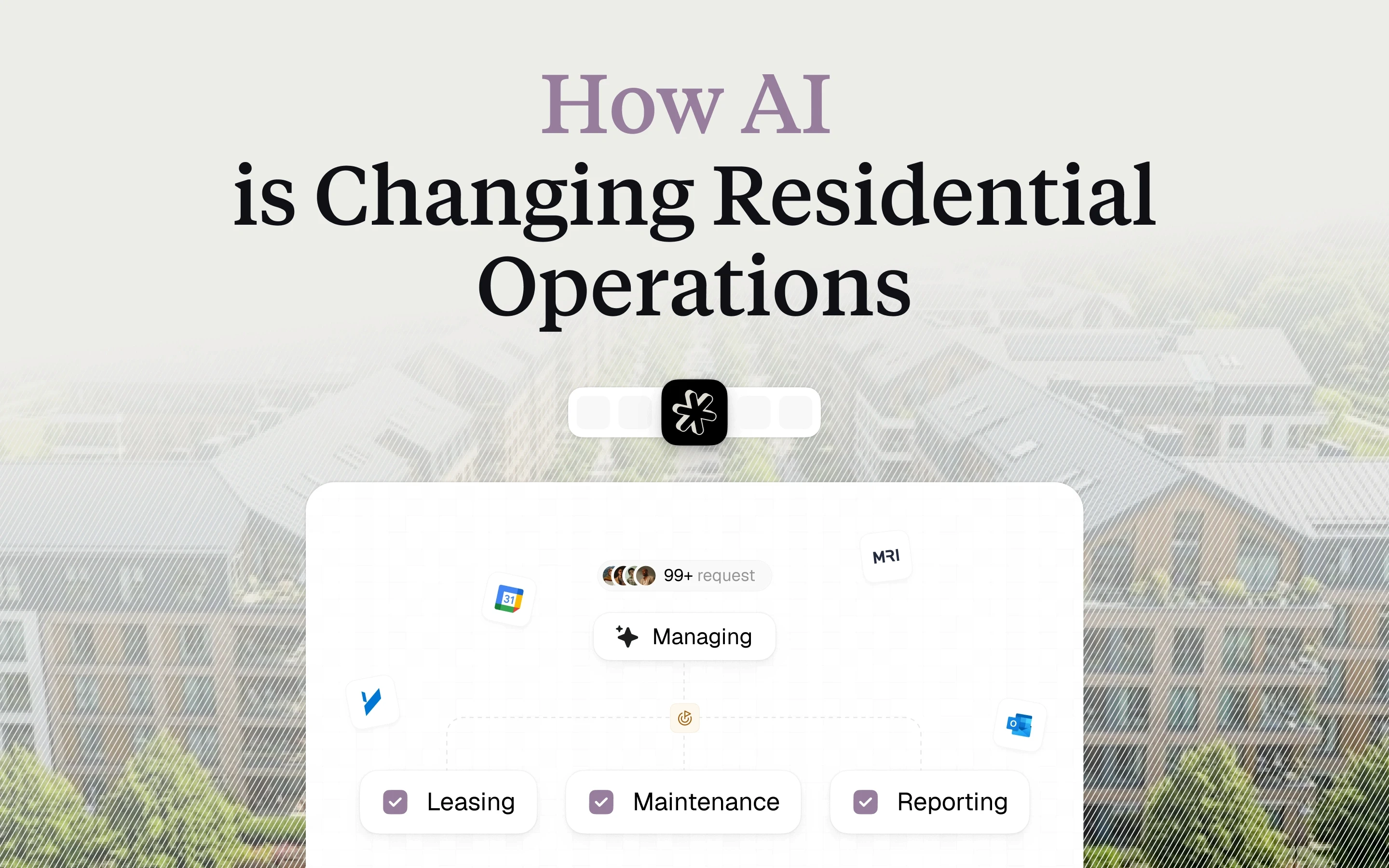
Property management has always been more than collecting rent and logging repairs. Behind every building is a constant queue of small jobs like late evening enquiries, repair reports, renewal dates, arrears reminders, compliance letters, contractor updates and owner reporting.
The old way was mostly manual. A PMS stored the record, an inbox caught the enquiry, and the team pushed work from one system to another.
With AI becoming so advanced, it has been rapidly changing that model. The best real estate AI tools no longer just record the work or answer a message. They help run the workflow. That is why AI for property management now matters to operators that need faster responses, fewer empty days and more scale without turning every new home into more admin.
What AI for Property Management Really Means
AI for property management is software that helps property teams carry out everyday operational work across leasing, resident management, maintenance, renewals, arrears and reporting.
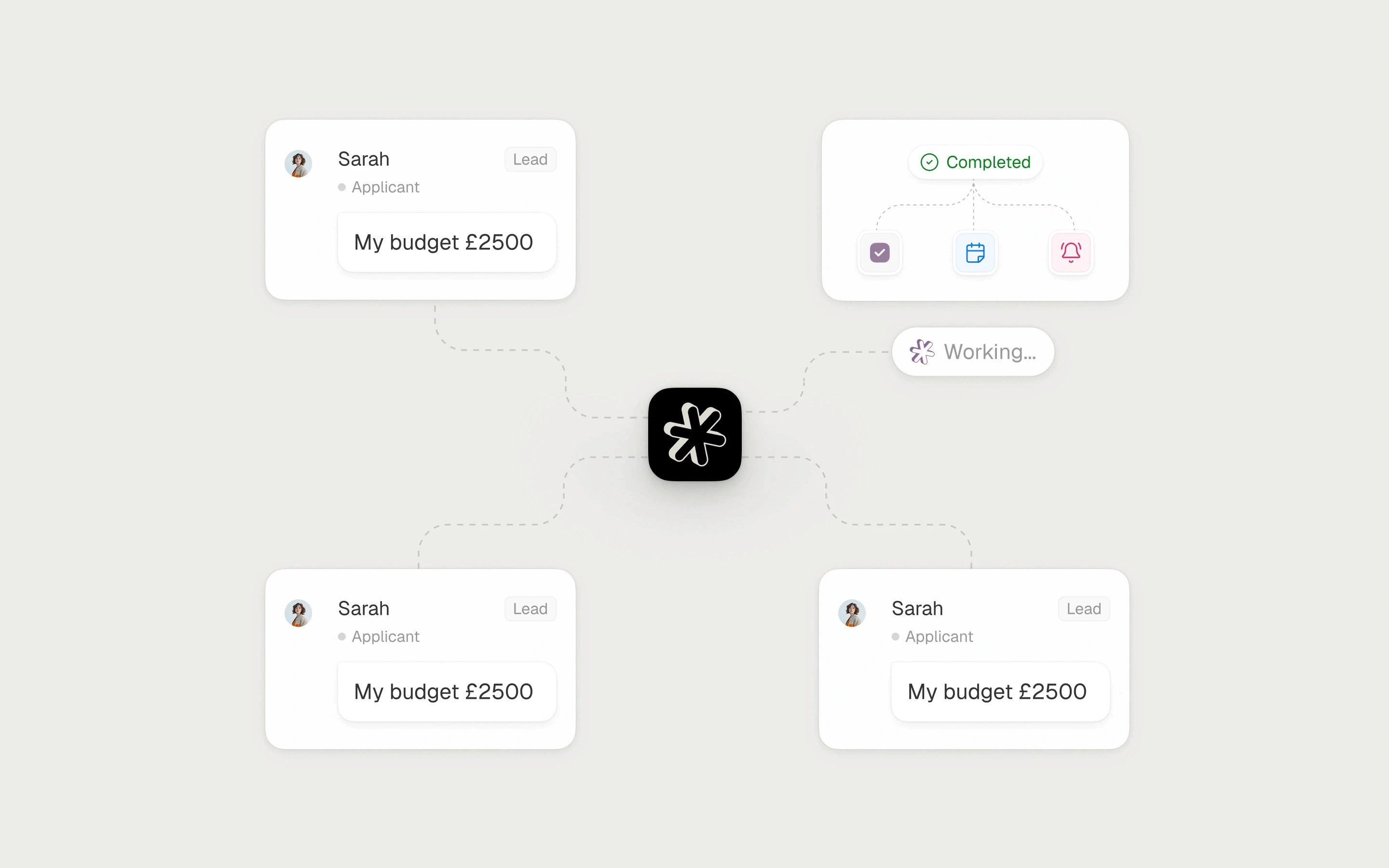
A basic leasing chatbot can answer a question and pass the rest to a person. AI property management software can go further. It can read live data, ask the next question, trigger the next action, update the record and escalate when a human decision is needed.
That makes real estate AI wider than a chat box on a website. It includes several types of AI, and they are not all equal.
Type of AI | What it does | Example | Limitation |
|---|---|---|---|
General AI assistant | Helps a person draft, summarise or rewrite | A manager asks it to rewrite an email to a resident | The person still has to do the task |
Leasing chatbot | Answers common leasing questions | A renter asks if pets are allowed | Often stops after the conversation |
Workflow AI | Runs repeatable property tasks | A repair is triaged, routed and logged automatically | Needs live data, rules and escalation |
Operating layer | Connects channels, PMS data and workflows | Enquiry, viewing, repair, renewal and reporting all move through one system | Must be implemented with strong controls |
Here is a simple example. A renter asks about a flat at 8pm.
A leasing chatbot may reply with basic details and tell the team to follow up. A workflow AI checks availability, asks move in and affordability questions, books a viewing slot and updates the PMS. One has answered the message. The other has moved the lead forward.
That is the difference property teams should care about.
How AI Is Changing the Daily Work of Property Teams
The biggest change is not that property teams suddenly have less responsibility. It is that their day starts in a different place.
In the old model, Monday morning often begins with a backlog. Weekend enquiries need replies. Repairs need triage. Renewal dates need checking. A resident has chased the same issue twice. The team spends hours getting back to where the work should already be.
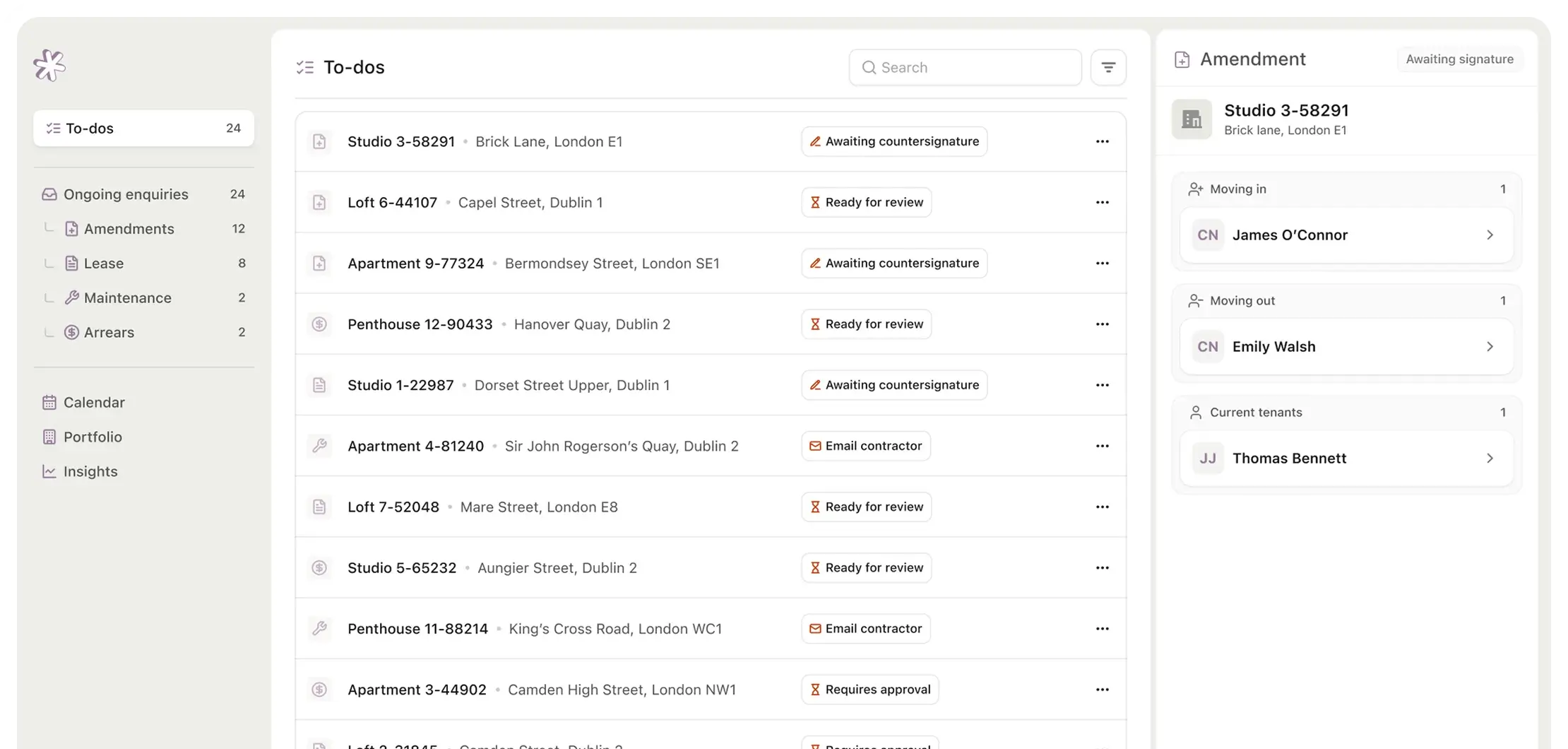
With automated property management, more routine work happens when it arrives. Evening enquiries are answered. Simple repair questions are handled. Missing documents are chased. Reports are updated as activity happens.
The team starts with exceptions instead of a wall of admin.
Speed matters because property management is full of moments where delay changes the outcome. A renter who asks about a home in the evening may book elsewhere by morning. A repair reported at night may become a complaint if nobody responds until the next day. A renewal that sits too long can become a void risk.
This is why AI for property management is not just a convenience layer. It changes the operating rhythm.
At scale, even small delays become expensive. Thousands of homes generate thousands of messages, tickets, checks and reminders.
The result is a different job for the property team. People spend less time copying details, chasing the same missing item or clearing repetitive questions. They spend more time on judgement, resident care, difficult cases, asset performance and the decisions that need context.
What Jobs AI Can Already Do Today
The simple rule is this: let AI handle repeatable work of property management, so your teams can focus on the decisions that actually need human judgement.
That means AI is well suited to work that follows a clear process. It can answer and qualify enquiries, book viewings, triage repairs, chase documents, start renewals, send reminders, prepare notices and build reporting views. It is less suited to decisions that involve vulnerability, legal risk, fairness, negotiation or relationship judgement.
Let’s have a look at how daily property work changes when AI is used properly.
Job | Old way | New way with AI |
|---|---|---|
Renting and enquiries | Team replies when someone reaches the inbox | Enquiries are captured, qualified and routed immediately |
Repairs | Resident reports a fault and waits for manual triage | AI asks for details, checks urgency, guides simple fixes and routes the job |
Renewals | Dates are tracked in spreadsheets or PMS reports | Renewal workflows start automatically before key dates |
Late rent | Reminders are sent manually and inconsistently | Arrears sequences run on schedule with escalation rules |
Official letters | Notices are drafted and logged by hand | Standard notices are prepared from approved templates and recorded |
Reports | Month end packs are built from scattered data | Dashboards update as work is completed |
Leasing is usually the first place operators feel the change. AI can capture an enquiry, qualify the prospect, book the viewing and support the lead to lease journey without someone manually touching every step. This is why leasing automation has become one of the clearest entry points for AI in residential operations.
Maintenance is the second obvious area. A resident should not need to log into a portal just to report a leak. They should be able to message the issue, send a photo and get a response. AI can ask follow up questions, decide whether the issue is urgent, suggest safe first steps and send the right contractor when needed. That is where maintenance automation moves from convenience to operational control.
The same pattern applies to renewals, rent reviews, arrears and reporting. AI does not make those jobs disappear. It removes the manual chasing and checking around them.
Real results follow from that shift. Teams see far less paperwork, faster repair response, cleaner records and fewer tasks waiting for someone to remember the next step. The resident gets a faster answer. The team gets a calmer day. The operator gets better visibility.
How AI Affects Money, Empty Homes, and Team Size
AI for property management improves performance in three clear areas. Time, voids and headcount.
It gives time back by handling repetitive replies, document chasing, repair triage and reporting updates automatically. Teams can then focus on resident conversations, renewal saves, high value prospects and issues that need local judgement.
It helps homes fill faster. Faster replies, earlier qualification, smoother viewing booking and better application follow up all reduce the time between enquiry and move in. That makes AI a finance conversation, not just an operations tool, because fewer empty days feed directly into NOI.
Live deployments show the scale of the impact. With Lette deployed, re-let times have been cut from 25 days to 5 days in some portfolios, creating more than 3% NOI uplift. One operator also added over 1,000 homes without hiring another property manager, which is the clearest version of the scale argument.
Automated property management changes the headcount equation. More homes no longer need to mean more admin. With portfolio analytics, leaders can also see response times, drop offs, repair performance and operational bottlenecks more clearly.
How the Rules in the UK and Europe Push Companies Toward AI
Regulation is no longer only a reason to be careful with AI. For property operators, it is also a reason to modernise how work gets done.
UK and European rules now reward speed, consistency, evidence and careful data handling. AI property management software can support this by creating a time stamped record while the work happens, from the first report to the response, triage, contractor update and resolution.
In England, the Renters’ Rights Act came into force changed how landlords let out private properties from 1 May 2026, with stronger tenant protections and new expectations around tenancy handling and evidence.
[Ireland has moved to a national rent control system](https://www.lette.ai/blog/renting-in-ireland-from-2026-what-tenants-and-landlords-need-to-know-and-how-tech-can-help.). For operators, that means rent reviews and rent changes need to follow the correct process every time. AI can help apply approved workflows consistently and keep a clear record.
Data protection is just as important. Real estate AI touches applicant, resident and repair data, so GDPR, UK GDPR, data residency, access control and auditability must be part of the buying decision.
Lette is GDPR compliant, ISO 27001:2022 certified, hosted on AWS EU West 1 in Ireland and does not use customer data to train external foundation models.
The EU AI Act adds a final point. AI can run the routine workflow, but people should stay in charge of decisions with legal, financial or fairness risk.
The Honest Limits and Risks of AI
The best AI for property management is not the system that tries to handle everything on its own. It is the system that understands the limits of automation.
Most day to day work follows a clear pattern. A resident asks about a repair. A prospect wants a viewing. A document is missing. A renewal reminder needs to go out. These are the moments where AI can move quickly, follow approved rules and keep the record updated.
The important part is what happens when the work stops being routine.
A well built AI operating layer should recognise uncertainty, pause the workflow and bring in a person with the full context attached. That way, the team does not lose control. They get involved exactly where their judgement matters most.
Situation | What AI can handle | When a person steps in |
|---|---|---|
Availability or rent questions | Use live PMS data and approved answers | If the data is missing or unclear |
Repair reports | Ask triage questions and route routine jobs | If the issue is urgent, sensitive or unusual |
Document chasing | Send reminders and update the record | If the applicant or resident disputes the request |
Rent reviews and notices | Prepare approved workflows and record each step | If the case needs legal or commercial judgement |
Resident complaints | Capture the issue and summarise the history | If the conversation needs empathy or escalation |
That is the right model for automated property management. Routine work keeps moving. Sensitive work goes to the team.
A boiler reset may be simple. A vulnerable resident needs a person. A missing payslip can be chased automatically. A dispute about fairness should not be. Good AI does not blur that line. It protects it.
This is how AI becomes safer and more useful for property teams. It reduces the admin load, keeps records cleaner and gives people more time for the moments that actually need them.
Will AI Replace Property Managers?
No. AI will not replace property managers in the way people often imagine. It will change what they spend the day doing.
The routine parts are already shifting. Repeated questions, basic repair triage, viewing booking, document chasing, arrears reminders, renewals prompts and reporting updates are all strong candidates for automation.
The human parts remain human. Property managers still handle judgement, empathy, complaints, vulnerable residents, complex arrears, sensitive repairs, negotiation, local building knowledge and final decisions that affect someone’s home.
The honest answer is that some tasks will shrink. A role built mostly around manual processing will look different. But that is not the same as removing the property manager.
In many teams, the problem is not that people are doing too little. It is that they are buried in work that does not need their judgement. AI clears that layer so they can spend more time on residents, assets and exceptions.
The best operators will not use AI to make the team invisible. They will use it to make the team more available where it matters.
How to Start Using AI the Smart Way
The smart way to adopt AI is not to buy the loudest tool. It is to ask whether the system fits your operating model.
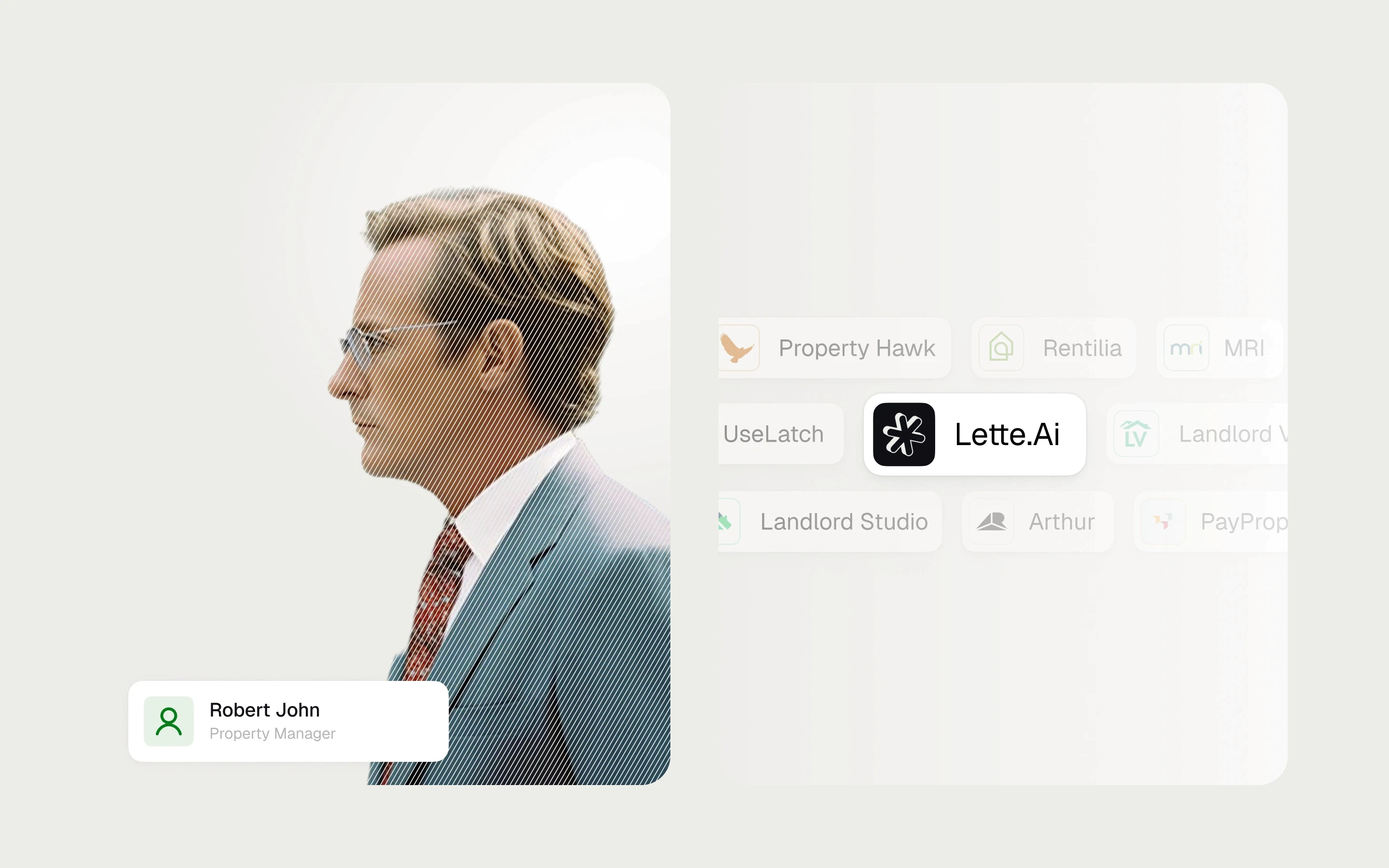
Start with your PMS. If the AI cannot work with the system you already use to run your homes, it will create another place to check. For most institutional teams, the better model is a layer on top of Yardi, MRI or the existing PMS rather than a replacement project.
Then ask whether it actually does the work. A leasing chatbot may be useful, but if it only replies and hands the task back to the team, it will not change much. AI property management software should qualify, route, follow up, update records and escalate.
Next, ask where the data lives. Resident and applicant information is sensitive. Your provider should be clear about hosting, access, security, processing and whether your data is used for model training.
Finally, ask how the system handles risk. Does it pause when it is unsure. Does it escalate difficult cases. Does it keep a record of what happened. Does it support human review for decisions that should never be fully automated.
These are the buying questions that matter.
Question to ask | Why it matters |
|---|---|
Does it work with our PMS | Avoids rip and replace and keeps the source of truth clean |
Does it read and write back | Prevents double entry and fragmented reporting |
Does it do the work or only chat | Separates operating software from a front end messenger |
Where is resident data stored | Supports GDPR, UK GDPR and internal due diligence |
How does human escalation work | Keeps people in charge of judgement and risk |
What workflows are live today | Avoids buying roadmap promises instead of working product |
The best real estate AI implementation feels less like adding a new system and more like removing friction from the stack you already have.
Common Questions People Ask
Is AI for property management just a leasing chatbot?
No. A leasing chatbot usually answers rental questions and may pass a lead to the team. AI for property management is broader. It can support leasing, repairs, renewals, arrears, resident communication, reporting and record updates. The key difference is whether the system only chats or actually moves the work forward.
What property management tasks can AI automate today?
AI can already automate routine, rules based work such as enquiry response, renter qualification, viewing booking, repair triage, document chasing, renewal reminders, arrears follow up and basic reporting. The best use is to let AI handle repeatable admin while people stay in charge of sensitive decisions, exceptions and resident relationships.
Where is resident and applicant information stored?
Resident and applicant information should be stored in a secure environment with clear access controls, audit trails and data processing terms. For UK and EU operators, GDPR, data residency and transfer rules matter. Any AI property management software should be able to explain where data is hosted, who can access it and whether customer data is used for model training.
What happens when AI makes a mistake?
A well built system should not guess when the answer is unclear or sensitive. It should use approved data, follow defined rules, keep a record of the conversation and escalate to a person when needed. This is especially important for repairs, complaints, applicant decisions, rent changes and anything that could create legal or fairness risk.
Does AI work with the property management system we already use?
The right AI property management software should work with the PMS you already use rather than replace it. For operators using systems such as Yardi, MRI or other PMS platforms, the AI layer should read live data, take action across workflows and write updates back so the PMS remains the source of truth.
How does AI handle questions and repairs outside office hours?
AI can respond as soon as a message arrives, including evenings, weekends and overnight. For enquiries, that means answering questions, qualifying the person and offering the next step. For repairs, it can ask triage questions, check urgency, suggest safe troubleshooting and route the issue to the right person or contractor.
Will AI replace property managers?
No. AI changes what property managers spend their day doing. It takes on repetitive admin, chasing and triage, while people stay responsible for judgement, resident care, complaints, vulnerable residents, complex arrears, sensitive repairs and commercial decisions. The goal is not to remove people. It is to give them more time for the work that needs them.
How long does AI take to implement in property management?
Implementation depends on the PMS, data access, workflows, channels and approval process. For many institutional operators, the right model is an AI layer that connects to existing systems rather than a full replacement project. That usually makes adoption faster and less disruptive than changing the core PMS.
What’s Next?
AI is changing property management in one clear direction: software is moving from recording the work to running more of it.
That does not remove the need for property managers. It removes the backlog that stops them doing their best work. Routine enquiries, repair triage, renewal reminders, arrears follow up and reporting updates can move automatically. The hard calls, the sensitive conversations and the commercial judgement stay with people.
For operators, the opportunity from automated property management is practical. Faster responses and fewer empty days, resulting in a better bottom line.
Try Lette out and let’s walk you through what AI for property management would look like across your portfolio.
Property management has always been more than collecting rent and logging repairs. Behind every building is a constant queue of small jobs like late evening enquiries, repair reports, renewal dates, arrears reminders, compliance letters, contractor updates and owner reporting.
The old way was mostly manual. A PMS stored the record, an inbox caught the enquiry, and the team pushed work from one system to another.
With AI becoming so advanced, it has been rapidly changing that model. The best real estate AI tools no longer just record the work or answer a message. They help run the workflow. That is why AI for property management now matters to operators that need faster responses, fewer empty days and more scale without turning every new home into more admin.
What AI for Property Management Really Means
AI for property management is software that helps property teams carry out everyday operational work across leasing, resident management, maintenance, renewals, arrears and reporting.
A basic leasing chatbot can answer a question and pass the rest to a person. AI property management software can go further. It can read live data, ask the next question, trigger the next action, update the record and escalate when a human decision is needed.
That makes real estate AI wider than a chat box on a website. It includes several types of AI, and they are not all equal.
Type of AI | What it does | Example | Limitation |
|---|---|---|---|
General AI assistant | Helps a person draft, summarise or rewrite | A manager asks it to rewrite an email to a resident | The person still has to do the task |
Leasing chatbot | Answers common leasing questions | A renter asks if pets are allowed | Often stops after the conversation |
Workflow AI | Runs repeatable property tasks | A repair is triaged, routed and logged automatically | Needs live data, rules and escalation |
Operating layer | Connects channels, PMS data and workflows | Enquiry, viewing, repair, renewal and reporting all move through one system | Must be implemented with strong controls |
Here is a simple example. A renter asks about a flat at 8pm.
A leasing chatbot may reply with basic details and tell the team to follow up. A workflow AI checks availability, asks move in and affordability questions, books a viewing slot and updates the PMS. One has answered the message. The other has moved the lead forward.
That is the difference property teams should care about.
How AI Is Changing the Daily Work of Property Teams
The biggest change is not that property teams suddenly have less responsibility. It is that their day starts in a different place.
In the old model, Monday morning often begins with a backlog. Weekend enquiries need replies. Repairs need triage. Renewal dates need checking. A resident has chased the same issue twice. The team spends hours getting back to where the work should already be.
With automated property management, more routine work happens when it arrives. Evening enquiries are answered. Simple repair questions are handled. Missing documents are chased. Reports are updated as activity happens.
The team starts with exceptions instead of a wall of admin.
Speed matters because property management is full of moments where delay changes the outcome. A renter who asks about a home in the evening may book elsewhere by morning. A repair reported at night may become a complaint if nobody responds until the next day. A renewal that sits too long can become a void risk.
This is why AI for property management is not just a convenience layer. It changes the operating rhythm.
At scale, even small delays become expensive. Thousands of homes generate thousands of messages, tickets, checks and reminders.
The result is a different job for the property team. People spend less time copying details, chasing the same missing item or clearing repetitive questions. They spend more time on judgement, resident care, difficult cases, asset performance and the decisions that need context.
What Jobs AI Can Already Do Today
The simple rule is this: let AI handle repeatable work of property management, so your teams can focus on the decisions that actually need human judgement.
That means AI is well suited to work that follows a clear process. It can answer and qualify enquiries, book viewings, triage repairs, chase documents, start renewals, send reminders, prepare notices and build reporting views. It is less suited to decisions that involve vulnerability, legal risk, fairness, negotiation or relationship judgement.
Let’s have a look at how daily property work changes when AI is used properly.
Job | Old way | New way with AI |
|---|---|---|
Renting and enquiries | Team replies when someone reaches the inbox | Enquiries are captured, qualified and routed immediately |
Repairs | Resident reports a fault and waits for manual triage | AI asks for details, checks urgency, guides simple fixes and routes the job |
Renewals | Dates are tracked in spreadsheets or PMS reports | Renewal workflows start automatically before key dates |
Late rent | Reminders are sent manually and inconsistently | Arrears sequences run on schedule with escalation rules |
Official letters | Notices are drafted and logged by hand | Standard notices are prepared from approved templates and recorded |
Reports | Month end packs are built from scattered data | Dashboards update as work is completed |
Leasing is usually the first place operators feel the change. AI can capture an enquiry, qualify the prospect, book the viewing and support the lead to lease journey without someone manually touching every step. This is why leasing automation has become one of the clearest entry points for AI in residential operations.
Maintenance is the second obvious area. A resident should not need to log into a portal just to report a leak. They should be able to message the issue, send a photo and get a response. AI can ask follow up questions, decide whether the issue is urgent, suggest safe first steps and send the right contractor when needed. That is where maintenance automation moves from convenience to operational control.
The same pattern applies to renewals, rent reviews, arrears and reporting. AI does not make those jobs disappear. It removes the manual chasing and checking around them.
Real results follow from that shift. Teams see far less paperwork, faster repair response, cleaner records and fewer tasks waiting for someone to remember the next step. The resident gets a faster answer. The team gets a calmer day. The operator gets better visibility.
How AI Affects Money, Empty Homes, and Team Size
AI for property management improves performance in three clear areas. Time, voids and headcount.
It gives time back by handling repetitive replies, document chasing, repair triage and reporting updates automatically. Teams can then focus on resident conversations, renewal saves, high value prospects and issues that need local judgement.
It helps homes fill faster. Faster replies, earlier qualification, smoother viewing booking and better application follow up all reduce the time between enquiry and move in. That makes AI a finance conversation, not just an operations tool, because fewer empty days feed directly into NOI.
Live deployments show the scale of the impact. With Lette deployed, re-let times have been cut from 25 days to 5 days in some portfolios, creating more than 3% NOI uplift. One operator also added over 1,000 homes without hiring another property manager, which is the clearest version of the scale argument.
Automated property management changes the headcount equation. More homes no longer need to mean more admin. With portfolio analytics, leaders can also see response times, drop offs, repair performance and operational bottlenecks more clearly.
How the Rules in the UK and Europe Push Companies Toward AI
Regulation is no longer only a reason to be careful with AI. For property operators, it is also a reason to modernise how work gets done.
UK and European rules now reward speed, consistency, evidence and careful data handling. AI property management software can support this by creating a time stamped record while the work happens, from the first report to the response, triage, contractor update and resolution.
In England, the Renters’ Rights Act came into force changed how landlords let out private properties from 1 May 2026, with stronger tenant protections and new expectations around tenancy handling and evidence.
[Ireland has moved to a national rent control system](https://www.lette.ai/blog/renting-in-ireland-from-2026-what-tenants-and-landlords-need-to-know-and-how-tech-can-help.). For operators, that means rent reviews and rent changes need to follow the correct process every time. AI can help apply approved workflows consistently and keep a clear record.
Data protection is just as important. Real estate AI touches applicant, resident and repair data, so GDPR, UK GDPR, data residency, access control and auditability must be part of the buying decision.
Lette is GDPR compliant, ISO 27001:2022 certified, hosted on AWS EU West 1 in Ireland and does not use customer data to train external foundation models.
The EU AI Act adds a final point. AI can run the routine workflow, but people should stay in charge of decisions with legal, financial or fairness risk.
The Honest Limits and Risks of AI
The best AI for property management is not the system that tries to handle everything on its own. It is the system that understands the limits of automation.
Most day to day work follows a clear pattern. A resident asks about a repair. A prospect wants a viewing. A document is missing. A renewal reminder needs to go out. These are the moments where AI can move quickly, follow approved rules and keep the record updated.
The important part is what happens when the work stops being routine.
A well built AI operating layer should recognise uncertainty, pause the workflow and bring in a person with the full context attached. That way, the team does not lose control. They get involved exactly where their judgement matters most.
Situation | What AI can handle | When a person steps in |
|---|---|---|
Availability or rent questions | Use live PMS data and approved answers | If the data is missing or unclear |
Repair reports | Ask triage questions and route routine jobs | If the issue is urgent, sensitive or unusual |
Document chasing | Send reminders and update the record | If the applicant or resident disputes the request |
Rent reviews and notices | Prepare approved workflows and record each step | If the case needs legal or commercial judgement |
Resident complaints | Capture the issue and summarise the history | If the conversation needs empathy or escalation |
That is the right model for automated property management. Routine work keeps moving. Sensitive work goes to the team.
A boiler reset may be simple. A vulnerable resident needs a person. A missing payslip can be chased automatically. A dispute about fairness should not be. Good AI does not blur that line. It protects it.
This is how AI becomes safer and more useful for property teams. It reduces the admin load, keeps records cleaner and gives people more time for the moments that actually need them.
Will AI Replace Property Managers?
No. AI will not replace property managers in the way people often imagine. It will change what they spend the day doing.
The routine parts are already shifting. Repeated questions, basic repair triage, viewing booking, document chasing, arrears reminders, renewals prompts and reporting updates are all strong candidates for automation.
The human parts remain human. Property managers still handle judgement, empathy, complaints, vulnerable residents, complex arrears, sensitive repairs, negotiation, local building knowledge and final decisions that affect someone’s home.
The honest answer is that some tasks will shrink. A role built mostly around manual processing will look different. But that is not the same as removing the property manager.
In many teams, the problem is not that people are doing too little. It is that they are buried in work that does not need their judgement. AI clears that layer so they can spend more time on residents, assets and exceptions.
The best operators will not use AI to make the team invisible. They will use it to make the team more available where it matters.
How to Start Using AI the Smart Way
The smart way to adopt AI is not to buy the loudest tool. It is to ask whether the system fits your operating model.
Start with your PMS. If the AI cannot work with the system you already use to run your homes, it will create another place to check. For most institutional teams, the better model is a layer on top of Yardi, MRI or the existing PMS rather than a replacement project.
Then ask whether it actually does the work. A leasing chatbot may be useful, but if it only replies and hands the task back to the team, it will not change much. AI property management software should qualify, route, follow up, update records and escalate.
Next, ask where the data lives. Resident and applicant information is sensitive. Your provider should be clear about hosting, access, security, processing and whether your data is used for model training.
Finally, ask how the system handles risk. Does it pause when it is unsure. Does it escalate difficult cases. Does it keep a record of what happened. Does it support human review for decisions that should never be fully automated.
These are the buying questions that matter.
Question to ask | Why it matters |
|---|---|
Does it work with our PMS | Avoids rip and replace and keeps the source of truth clean |
Does it read and write back | Prevents double entry and fragmented reporting |
Does it do the work or only chat | Separates operating software from a front end messenger |
Where is resident data stored | Supports GDPR, UK GDPR and internal due diligence |
How does human escalation work | Keeps people in charge of judgement and risk |
What workflows are live today | Avoids buying roadmap promises instead of working product |
The best real estate AI implementation feels less like adding a new system and more like removing friction from the stack you already have.
Common Questions People Ask
Is AI for property management just a leasing chatbot?
No. A leasing chatbot usually answers rental questions and may pass a lead to the team. AI for property management is broader. It can support leasing, repairs, renewals, arrears, resident communication, reporting and record updates. The key difference is whether the system only chats or actually moves the work forward.
What property management tasks can AI automate today?
AI can already automate routine, rules based work such as enquiry response, renter qualification, viewing booking, repair triage, document chasing, renewal reminders, arrears follow up and basic reporting. The best use is to let AI handle repeatable admin while people stay in charge of sensitive decisions, exceptions and resident relationships.
Where is resident and applicant information stored?
Resident and applicant information should be stored in a secure environment with clear access controls, audit trails and data processing terms. For UK and EU operators, GDPR, data residency and transfer rules matter. Any AI property management software should be able to explain where data is hosted, who can access it and whether customer data is used for model training.
What happens when AI makes a mistake?
A well built system should not guess when the answer is unclear or sensitive. It should use approved data, follow defined rules, keep a record of the conversation and escalate to a person when needed. This is especially important for repairs, complaints, applicant decisions, rent changes and anything that could create legal or fairness risk.
Does AI work with the property management system we already use?
The right AI property management software should work with the PMS you already use rather than replace it. For operators using systems such as Yardi, MRI or other PMS platforms, the AI layer should read live data, take action across workflows and write updates back so the PMS remains the source of truth.
How does AI handle questions and repairs outside office hours?
AI can respond as soon as a message arrives, including evenings, weekends and overnight. For enquiries, that means answering questions, qualifying the person and offering the next step. For repairs, it can ask triage questions, check urgency, suggest safe troubleshooting and route the issue to the right person or contractor.
Will AI replace property managers?
No. AI changes what property managers spend their day doing. It takes on repetitive admin, chasing and triage, while people stay responsible for judgement, resident care, complaints, vulnerable residents, complex arrears, sensitive repairs and commercial decisions. The goal is not to remove people. It is to give them more time for the work that needs them.
How long does AI take to implement in property management?
Implementation depends on the PMS, data access, workflows, channels and approval process. For many institutional operators, the right model is an AI layer that connects to existing systems rather than a full replacement project. That usually makes adoption faster and less disruptive than changing the core PMS.
What’s Next?
AI is changing property management in one clear direction: software is moving from recording the work to running more of it.
That does not remove the need for property managers. It removes the backlog that stops them doing their best work. Routine enquiries, repair triage, renewal reminders, arrears follow up and reporting updates can move automatically. The hard calls, the sensitive conversations and the commercial judgement stay with people.
For operators, the opportunity from automated property management is practical. Faster responses and fewer empty days, resulting in a better bottom line.
Try Lette out and let’s walk you through what AI for property management would look like across your portfolio.

Ready to simplify your property operations?
See how Lette helps leasing and residential teams automate daily work, respond faster, and scale with confidence.

167-169 Great Portland Street 5th Floor London W1W 5PF
33 Fitzwilliam Place, Dublin 2 Carroll Estates Mews DUBLIN 2 D02 A5W0 IRELAND
info@lette.ai

Ready to simplify your property operations?
See how Lette helps leasing and residential teams automate daily work, respond faster, and scale with confidence.
167-169 Great Portland Street 5th Floor London W1W 5PF
33 Fitzwilliam Place, Dublin 2 Carroll Estates Mews DUBLIN 2 D02 A5W0 IRELAND
info@lette.ai
Ready to simplify your property operations?
See how Lette helps leasing and residential teams automate daily work, respond faster, and scale with confidence.
167-169 Great Portland Street 5th Floor London W1W 5PF
33 Fitzwilliam Place, Dublin 2 Carroll Estates Mews DUBLIN 2 D02 A5W0 IRELAND
info@lette.ai
Ready to simplify your property operations?
See how Lette helps leasing and residential teams automate daily work, respond faster, and scale with confidence.
167-169 Great Portland Street 5th Floor London W1W 5PF
33 Fitzwilliam Place, Dublin 2 Carroll Estates Mews DUBLIN 2 D02 A5W0 IRELAND
info@lette.ai