
Blog
Blog
The Renters’ Rights Bill: What Landlords Need to Know in 2026
The Renters’ Rights Bill: What Landlords Need to Know in 2026
The administration of managing a rental property, whether a single flat or an institutional portfolio with thousands of units is entering a period of profound change.
Regulatory expectations are rising sharply, tenant protections are being strengthened, and the operational burden on landlords and property teams is increasing across every part of the tenancy lifecycle.
The most significant shift comes with the Renters’ Rights Bill, due to be enacted in England from March 2026, with changes phased across the year. The Bill represents the largest reform to the private rented sector (PRS) in a generation and introduces new responsibilities, higher service standards, and tighter oversight for landlords and managing agents.
Key Protections and Changes for Tenants
The Renters’ Rights Bill reshapes the balance of rights between tenants and landlords through a series of structural reforms:
1. End of “No-Fault” Evictions
Section 21 evictions will be abolished. Eviction will only be possible where a landlord can demonstrate a valid ground under Section 8. This offers tenants far greater security and stability while requiring landlords to keep accurate records of evidence, communication, and conduct.
2. End of Fixed-Term Tenancies
All tenancies will transition to periodic (rolling) agreements. Tenants will have the right to end a tenancy with two months’ notice. This increases flexibility for residents but introduces new challenges for portfolio-level forecasting and tenancy management, particularly where turnover becomes more unpredictable.
3. Adjusted Eviction Grounds and Higher Thresholds
New and updated Section 8 grounds will be introduced, including higher thresholds for persistent rent arrears and clarified definitions of antisocial behaviour. Demonstrating compliance here will rely heavily on clear documentation.
4. Ban on Rental Bidding Wars
Landlords must advertise properties at a fixed price and cannot accept higher offers. This aims to level the playing field for renters and reduce pressure in competitive markets.
5. Decent Homes Standard & Awaab’s Law
For the first time, the private rented sector will be brought in line with social housing expectations. Properties must meet the Decent Homes Standard, and under Awaab’s Law hazards such as damp and mould will need to be remedied within strict statutory timeframes (to be confirmed). Record-keeping around repair requests, responses and completion will be critical.
6. Anti-Discrimination Measures
It will be illegal to refuse tenants on the basis that they receive benefits or have children.
7. Tenant Rights to Keep Pets
Landlords must not unreasonably refuse pets, though they may require pet insurance. This increases the need for clear communication pathways and documentation, particularly where consent or property-impact concerns arise.
New Systems and Responsibilities for Landlords
The Bill is accompanied by a series of new frameworks aimed at improving oversight, transparency and professional standards across the sector:
1. Landlord Ombudsman
A mandatory national ombudsman scheme will provide clear routes for dispute resolution. Landlords will need detailed logs of interactions and responses to evidence their actions.
2. National Private Rented Sector Database
All landlords and properties will need to be registered in a central database, improving transparency for renters and enforcement bodies alike (Late 2026)
3. Rent Increases
Rent can only be increased once per year via a Section 13 notice, with two months’ notice required. Transparent, timestamped communication will help avoid challenges.
4. Enhanced Local Authority Enforcement
From December 2025, local councils will gain new investigatory powers and enhanced enforcement mechanisms, increasing scrutiny of compliance.
5. Updated Statutory Tenancy Wording
Revised standard wording for tenancy agreements is expected from January 2026.
The Expanding Compliance Landscape
Alongside these new statutory requirements sit the existing obligations that landlords must already meet including GDPR, ICO registration, legal and financial record-keeping, safety certification, and evidential documentation around repairs, communications, and tenancy management.
While the new legislation does not explicitly mandate the keeping of detailed communication logs, it is effectively impossible to demonstrate compliance, particularly around eviction grounds, repairs, discrimination, and complaint handling without a clear, timestamped record of every significant interaction.
This includes:
Possession Grounds: With Section 21 abolished, landlords must rely on specific Section 8 grounds and will need demonstrable evidence to support their case.
Repairs and Awaab’s Law: Response timelines will form part of statutory compliance. Documenting requests, follow-ups, contractor activity and completion becomes essential.
Data Protection: Personal data must be handled lawfully, securely and transparently.
Financial & Legal Compliance: Records of rent, expenses, inspections, safety certificates and tenancy documents must be maintained for at least six years.
The recurring theme is clear: the administrative workload will materially increase, and doing it manually will become increasingly risky, costly and inefficient.
How Technology Can Support Compliance and Service Quality
With property teams already stretched across customer service, property maintenance, compliance, and on-site operations, the sector is searching for ways to meet rising expectations without proportionally increasing headcount or administrative cost.
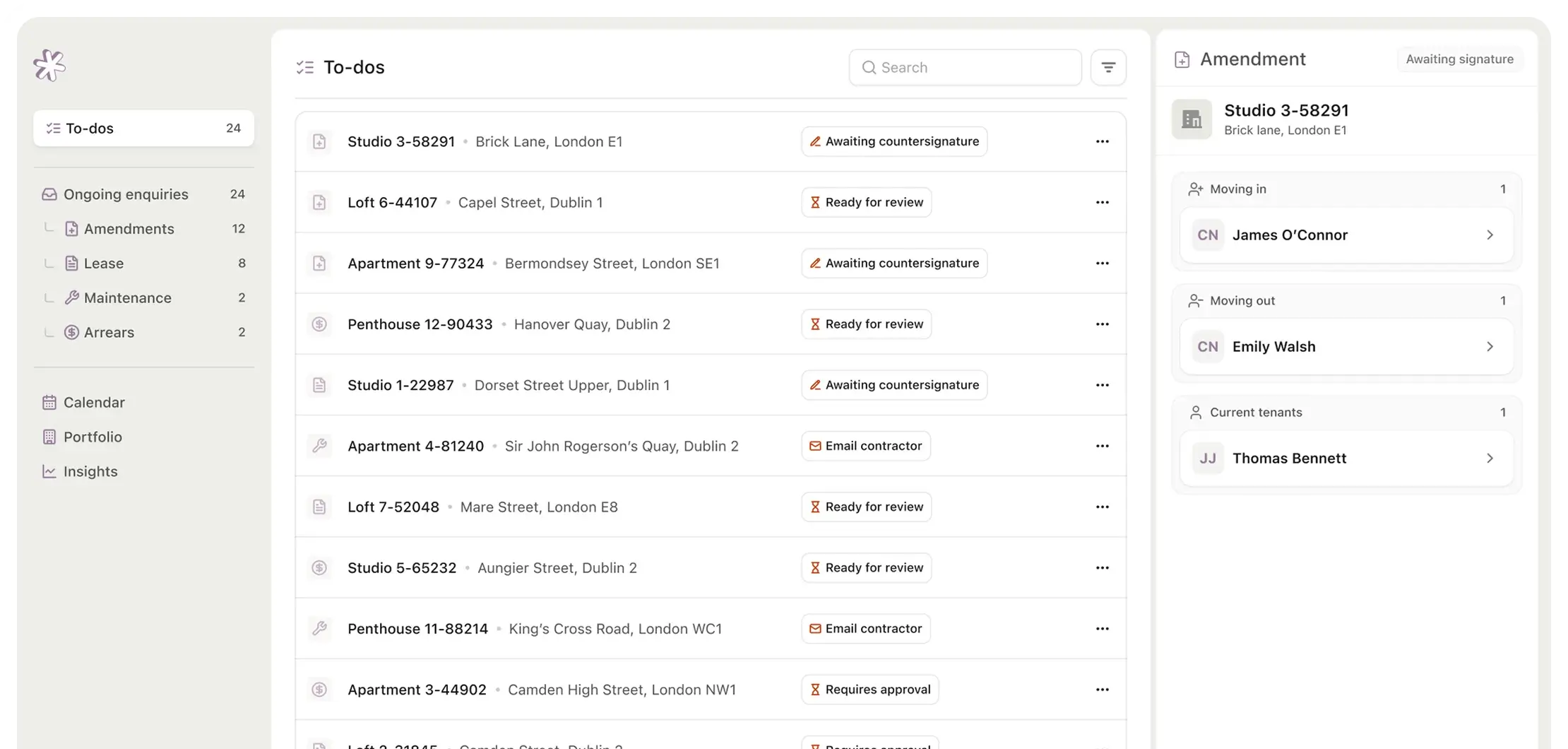
This is where platforms like Lette AI can play a meaningful role in future-proofing operations. While not a substitute for professional judgement or the human relationships that underpin great housing management, Lette AI can help organisations address three core challenges emerging from the new regulatory environment:
1. Automating Workflows Across the Customer / Resident Journey
From onboarding and referencing to repairs triage, arrears processes, renewals and dispute management, automation reduces manual handling, eliminates repetitive admin tasks, and ensures nothing is missed, particularly valuable under the tighter timelines of Awaab’s Law and the Decent Homes Standard.
2. Centralising All Communications in a Secure, GDPR- and ISO27001-Compliant Database
A single source of truth for all inbound and outbound communication,email, SMS, WhatsApp and platform messages, helps landlords evidence compliance, respond quickly to enquiries, and protect themselves in the event of disputes or enforcement action.
3. Improving Customer Experience Through Consistent, Timely Messaging
Clear, proactive communication reduces complaints, improves trust, and prevents issues escalating unnecessarily. By handling routine queries and updates automatically, Lette AI frees FM and property teams to focus on higher-value work: on-site interactions, escalations, duty-of-care issues, and the human touches that drive customer satisfaction.
As the Renters’ Rights Bill comes into force, landlords and operators who modernise their communication, record-keeping and workflow processes will be better positioned to remain compliant, reduce risk and deliver high-quality resident experience at scale. Technology alone isn’t the full solution, but it is increasingly an essential part of it.
Click the link to book a chat with Lette AI and see how we can support your compliance journey.
The administration of managing a rental property, whether a single flat or an institutional portfolio with thousands of units is entering a period of profound change.
Regulatory expectations are rising sharply, tenant protections are being strengthened, and the operational burden on landlords and property teams is increasing across every part of the tenancy lifecycle.
The most significant shift comes with the Renters’ Rights Bill, due to be enacted in England from March 2026, with changes phased across the year. The Bill represents the largest reform to the private rented sector (PRS) in a generation and introduces new responsibilities, higher service standards, and tighter oversight for landlords and managing agents.
Key Protections and Changes for Tenants
The Renters’ Rights Bill reshapes the balance of rights between tenants and landlords through a series of structural reforms:
1. End of “No-Fault” Evictions
Section 21 evictions will be abolished. Eviction will only be possible where a landlord can demonstrate a valid ground under Section 8. This offers tenants far greater security and stability while requiring landlords to keep accurate records of evidence, communication, and conduct.
2. End of Fixed-Term Tenancies
All tenancies will transition to periodic (rolling) agreements. Tenants will have the right to end a tenancy with two months’ notice. This increases flexibility for residents but introduces new challenges for portfolio-level forecasting and tenancy management, particularly where turnover becomes more unpredictable.
3. Adjusted Eviction Grounds and Higher Thresholds
New and updated Section 8 grounds will be introduced, including higher thresholds for persistent rent arrears and clarified definitions of antisocial behaviour. Demonstrating compliance here will rely heavily on clear documentation.
4. Ban on Rental Bidding Wars
Landlords must advertise properties at a fixed price and cannot accept higher offers. This aims to level the playing field for renters and reduce pressure in competitive markets.
5. Decent Homes Standard & Awaab’s Law
For the first time, the private rented sector will be brought in line with social housing expectations. Properties must meet the Decent Homes Standard, and under Awaab’s Law hazards such as damp and mould will need to be remedied within strict statutory timeframes (to be confirmed). Record-keeping around repair requests, responses and completion will be critical.
6. Anti-Discrimination Measures
It will be illegal to refuse tenants on the basis that they receive benefits or have children.
7. Tenant Rights to Keep Pets
Landlords must not unreasonably refuse pets, though they may require pet insurance. This increases the need for clear communication pathways and documentation, particularly where consent or property-impact concerns arise.
New Systems and Responsibilities for Landlords
The Bill is accompanied by a series of new frameworks aimed at improving oversight, transparency and professional standards across the sector:
1. Landlord Ombudsman
A mandatory national ombudsman scheme will provide clear routes for dispute resolution. Landlords will need detailed logs of interactions and responses to evidence their actions.
2. National Private Rented Sector Database
All landlords and properties will need to be registered in a central database, improving transparency for renters and enforcement bodies alike (Late 2026)
3. Rent Increases
Rent can only be increased once per year via a Section 13 notice, with two months’ notice required. Transparent, timestamped communication will help avoid challenges.
4. Enhanced Local Authority Enforcement
From December 2025, local councils will gain new investigatory powers and enhanced enforcement mechanisms, increasing scrutiny of compliance.
5. Updated Statutory Tenancy Wording
Revised standard wording for tenancy agreements is expected from January 2026.
The Expanding Compliance Landscape
Alongside these new statutory requirements sit the existing obligations that landlords must already meet including GDPR, ICO registration, legal and financial record-keeping, safety certification, and evidential documentation around repairs, communications, and tenancy management.
While the new legislation does not explicitly mandate the keeping of detailed communication logs, it is effectively impossible to demonstrate compliance, particularly around eviction grounds, repairs, discrimination, and complaint handling without a clear, timestamped record of every significant interaction.
This includes:
Possession Grounds: With Section 21 abolished, landlords must rely on specific Section 8 grounds and will need demonstrable evidence to support their case.
Repairs and Awaab’s Law: Response timelines will form part of statutory compliance. Documenting requests, follow-ups, contractor activity and completion becomes essential.
Data Protection: Personal data must be handled lawfully, securely and transparently.
Financial & Legal Compliance: Records of rent, expenses, inspections, safety certificates and tenancy documents must be maintained for at least six years.
The recurring theme is clear: the administrative workload will materially increase, and doing it manually will become increasingly risky, costly and inefficient.
How Technology Can Support Compliance and Service Quality
With property teams already stretched across customer service, property maintenance, compliance, and on-site operations, the sector is searching for ways to meet rising expectations without proportionally increasing headcount or administrative cost.
This is where platforms like Lette AI can play a meaningful role in future-proofing operations. While not a substitute for professional judgement or the human relationships that underpin great housing management, Lette AI can help organisations address three core challenges emerging from the new regulatory environment:
1. Automating Workflows Across the Customer / Resident Journey
From onboarding and referencing to repairs triage, arrears processes, renewals and dispute management, automation reduces manual handling, eliminates repetitive admin tasks, and ensures nothing is missed, particularly valuable under the tighter timelines of Awaab’s Law and the Decent Homes Standard.
2. Centralising All Communications in a Secure, GDPR- and ISO27001-Compliant Database
A single source of truth for all inbound and outbound communication,email, SMS, WhatsApp and platform messages, helps landlords evidence compliance, respond quickly to enquiries, and protect themselves in the event of disputes or enforcement action.
3. Improving Customer Experience Through Consistent, Timely Messaging
Clear, proactive communication reduces complaints, improves trust, and prevents issues escalating unnecessarily. By handling routine queries and updates automatically, Lette AI frees FM and property teams to focus on higher-value work: on-site interactions, escalations, duty-of-care issues, and the human touches that drive customer satisfaction.
As the Renters’ Rights Bill comes into force, landlords and operators who modernise their communication, record-keeping and workflow processes will be better positioned to remain compliant, reduce risk and deliver high-quality resident experience at scale. Technology alone isn’t the full solution, but it is increasingly an essential part of it.
Click the link to book a chat with Lette AI and see how we can support your compliance journey.

Ready to simplify your property operations?
See how Lette helps leasing and residential teams automate daily work, respond faster, and scale with confidence.

167-169 Great Portland Street 5th Floor London W1W 5PF
33 Fitzwilliam Place, Dublin 2 Carroll Estates Mews DUBLIN 2 D02 A5WO IRELAND
info@lette.ai

Ready to simplify your property operations?
See how Lette helps leasing and residential teams automate daily work, respond faster, and scale with confidence.
167-169 Great Portland Street 5th Floor London W1W 5PF
33 Fitzwilliam Place, Dublin 2 Carroll Estates Mews DUBLIN 2 D02 A5WO IRELAND
info@lette.ai
Ready to simplify your property operations?
See how Lette helps leasing and residential teams automate daily work, respond faster, and scale with confidence.
167-169 Great Portland Street 5th Floor London W1W 5PF
33 Fitzwilliam Place, Dublin 2 Carroll Estates Mews DUBLIN 2 D02 A5WO IRELAND
info@lette.ai
Ready to simplify your property operations?
See how Lette helps leasing and residential teams automate daily work, respond faster, and scale with confidence.
167-169 Great Portland Street 5th Floor London W1W 5PF
33 Fitzwilliam Place, Dublin 2 Carroll Estates Mews DUBLIN 2 D02 A5WO IRELAND
info@lette.ai